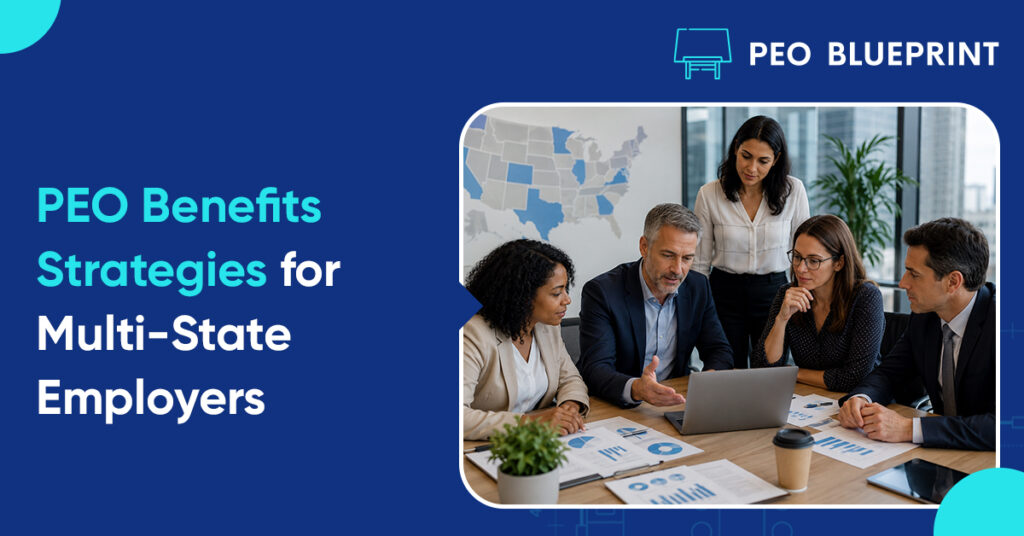
Navigating the complexities of a distributed workforce demands innovative solutions, making effective PEO Benefits Strategies essential for modern multi-state employers. Managing a business across state lines introduces a labyrinth of varying labor laws, tax codes, and compliance regulations. Without the right HR infrastructure, business owners quickly find themselves overwhelmed by administrative burdens. By partnering with a Professional Employer Organization (PEO), companies can access enterprise-level benefits and streamline their operations.
Developing comprehensive PEO Benefits Strategies allows organizations to punch above their weight class in the talent market. When you utilize a co-employment model, you outsource the heavy lifting of HR compliance while retaining total control over your day-to-day operations. This unique arrangement unlocks unprecedented buying power, giving your employees access to top-tier health networks, robust retirement plans, and comprehensive wellness programs.
In this exhaustive guide, we explore how small and mid-sized businesses can leverage advanced PEO Benefits Strategies to drive growth, minimize risk, and build a thriving, compliant workplace across state lines.
The Core of PEO Benefits Strategies
At its foundation, a Professional Employer Organization operates through a co-employment agreement. In this dynamic, the PEO becomes the employer of record for specific tax and administrative purposes, while you remain the managing employer. This structural shift underpins all successful PEO Benefits Strategies.
By pooling thousands of employees from various client companies under one massive umbrella, a PEO creates tremendous economies of scale. Small businesses suddenly gain the collective bargaining power of a Fortune 500 corporation. This allows you to negotiate highly competitive rates with national insurance carriers. Without these optimized PEO Benefits Strategies, independent small businesses face exorbitant premiums and limited coverage options.
Implementing sound PEO Benefits Strategies also centralizes your administrative workflows. Instead of juggling a dozen different vendors for payroll, health insurance, dental coverage, and retirement planning, you funnel everything through a single, unified platform. This consolidation reduces costly data-entry errors, saves hundreds of administrative hours, and secures your highly sensitive employee data.
Why Multi-State Employers Need Robust PEO Benefits Strategies
Expanding a business across state lines multiplies your legal and operational risks. Each state enforces its own distinct rules regarding workers’ compensation, state unemployment taxes (SUTA), paid sick leave, and final paycheck deadlines. Crafting meticulous PEO Benefits Strategies shields your company from the severe financial penalties associated with noncompliance.
Operating in multiple states means you cannot rely on a one-size-fits-all benefits package. A health insurance network that provides excellent coverage in California might offer zero in-network providers for an employee residing in Texas. PEO Benefits Strategies solve this geographical dilemma by providing access to massive, nationwide PPO networks that ensure every team member receives quality care, regardless of their zip code.
Consider the distinct advantages multi-state employers gain when they deploy targeted PEO Benefits Strategies:
✅ Nationwide coverage networks that accommodate a geographically diverse workforce
✅ Centralized administration that eliminates redundant data entry across multiple software platforms
✅ Automated compliance monitoring that adapts to rapidly changing state-specific labor laws
✅ Seamless onboarding processes for out-of-state hires that ensure immediate tax compliance
✅ Reduced exposure to multi-state employment litigation and expensive regulatory fines
The Hidden Complexities of Multi-State Employee Benefits
Many business leaders underestimate the sheer volume of bureaucratic red tape involved in multi-state expansion. When an employee relocates, or you hire remote talent in a new jurisdiction, you instantly trigger new tax withholding obligations and mandatory state registrations. Incorporating proactive PEO Benefits Strategies ensures you never miss a filing deadline.
For example, states like California, New York, and New Jersey enforce highly specific mandatory disability and paid family leave contributions. Tracking these distinct legislative changes requires an entire team of legal experts. Your PEO Benefits Strategies act as a built-in compliance engine, automatically updating your payroll runs to reflect the latest state withholding formulas and leave requirements.
Furthermore, some states dictate strict pay transparency laws and specific mandates regarding how benefit details must be presented to recruits. Noncompliance can result in severe legal action and reputational damage. By relying on sophisticated PEO Benefits Strategies, you transfer the burden of constant regulatory monitoring to dedicated specialists who absorb the risk on your behalf.
Health Insurance Pooling: A Pillar of PEO Benefits Strategies
Healthcare costs consistently rank among the largest expenses for growing businesses. Traditional small group insurance markets offer limited flexibility and face relentless year-over-year rate increases. Leveraging health insurance pooling is arguably the most lucrative aspect of modern PEO Benefits Strategies.
Because a PEO aggregates employees from hundreds of client companies, it spreads medical risk across a much larger population. This risk distribution stabilizes renewal rates and prevents catastrophic claims from bankrupting a small business’s health plan. Through smart PEO Benefits Strategies, employers can offer diverse plan types, including PPOs, HMOs, and High Deductible Health Plans (HDHPs) paired with Health Savings Accounts (HSAs).
When you refine your PEO Benefits Strategies, you stop dictating a single, rigid health plan to your diverse workforce. Instead, you empower employees to choose coverage that aligns with their unique family and financial needs. This autonomy dramatically boosts employee satisfaction and serves as a powerful retention tool in a highly competitive labor market.
Navigating State-Mandated Leave and Statutory Benefits
Statutory benefits represent a legal minefield for multi-state operators. While federal mandates like the Family and Medical Leave Act (FMLA) set a baseline, individual states frequently impose far stricter requirements. Advanced PEO Benefits Strategies provide a foolproof framework for managing these overlapping and often contradictory regulations.
Some jurisdictions require employers to fund specific state disability insurance (SDI) programs, while others mandate varying tiers of paid sick leave based on company headcount. Manually tracking these nuances is a recipe for disaster. Effective PEO Benefits Strategies utilize automated tracking systems to calculate accruals and deduct the appropriate state-mandated taxes instantly.
Understanding the varying types of state-level mandates is critical for your HR team. Here is a breakdown of common statutory requirements managed by effective PEO Benefits Strategies:
• State-sponsored retirement mandates (e.g., CalSavers or OregonSaves) that require employer enrollment or qualified alternatives
• Mandatory state disability insurance programs funded through precise payroll deductions
• Paid family and medical leave (PFML) contributions that vary drastically by state and local jurisdiction
• Localized sick leave ordinances that supersede state laws in major metropolitan areas
• Specific timing requirements regarding the payout of accrued PTO upon an employee’s termination
Workers’ Compensation and Multi-State Risk Management
In almost every state, employing even a single individual requires securing workers’ compensation insurance. However, rules on classifications, rates, and reporting vary widely from state to state. Integrating risk management into your PEO benefits strategy removes this logistical nightmare from your desk.
PEOs manage multi-state claims seamlessly by coordinating medical networks, adjusters, and legal teams across multiple jurisdictions. This integrated approach ensures consistent communication, facilitates faster return-to-work rates, and ultimately lowers your loss costs. Exceptional PEO Benefits Strategies provide robust protection without requiring you to negotiate individual policies for every state in which you operate.
Furthermore, many PEOs employ dedicated safety experts who help you design workplace injury prevention programs. By minimizing your exposure to OSHA violations and reducing workplace accidents, your PEO Benefits Strategies actively lower your experience modifier rate (EMR). This translates directly to significant, long-term financial savings for your organization.
Elevating Retirement Planning with PEO Benefits Strategies
A competitive 401(k) plan is no longer a luxury; it is a baseline expectation for top-tier talent. Unfortunately, standalone retirement plans carry exorbitant setup fees, massive administrative burdens, and daunting fiduciary liabilities. Superior PEO Benefits Strategies grant you access to Multiple Employer Plans (MEPs).
Under a MEP, the PEO serves as the plan sponsor and assumes most of the fiduciary risk. This arrangement eliminates the need for your company to undergo costly, independent annual audits. When you integrate retirement planning into your PEO Benefits Strategies, you provide your team with premium investment options and low administrative fees that are typically reserved for massive corporations.
Additionally, your PEO Benefits Strategies will automatically handle all compliance testing, Form 5500 filings, and employee educational outreach. By outsourcing these highly technical responsibilities to financial experts, your internal leadership team can refocus on revenue-generating activities and core business growth.
Overcoming the Remote Work Challenge with Tailored Offerings
The shift toward permanent remote work has fundamentally altered the talent acquisition landscape. Geographic boundaries no longer restrict companies, but this freedom introduces new HR hurdles. PEO Benefits Strategies offer the agility required to support a deeply fragmented, work-from-anywhere employee base.
Remote workers want benefits that fit their unique lifestyles. This includes stipends for home office equipment, robust mental health support, and telehealth services. Forward-thinking PEO benefits strategies let you weave these modern perks into your broader compensation package seamlessly. If you need help structuring these remote-friendly packages, consider exploring customized PEO compliance solutions aligned with your growth goals.
When you deploy agile PEO Benefits Strategies, you guarantee that an employee working from a coffee shop in Montana receives the same standard of HR support as an employee sitting in your New York headquarters. This consistency fosters a strong, unified corporate culture, regardless of physical distance.
7 Steps to Implement High-Impact PEO Benefits Strategies
Successfully transitioning to a co-employment model requires meticulous planning and strategic foresight. Rushing implementation can lead to employee confusion and temporary coverage gaps. Follow these definitive steps to deploy world-class PEO Benefits Strategies across your multi-state organization.
- Audit your current multi-state footprint to identify existing compliance gaps and varied state regulations.
- Survey your existing workforce to understand which benefits (e.g., HDHPs, pet insurance, telehealth) they value most.
- Evaluate potential PEO partners based on their national network strength and specific multi-state expertise.
- Compare providers’ fee structures, paying close attention to administrative fees versus actual benefit costs.
- Collaborate with your chosen PEO to design a customized, multi-tiered benefits package that appeals to diverse demographics.
- Launch a comprehensive internal communication campaign to educate your employees on their upgraded benefits and new enrollment platforms.
- Schedule quarterly reviews with your PEO account manager to optimize your offerings and adapt to legislative changes.
Compliance Protection and the Legal Safety Net
Employment litigation is a constant threat to growing enterprises. A single wrongful termination lawsuit or wage-and-hour dispute can cripple a small business financially. Relying on expert PEO Benefits Strategies provides an invaluable legal safety net, as you share this liability with seasoned HR professionals.
For comprehensive guidance on federal labor standards, employers should regularly consult Department of Labor (DOL) resources. However, navigating these federal guidelines alongside contradictory state laws is perilous. Your PEO Benefits Strategies include access to dedicated HR specialists who guide you through complex terminations, disciplinary actions, and standard operating procedures.
Your PEO also helps develop highly customized, state-specific employee handbooks. These documents are living entities, constantly updated by your PEO’s legal team to reflect the latest judicial rulings and legislative mandates. By anchoring your operations in legally sound PEO Benefits Strategies, you actively deter frivolous lawsuits and protect your brand’s reputation.
Tailoring PEO Benefits Strategies for Millennial and Gen Z Talent
The modern workforce spans multiple generations, each with distinctly different priorities and expectations. Millennials and Gen Z currently dominate the labor pool, and their benefit preferences lean heavily toward flexibility, mental health, and financial wellness. Stagnant HR programs fail to attract this demographic; dynamic PEO Benefits Strategies are required.
Younger employees highly value access to mental health advocacy, student loan repayment assistance, and flexible paid time off structures. Through scalable PEO Benefits Strategies, you can easily bolt these specialized ancillary benefits onto your core health and dental offerings. This modular approach lets you curate a hyper-attractive total rewards package without the administrative nightmare of managing individual vendor contracts.
To remain competitive, you must continuously evolve your approach. Here are several modern perks you can seamlessly integrate through advanced PEO Benefits Strategies:
✅ Comprehensive mental health and virtual therapy programs via dedicated telehealth applications
✅ Identity theft protection and robust legal assistance plans for personal matters
✅ Flexible commuter benefits tailored for hybrid employees who split time between home and the office
✅ Expansive pet insurance policies, highly requested by younger professionals
✅ Employer-sponsored health advocacy services that help employees navigate complex medical billing issues
Advanced Tech and Employee Portals in Modern PEO Benefits Strategies
In the digital age, how you deliver benefits matters as much as the benefits themselves. Employees expect consumer-grade technology that allows them to manage their HR needs from their smartphones. Superior PEO Benefits Strategies heavily leverage integrated, cloud-based HR Information Systems (HRIS).
A premier PEO provides a unified digital dashboard where employees can view their pay stubs, update their tax withholdings, and manage their benefit enrollments. These sophisticated platforms are a critical component of successful PEO Benefits Strategies, as they eliminate the need for endless email chains and manual HR requests. When an employee experiences a qualifying life event, such as a marriage or the birth of a child, they can seamlessly update their coverage directly through the portal.
For business owners, these centralized dashboards provide invaluable analytics. You can instantly generate reports regarding labor costs, turnover rates, and benefit utilization metrics. If you want to explore how these platforms scale with your business, reviewing comprehensive small business PEO services will illuminate the technological advantages of co-employment.
Key Financial Advantages of Optimizing Your PEO Benefits Strategies
While the operational and legal benefits of a PEO are profound, the financial ROI is often the deciding factor for executives. Businesses that engage in a PEO relationship grow 7 to 9 percent faster, experience 10 to 14 percent lower employee turnover, and are significantly less likely to go out of business. These statistics underscore the tangible monetary value of executing elite PEO Benefits Strategies.
By utilizing Section 125 cafeteria plans provided by the PEO, you enable employees to pay for their health premiums on a pre-tax basis. This brilliant facet of PEO Benefits Strategies not only increases your employees’ take-home pay but simultaneously reduces your company’s overall payroll tax obligations. This mutually beneficial scenario directly bolsters your bottom line.
Additionally, PEOs actively manage and defend against fraudulent or inappropriate unemployment claims on your behalf. Their expertise in handling state unemployment insurance (SUI) can stabilize or even lower your SUTA rates over time. When you combine these tax savings with reduced healthcare premiums and minimized administrative overhead, your PEO Benefits Strategies effectively pay for themselves.
Overcoming the Drawbacks: When to Adjust Your PEO Benefits Strategies
While the advantages are overwhelming, co-employment is not a permanent silver bullet for every stage of a company’s lifecycle. As your enterprise scales toward the enterprise level, the standardized nature of a PEO might begin to feel restrictive. Continuously evaluating your PEO Benefits Strategies ensures you remain in the most advantageous HR setup for your current size.
PEOs typically charge administrative fees as either a flat per-employee-per-month (PEPM) rate or as a percentage of your total payroll. If your company experiences explosive growth and your payroll skyrockets, a percentage-based fee structure can quickly become cost-prohibitive. Astute PEO Benefits Strategies require you to routinely audit these fee structures and aggressively negotiate terms upon contract renewal.
You may also eventually want fully customized health plans that fall outside the PEO’s master policies. When auditing your PEO Benefits Strategies, keep an eye on these potential limitations:
• A perceived loss of absolute control over the highly specific design of individual health plan networks
• Potential disruption to company culture if the PEO’s technology platform offers a poor user experience
• The possibility of outgrowing the financial benefits if your internal employee headcount exceeds 500 individuals
• Complex transition periods if you decide to leave the PEO and bring HR operations entirely in-house eventually
• Potential early termination penalties hidden within rigid, multi-year service agreements
Future-Proofing Your Company with Agile PEO Benefits Strategies
The regulatory environment surrounding employment is exceptionally volatile. Legislators continually introduce new rules on pay equity, artificial intelligence in hiring, and gig-worker classifications. To survive, organizations must develop incredibly agile PEO Benefits Strategies that can pivot at a moment’s notice.
By partnering with an industry leader, you can stay ahead of the compliance curve. To understand industry standards and best practices, employers should reference guidelines published by the National Association of Professional Employer Organizations (NAPEO) and the Society for Human Resource Management (SHRM). These resources validate the immense strategic advantage of outsourcing complex administrative tasks.
Future-proofing your company means building an infrastructure that can handle rapid expansion without breaking. Whether you plan to acquire a competitor in a neighboring state or hire a fleet of remote contractors globally, scalable PEO Benefits Strategies guarantee that your HR capabilities will never act as a bottleneck to your revenue growth.
The Synergy of Co-Employment and Corporate Culture
A common misconception is that outsourcing HR functions will dilute your unique corporate culture. In reality, the exact opposite is true. Exceptional PEO Benefits Strategies enhance your culture by removing the friction of poor onboarding, delayed payroll, and confusing benefit enrollments.
When your leadership team is freed from the drudgery of processing FMLA requests or managing COBRA administration, they can focus entirely on employee engagement, career development, and team-building initiatives. These co-employment models are designed to operate invisibly in the background, providing steadfast support while you maintain complete creative control over your workplace environment.
By delivering flawless, enterprise-grade HR experiences, your PEO Benefits Strategies signal to your employees that you deeply value their well-being and professional security. This foundation of trust translates directly into higher productivity, stronger loyalty, and a unified team capable of dominating your target market.
Conclusion: Maximizing Growth Through Proven PEO Benefits Strategies
Operating a multi-state business is incredibly demanding, with logistical hurdles and serious compliance risks. However, you do not have to navigate this treacherous landscape alone. By implementing sophisticated PEO Benefits Strategies, you instantly transform your human resources department from a massive liability into your greatest competitive advantage.
Offering large-group health networks, mitigating multi-state legal risks, and automating complex payroll taxation allow small to mid-sized businesses to operate with the confidence of industry giants. Whether you are expanding into your second state or your fiftieth, strategically deploying co-employment solutions keeps your operations resilient, compliant, and highly profitable. Stop letting administrative burdens throttle your potential; embrace elite PEO Benefits Strategies today and unlock the limitless growth your organization deserves.