Creating a zero-liability HR environment is no longer aspirational—it’s a foundational requirement for organizations operating in an era marked by intensifying employment regulations, rising litigation threats, and unprecedented workforce complexity. Enterprises today must demonstrate operational rigor and clarity in compliance while fostering an employee experience that builds trust and safeguards organizational integrity.
This is where PEO structural protection emerges as a transformative force. Professional Employer Organizations have redefined modern HR governance by offering a compliance-forward, risk-mitigation-centric infrastructure that allows employers to transfer administrative, regulatory, and employment-related liabilities to experts. By strategically leveraging a PEO’s co-employment model, organizations can architect a truly zero-liability HR environment—one that sustains business continuity, improves operational efficiency, and accelerates workforce stability.
This comprehensive blueprint unpacks the frameworks, processes, and decision-making pathways that empower businesses to reduce exposure, adopt bulletproof HR systems, and operate with peace of mind.
🛡️ Strategic Imperative: Why Zero-Liability HR Is Now Non-Negotiable
Organizations today operate under stringent and ever-evolving employment laws. Penalties for non-compliance are increasing, court cases are rising, and federal/state bodies are tightening audit protocols. Building a zero-liability HR environment is no longer optional—it’s synonymous with organizational resilience.
Why companies are shifting aggressively toward zero-liability HR models:
- ✔️ Complex labor laws create unavoidable risk for non-specialized HR teams
- ✔️ Remote and hybrid workforces add multi-state jurisdictional obligations
- ✔️ Employee claims and litigation continue to increase annually
- ✔️ Regulators expect impeccable documentation and compliant processes
- ✔️ Insurance requirements have become more rigid and expensive
Forward-leaning organizations are adopting PEO structural protection as the cornerstone of risk-free HR operations—ensuring compliance and shielding themselves from fines, penalties, lawsuits, and administrative vulnerabilities.
For deeper structural insights on workforce risk strategy, explore additional frameworks at PEO Blueprint: https://peoblueprint.com/
🧩 Understanding PEO Structural Protection in the Zero-Liability Context
Before building a zero-liability HR environment, it’s essential to understand how a PEO’s structural guardrails provide the backbone of the model.
How PEO Structural Protection Works
Under the co-employment model:
- ✔️ The business retains day-to-day control
- ✔️ The PEO becomes the employer of record for compliance
- ✔️ The PEO assumes liability for tax filings, payroll, HR compliance, and more
- ✔️ The organization gains built-in legal and regulatory safeguards
This structure creates unmatched stability by eliminating the operational friction and enforcement risk that companies typically shoulder on their own.
Core Risk Domains Managed by PEOs
- ✔️ Payroll accuracy and tax compliance
- ✔️ Workers’ compensation coverage and claims support
- ✔️ Regulatory compliance monitoring
- ✔️ Employee documentation governance
- ✔️ Benefits administration compliance
- ✔️ Audits, filings, and reporting
The ability to formalize and externalize risk through PEOs empowers business leaders to focus on enterprise performance without fear of HR-related disruptions.
More insights on PEO functions can be found at:
https://peoblueprint.com/
📘 Building Blocks of a Zero-Liability HR Environment
Below are the foundational pillars for designing an HR ecosystem that ensures your organization operates with zero liability, maximum compliance, and long-term sustainability.
⚙️ Framework 1: Compliance Infrastructure Reinforced by PEO Governance
A compliant organization is a resilient organization. PEOs operate as compliance custodians, protecting businesses from federal, state, and local legal exposure.
How PEOs safeguard compliance integrity:
- ✔️ Maintain up-to-date knowledge of all employment regulations
- ✔️ Ensure correct classification of employees and contractors
- ✔️ Maintain legal documentation aligned with federal and state requirements
- ✔️ Track HR policy updates and execute timely compliance adjustments
Key Regulatory Categories a PEO Oversees
- FLSA
- OSHA
- EEOC
- IRS compliance
- State-level labor codes
- Multi-state employment laws
Example:
A manufacturing company operating across three states shifts HR oversight to a PEO and instantly eliminates multi-jurisdictional compliance errors that previously triggered audit risk.
🛠️ Framework 2: Payroll Accuracy Through PEO-Controlled Tax Management
Payroll errors are one of the most significant sources of employer liability. Incorrect filings, delayed deposits, misclassified wages, and inaccurate reporting can lead to substantial penalties.
A zero-liability HR environment requires precision payroll execution—which PEOs inherently supply.
PEO Payroll Protection Includes:
- ✔️ Employer tax filings executed under the PEO’s EIN
- ✔️ Guaranteed accuracy in wage calculations
- ✔️ Automated filing and remittance schedules
- ✔️ Shielding the employer from IRS penalties
Example:
A startup facing recurring payroll errors transitions to a PEO and achieves 100% accuracy in the first quarter, eliminating all historical IRS notices.
Explore compliant payroll strategies at: https://peoblueprint.com/
📄 Framework 3: Employee Documentation Governance to Eliminate Audit Exposure
Documentation failures are one of the easiest ways for regulators to penalize organizations. Missing I-9s, outdated handbooks, and unclear disciplinary history can create instant liability.
PEO documentation governance provides structure, clarity, and enforcement.
PEO-managed documentation includes:
- ✔️ I-9 completion and secure storage
- ✔️ Employee onboarding records
- ✔️ Handbook and policy alignment
- ✔️ Termination documentation
- ✔️ Leave and accommodation records
A zero-liability HR environment is impossible without meticulous documentation, and PEOs excel at building airtight frameworks.
📉 Framework 4: Workers’ Compensation Risk Transfer & Claim Management
Workers’ compensation is one of the most complex and expensive employer obligations. Claims mismanagement can escalate legal exposure, insurance costs, and operational disruptions.
PEOs deploy advanced risk-management controls that dramatically reduce liability.
Key Workers’ Compensation Advantages Through PEOs:
- ✔️ Coverage under the PEO’s master policy
- ✔️ Claims handled by specialists, not employers
- ✔️ Faster return-to-work programs
- ✔️ Fraud prevention and claim auditing
- ✔️ Lower premiums due to economies of scale
Example:
A logistics company experiences frequent workplace injuries. After shifting to a PEO, claim volumes decrease because of improved safety training and structured incident reporting.
🏥 Framework 5: Benefits Compliance & ERISA Risk Mitigation
Benefits administration today is a compliance minefield—HIPAA, ERISA, ACA, COBRA, and state mandates create constant liability.
PEO structural protection eliminates nearly all employer exposure.
PEO Benefits Compliance Includes:
- ✔️ Accurate ACA reporting
- ✔️ ERISA documentation and filings
- ✔️ HIPAA compliance protocols
- ✔️ COBRA administration
- ✔️ State-level benefits compliance
Example:
A professional services firm previously penalized for ACA mistakes moves to a PEO and eliminates reporting errors due to the PEO’s automated systems.
Visit https://peoblueprint.com/ for more regulatory insights.
🔐 Framework 6: HR Policy Standardization That Eliminates Internal Disputes
Consistent, compliant HR policies are essential for legal safety.
PEOs design standardized, court-ready HR policies aligned with best practices.
Policy Areas Standardized by PEOs:
- ✔️ Attendance and leave
- ✔️ Anti-harassment protocols
- ✔️ Compensation policies
- ✔️ Remote work policies
- ✔️ Performance management standards
This ensures the employer’s internal processes withstand scrutiny during disputes, audits, or investigations.
📊 Framework 7: A Litigation-Ready Termination Blueprint
Terminations are a massive liability zone. One error—verbal, procedural, or documentary—can trigger a wrongful termination lawsuit.
PEOs provide a structured, legally defensible termination protocol.
PEO Termination Safeguards:
- ✔️ Pre-termination compliance checks
- ✔️ Risk assessments
- ✔️ Documentation preparation
- ✔️ Final pay compliance
- ✔️ Exit interview frameworks
Example:
A retail chain facing repeated termination disputes adopts PEO guidance and reduces legal escalations by 80%.
🚨 Framework 8: Crisis Response & Regulatory Audit Shielding
When something goes wrong—an OSHA inspection, a wage complaint, or a discrimination allegation—the organization must respond with precision.
PEOs act as frontline defenders.
PEO Crisis Defense Includes:
- ✔️ Audit support and documentation supply
- ✔️ Investigation guidance
- ✔️ Regulatory liaison support
- ✔️ Corrective action recommendations
This creates immediate protection during high-risk scenarios.
📡 Framework 9: Multi-State Workforce Risk Elimination
Organizations operating across multiple states face varying requirements around:
- Break laws
- Pay schedules
- Sick leave
- Discrimination regulations
- Minimum wage
- Local payroll taxes
PEOs eliminate this complexity.
Benefits include:
- ✔️ State-specific compliance for every employee
- ✔️ Automatic updates as laws change
- ✔️ Risk-free expansion into new jurisdictions
A zero-liability HR environment becomes practical—even at a national scale.
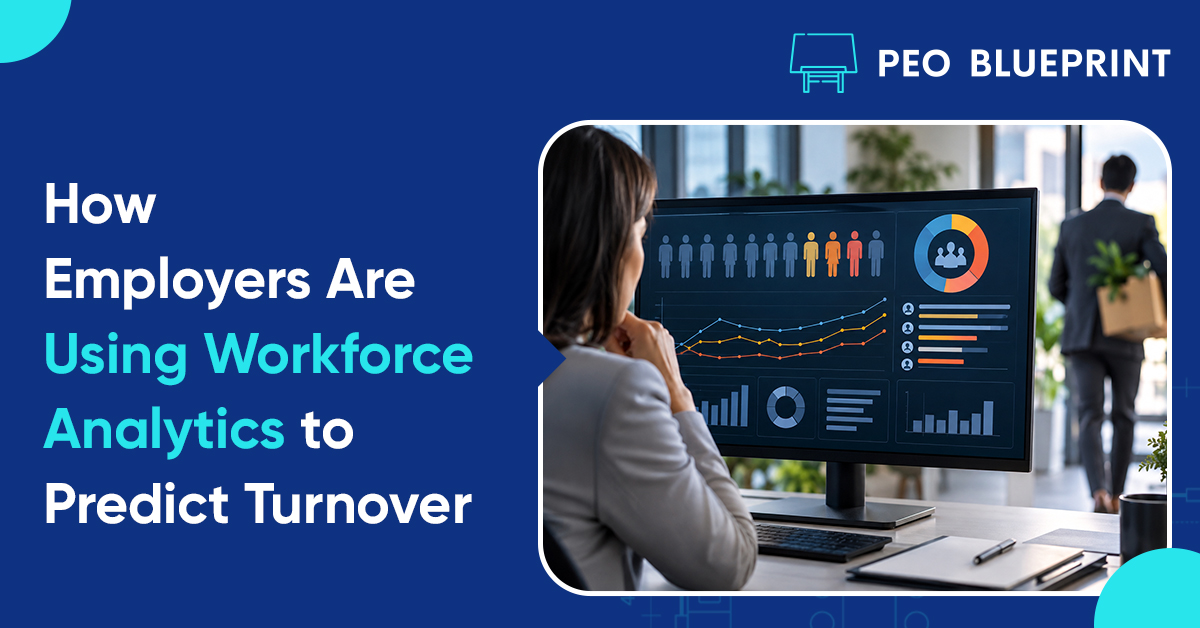
📈 Framework 10: Long-Term Risk Forecasting Through PEO Analytics
Data-driven insights are critical in identifying and mitigating emerging HR risks.
PEOs provide workforce analytics dashboards that track:
- ✔️ Turnover risk
- ✔️ Compensation anomalies
- ✔️ Safety trends
- ✔️ Claims patterns
- ✔️ Compliance gaps
This proactive approach reduces future exposure by identifying patterns before they become liabilities.
🌐 Integrating All Frameworks Into a Unified Zero-Liability HR Operating Model
An actual zero-liability HR environment blends technology, legal infrastructure, documented processes, risk transfer, and compliance automation. PEO structural protection acts as the operating system that binds these together.
The unified model delivers:
- ✔️ Risk-free HR management
- ✔️ Comprehensive legal shield
- ✔️ Elevated employee experience
- ✔️ Cost savings from reduced fines and claims
- ✔️ Operational confidence for leadership teams
Explore deeper frameworks for implementation at:
https://peoblueprint.com/
🛡️ Advanced Risk-Transfer Architecture for Sustained Zero-Liability HR Operations
As organizations mature, the pursuit of a zero-liability HR environment requires deeper integration between legal infrastructure, operational governance, and long-range workforce strategy. At this stage, PEO structural protection evolves from a tactical compliance tool into a strategic risk-transfer architecture that future-proofs the enterprise.
Modern businesses no longer evaluate PEOs solely for administrative support—they depend on them as liability buffers engineered to absorb shocks, manage complexity, and ensure operational continuity in high-risk HR territories.
How Advanced Risk-Transfer Architecture Strengthens HR Protection
- ✔️ Expands coverage scope beyond traditional HR functions
- ✔️ Introduces predictive compliance modeling
- ✔️ Aligns corporate governance with regulatory behavior trends
- ✔️ Establishes liability-neutral workflows across the entire employee lifecycle
- ✔️ Creates contractual insulation from operational missteps
This deeper architecture allows organizations to shift liability away from internal teams and onto a structured, legally fortified PEO ecosystem, thereby strengthening every dimension of workforce management.
📐 Strategic Workforce Controls That Anchor Zero-Liability HR Systems
A mature zero-liability HR environment depends on intentional workforce controls that ensure every action affecting employees is documented, validated, and execute-ready. PEOs support this by embedding systemic safeguards into daily operations.
Core Workforce Controls That Minimize Employer Exposure
- ✔️ Job architecture standards that prevent pay-equity violations
- ✔️ Performance documentation protocols to avoid wrongful termination claims
- ✔️ Discipline frameworks aligned with precedent-based HR practices
- ✔️ Salary band governance to avoid discrimination allegations
- ✔️ Work environment audits that detect risk triggers early
Example:
A healthcare provider deploys PEO-aligned workforce controls and rapidly reduces compliance incidents by implementing consistent, auditable performance review cycles—something previously unmanaged internally.
These structured controls create a compliant backbone that supports organizational growth without increasing liability exposure.
🧬 Talent Acquisition Risk Shielding Through PEO-Based Hiring Governance
Hiring introduces risk long before an employee clocks their first hour. Without structural governance, employers face legal exposure from:
- Poor documentation
- Discriminatory interpretations
- Wage-compliance errors
- Misaligned job postings
- Improper interview procedures
PEO hiring governance provides an insulation layer that eliminates these early risks.
PEO-Driven Hiring Safeguards
- ✔️ Pre-approved, compliant job descriptions
- ✔️ Salary transparency aligned with local laws
- ✔️ Structured interview templates to prevent bias claims
- ✔️ Pre-employment documentation compliance
- ✔️ Legally sound offer letters and employment terms
This design ensures the zero-liability HR environment starts at the recruiting stage—not after onboarding.
🛠️ Cultural Risk Management: The Overlooked Component of Zero-Liability HR
While compliance and documentation form the backbone of HR risk management, organizational culture often determines the actual level of exposure. Toxic or unmanaged culture environments generate:
- Harassment claims
- Discrimination allegations
- Retaliation lawsuits
- Psychological safety complaints
PEOs assist by embedding behavioral governance frameworks that standardize expectations, reduce ambiguity, and reinforce fairness.
Cultural Risk-Mitigation Strategies Supported by PEOs
- ✔️ Engagement analytics that identify culture threats early
- ✔️ Bias-management training delivered by compliance specialists
- ✔️ Structured HR advisory input during conflict escalations
- ✔️ “Culture feedback loops” for employee reporting safety
- ✔️ Centralized documentation for cultural audit readiness
A well-designed culture ecosystem isn’t merely beneficial—it is essential to sustaining a long-term zero-liability HR environment.
💡 Operational Automation That Eliminates Liability Caused by Human Error
A significant portion of HR liability arises not from intentional misconduct but from manual errors—missed dates, incorrect entries, undocumented approvals, and inconsistent workflows.
PEO technology infrastructure eliminates these gaps by automating tasks that generate liability.
Automation Categories That Reduce HR Risk
- ✔️ Timekeeping compliance automation
- ✔️ PTO accrual accuracy enforcement
- ✔️ FMLA and leave administration tracking
- ✔️ Mandatory form updates and distribution
- ✔️ Regulatory alerts delivered in real time
Example:
A SaaS company struggled with PTO miscalculations that previously led to employee disputes. After transitioning to a PEO-led automation ecosystem, discrepancies dropped to zero, eliminating a recurring liability category.
Automation is not merely operational support—it is a strategic guardrail against preventable exposure.
🛰️ Cross-Border Workforce Governance for Expanding Organizations
As businesses expand into additional states—or even internationally—the complexity of staying compliant multiplies. Each region imposes unique obligations, and misalignment creates instant exposure.
A PEO framework ensures cross-border compliance without burdening internal teams.
How PEOs Enable Multi-Region Zero-Liability Operations
- ✔️ Statutory benefits alignment for each jurisdiction
- ✔️ Local tax code adherence
- ✔️ Mandatory leave compliance
- ✔️ Localized employee handbook deployment
- ✔️ Country/state-specific termination frameworks
Organizations with distributed teams rely heavily on PEO structural protection to ensure each location maintains a zero-liability HR environment, even when operating under vastly different regulatory landscapes.
🪜 Governance Maturity Model for Zero-Liability HR Environments
To sustain protection over time, leaders must evaluate their HR governance maturity. PEOs accelerate maturity progression through structured frameworks.
Governance Levels Within the Zero-Liability HR Model
Level 1 — Reactive Compliance
Organizations respond only after regulatory disruptions occur—high exposure, minimal structure.
(Most SMBs, before adopting PEO, support.)
Level 2 — Foundational Controls
Basic documentation and policy alignment are in place, but inconsistencies remain.
Level 3 — Structured Risk Management (With PEO)
Liability is transferred, compliance is automated, and audit readiness is continuous.
Level 4 — Predictive Governance
Analytics forecast risk before exposure occurs.
Level 5 — Zero-Liability HR Environment
A fully fortified HR ecosystem with operational resilience, seamless compliance, and minimized internal responsibility.
PEO structural protection is the only scalable path that efficiently and cost-effectively accelerates organizations through these phases.
🔭 Future-Proofing Your Zero-Liability HR Blueprint Through Workforce Foresight
The future of HR liability will be shaped by:
- AI-driven employment decisions
- Pay transparency mandates
- Globalized remote teams
- New employee privacy regulations
- Rising DEI-related legal expectations
PEOs already engineer frameworks to anticipate these changes—ensuring employers remain guarded against emerging risks before they materialize.
Workforce Foresight Measures PEOs Deploy
- ✔️ Predictive labor-law trend analysis
- ✔️ Compliance simulations for future regulations
- ✔️ Risk scoring for HR processes
- ✔️ Technology audits for algorithmic decision governance
- ✔️ Workforce policy modernization cycles
Organizations that adopt foresight-driven governance maintain a zero-liability HR environment even as markets, laws, and expectations evolve.
🔒 The Executive Advantage: Liability-Free Decision Making
CEOs, founders, and executive teams face personal exposure during HR disputes—something many leaders underestimate.
A PEO framework reduces this dramatically by ensuring:
- Policies are compliant
- Documentation is airtight
- Terminations follow approved protocols
- Neutral professionals handle investigations
- Audits include expert-prepared evidence
Executives benefit from decision-making confidence, knowing that every HR action is structurally validated and legally insulated.
This leadership security is one of the most underappreciated advantages of adopting a zero-liability HR environment.
🧱 The Long-Term Structural Value of PEO-Protected HR Ecosystems
Beyond compliance, cost savings, and risk mitigation, the ultimate business case for PEO integration is structural longevity.
Organizations not only avoid liability—they build:
- ✔️ Operational stability
- ✔️ Workforce trust
- ✔️ Executive confidence
- ✔️ Scalable governance
- ✔️ A future-ready HR infrastructure
A traditional HR department—even a well-run one—cannot match the breadth and depth of risk absorption a PEO provides.
By extending protection across compliance, payroll, benefits, culture, hiring, safety, and analytics, a PEO positions the business to operate with unmatched resilience and organizational clarity.
🏆 Final Blueprint: Achieving a Zero-Liability HR Environment with PEO Structural Protection
A zero-liability HR environment is achievable when organizations shift from reactive HR management to structured, proactive governance grounded in PEO principles.
What you ultimately gain:
- ✔️ Legal and regulatory assurance
- ✔️ Reduced administrative burden
- ✔️ Eliminated HR errors and liabilities
- ✔️ Elevated organizational resilience
- ✔️ Peace of mind for leadership
PEO structural protection is not merely a service—it is a strategic asset that reshapes an organization’s risk profile, solidifies compliance, enhances workforce confidence, and enables long-term operational sustainability.
Business leaders prepared to future-proof their HR ecosystem can explore structured guidance, frameworks, and implementation pathways at: