Every high-growth organization eventually hits the same invisible ceiling — the employer growth gap. It’s the point where operational complexity increases faster than a company’s internal HR capacity can handle. Hiring speeds slow down, compliance pressure intensifies, and operational inefficiencies multiply. This gap widens rapidly during scale-up phases, especially for organizations expanding into new states, markets, or workforce models.
This is where a PEO Growth Strategy becomes transformative.
Professional Employer Organizations (PEOs) are no longer optional add-ons or administrative helpers. They have become core Infrastructure for scaling businesses — delivering enterprise-grade Compliance, Payroll, benefits, HRIS, and workforce management capabilities without the cost or rigidity of traditional HR structures.
This 3000-word guide explains why PEO-driven scalability outperforms traditional HR models, how it solves the employer growth gap, and why today’s most agile companies embed a PEO Growth Strategy into their operational design.
To explore more resources, playbooks, and actionable insights, visit
👉 PEO Blueprint.
🌟 Understanding the Employer Growth Gap
Every scaling business faces a moment where demand grows faster than Infrastructure. This gap becomes especially painful for companies without a strong HR backbone.
What Causes the Employer Growth Gap?
✔️ Rapid hiring without proper onboarding systems
✔️ Compliance is becoming complex across states
✔️ Manual payroll processes breaking under volume
✔️ HR teams stretched thin across too many initiatives
✔️ Rising risk exposure as operations scale
✔️ Administrative bottlenecks are slowing decision-making
Traditional HR teams, especially small ones, cannot support rapid scaling without significant investment in staff, systems, and compliance frameworks. This is why companies fall behind: their growth goals outpace their HR capabilities.
A PEO Growth Strategy closes this gap with agility, expertise, and scalable Infrastructure.
🏗️ Traditional HR Models: Why They Become a Bottleneck
Traditional HR teams were designed for stability, not speed. They excel in predictable environments but struggle when organizations change fast.
Limitations of Traditional HR
✔️ Large overhead costs for additional staff
✔️ SlStaffring cycles due to manual workflows
✔️ Limited compliance expertise across multiple states
✔️ Fragmented HR systems that don’t integrate
✔️ Difficulty managing distributed or remote teams
✔️ Reactive instead of proactive risk prevention
A traditional model requires building HR systems from scratch, layer by layer — Payroll, benefits, Compliance, handbooks, tracking, and audits. This approach is expensive, slow, and often not sustainable for modern growth trajectories.
This is precisely where a PEO Growth Strategy disrupts the historical HR model and offers superior structural efficiency.
🚀 How a PEO Growth Strategy Closes the Scaling Gap
A well-designed PEO Growth Strategy replaces structural limitations with flexible, ready-built systems that scale with the company.
PEOs provide immediate access to:
✔️ Multi-state compliance infrastructure
✔️ Co-employment for risk reduction
✔️ Premium benefits at lower cost
✔️ Automated payroll processing
✔️ HR consulting, templates, and workforce governance
✔️ A unified HRIS for all employee data
Instead of hiring multiple specialists, companies instantly tap into a fully developed HR ecosystem.
This enables executives to focus on expansion while the PEO handles the workforce complexity that typically slows growth.
📈 The Scalability Advantage of PEO-Driven Models
Scaling requires systems that can expand without friction. A traditional HR model grows linearly with headcount, while a PEO Growth Strategy scales exponentially.
Why PEOs Scale Better
✔️ Infrastructure already exists — no need to build
✔️ Costs remain stable even as headcount increases
✔️ HR and Compliance operate consistently across states
✔️ Onboarding processes remain smooth during peak hiring
✔️ Centralized systems avoid duplication and delays
✔️ Risk is distributed, not absorbed fully by the employer
This allows organizations to open new locations, expand to new states, or onboard 100 employees in a week — without hiring additional HR staff.
Traditional models cannot keep up.
🌐 The Multi-State Advantage: Compliance Without the Chaos
One of the most complex challenges scaling companies face is expanding into new states with differing employment regulations.
A PEO Growth Strategy eliminates this burden.
PEOs Handle
✔️ State registrations
✔️ Multi-state payroll tax setup
✔️ Local labor law variations
✔️ Benefits compliance by state
✔️ Required leave administration
✔️ Risk mitigation for misclassification
Example:
A company headquartered in Texas expanding to California, Colorado, and New York would usually need specialized compliance staff. With a PEO, these systems are already built — allowing immediate expansion without hiring a compliance team.
🔐 Risk Mitigation: The PEO Safety Net
Risk is one of the most significant hidden costs of traditional HR. When companies scale quickly, risks compound quickly.
A PEO Growth Strategy reduces risk across the entire workforce lifecycle.
Common Risks PEOs Reduce
✔️ Employee misclassification penalties
✔️ Payroll tax errors
✔️ Wage and hour issues
✔️ Outdated employee handbooks
✔️ Non-compliance across states
✔️ Inaccurate recordkeeping
PEOs actively protect employers through co-employment, shared liability, and rigorous compliance processes. This safety net allows companies to scale without fear of hidden legal exposure.
💰 Cost Efficiency: Where PEOs Outperform Traditional HR Structures
A traditional HR model becomes expensive during scale-up, requiring:
✔️ Additional HR staff
✔️ High software costs
✔️ Compliance consultants
✔️ Benefit negotiations
✔️ Payroll processing tools
✔️ Training investments
A PEO Growth Strategy consolidates all of these expenses into a predictable monthly per-employee fee.
How PEOs Reduce Cost Burden
✔️ Lower benefits premiums through group plans
✔️ Reduced risk penalties
✔️ Fewer compliance-related legal fees
✔️ No software licensing required
✔️ Lower turnover due to better employee experience
For many companies, switching to a PEO decreases operating costs by 20–35%.
💼 Employee Experience: The Hidden Growth Driver
Scaling doesn’t just require systems — it needs people who stay, perform, and thrive.
A PEO Growth Strategy improves employee experience significantly through:
✔️ Competitive benefits packages
✔️ Faster onboarding
✔️ Accurate Payroll every time
✔️ Professional HR support
✔️ Modern HRIS self-service portals
✔️ Streamlined communication channels
Example:
Employees who feel supported stay longer, reducing costs and increasing productivity. Retention becomes a competitive advantage, not a hurdle.
🌱 Startups & Small Businesses: The Biggest Beneficiaries
Startups often hit the employer growth gap early because they attempt to scale with minimal HR infrastructure.
PEOs solve this immediately.
Why Startups Benefit Most
✔️ Immediate HR maturity
✔️ Compliance built in from day one
✔️ Lower cost than hiring full HR teams
✔️ Ability to read count quickly
✔️ No distractions from core mission
A PEO Growth Strategy helps startups stay lean while operating like established companies.
🧩 Mid-Sized Companies: Solving the Complexity Problem
Mid-sized companies often already have HR teams — but not enough capacity to handle growth.
A PEO becomes a strategic extension.
Mid-Sized Businesses Gain
✔️ Additional compliance structure
✔️ Better benefits cost control
✔️ Reduced HR workload
✔️ Unified systems replacing fragmented tools
✔️ Greater ability to geographically
It’s not about replacing HR—it’s about empowering HR.
🏢 Large Organizations: Driving Efficiency at Scale
Even enterprises benefit from PEO partnerships, especially during:
✔️ Mergers & acquisitions
✔️ New market entry
✔️ Rapid hiring cycles
✔️ Temporary expansions
✔️ Remote workforce transitions
A PEO Growth Strategy gives large organizations operational elasticity they can’t achieve internally.
📊 Data Advantage: Turning HR Into a Strategic Asset
PEOs provide advanced HRIS platforms that unify all employee data:
✔️ Payroll
✔️ Time-tracking
✔️ Performance
✔️ Onboarding
✔️ Benefits
✔️ Compliance
This turns HR from a manual function into a data-driven decision engine.
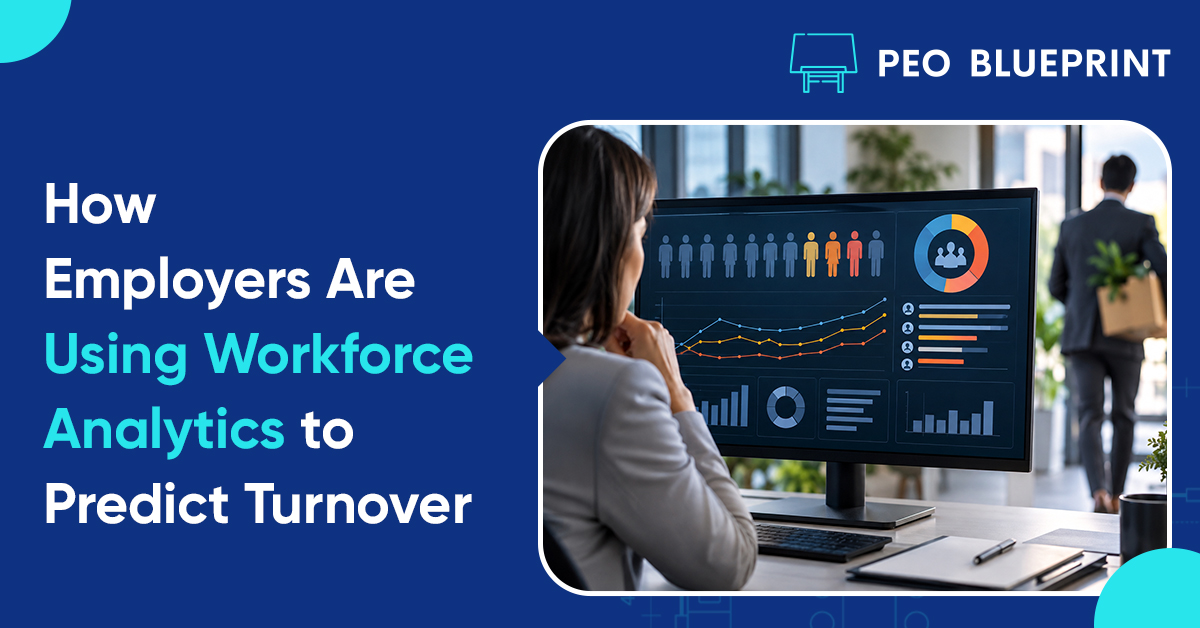
Executives gain insights such as turnover risk, cost per employee, hiring patterns, and compliance trends — all essential for long-term growth.
🪴 Why PEO-Driven Scalability Outperforms Traditional HR Long-Term
When evaluating long-term strategic outcomes, traditional HR models fall short.
A PEO Growth Strategy offers:
✔️ Faster hiring
✔️ Lower risk
✔️ BetRisk cost control
✔️ Higher employee retention
✔️ Shorter expansion timelines
✔️ Greater compliance accuracy
✔️ Stronger HR infrastructure
✔️ Lower legal exposure
The result:
Companies grow faster and smoothly, with fewer operational setbacks.
🔗 Helpful Resource for Implementing Your PEO Growth Strategy
For executive guides, frameworks, templates, and detailed PEO insights, visit:
👉 PEO Blueprint
(Excellent when planning implementation timelines and PEO comparisons.)
🧠 Case Study Scenario: Closing the Growth Gap in Real-Time
Imagine a company scaling from 50 to 200 employees in four states.
Traditional HR Model Challenges:
✔️ Compliance confusion
✔️ Hiring delays
✔️ Benefit cost spikes
✔️ Payroll inconsistencies
✔️ Employee dissatisfaction
PEO Growth Strategy Outcomes:
✔️ Compliance instantly managed
✔️ Multi-state payroll accuracy
✔️ Competitive benefits at lower cost
✔️ Rapid onboarding
✔️ A unified HRIS system
✔️ Higher retention
The company grows without friction — the PEO absorbs complexity.
🌍 How PEOs Support Remote and Hybrid Workforce Dynamics
Modern workforces are distributed. Traditional HR models aren’t built for this.
But a PEO Growth Strategy supports:
✔️ 1099/employee compliance
✔️ Multi-state payroll taxes
✔️ Remote onboarding
✔️ Virtual HR support
✔️ Distributed benefits delivery
This makes remote growth smooth, compliant, and cost-efficient.
🎯 Strategic Leadership: How Executives Benefit From PEO-Driven Growth
Executives gain the ability to: Able to doe faster with less risk
✔️ FocRiskn revenue, not admin
✔️ Predict people-related costs
✔️ Expand into new markets confidently
✔️ Reduce legal exposure
A PEO Growth Strategy aligns directly with organizational leadership objectives.
🌐 Strengthening Cross-Functional Alignment With a PEO-Enabled Framework
One of the most underestimated advantages of a PEO Growth Strategy is its ability to enhance alignment across departments. High-growth companies often experience disconnects between HR, finance, Compliance, and leadership teams — especially as hiring accelerates and complexity rises.
A well-integrated PEO model ensures these functions scale together rather than in isolation.
How PEOs Improve Cross-Functional Alignment
✔️ Finance gaFinancedictable labor cost structures
✔️ HR receives expert guidance and administrative relief
✔️ Operations gain faster workforce deployment
✔️ Leadership gains clearer risk insights
✔️ Compliance teams reduce audit exposure
✔️ Employees enjoy a unified support system
By harmonizing back-end systems, data flows, and responsibilities, companies can scale programs, processes, and initiatives with far fewer internal bottlenecks.
This alignment becomes a strategic multiplier—and a key reason a PEO Growth Strategy outperforms traditional HR in the long term.
🎯 Turning HR From a Cost Center Into a Strategic Partner
Traditional HR teams often become consumed by administrative duties. Payroll issues, benefits questions, audits, handbook updates, and onboarding drain time and energy, leaving little room for innovation.
A PEO Growth Strategy frees HR from repetitive tasks, allowing the department to evolve into a strategic force.
Strategic Outcomes Enabled by PEO Support
✔️ HR can focus on talent development instead of paperwork
✔️ Leaders receive proactive insights instead of reactive alerts
✔️ Employee engagement programs become easier to launch
✔️ Workforce planning becomes a long-term initiative
✔️ People leaders gain bandwidth to build culture, not just manage it
This shift disrupts outdated HR models and positions HR as a value creator rather than a cost center.
🧭 Accelerating Leadership Decision-Making With Real-Time Workforce Intelligence
When scale accelerates, decision-making must become faster, sharper, and less dependent on manual processes. Companies that use traditional systems often rely on outdated reports, incomplete spreadsheets, or siloed data.
A PEO Growth Strategy delivers real-time dashboards and unified workforce intelligence, giving executives immediate clarity into the organization’s health.
Insights Leaders Gain Instantly
✔️ Turnover indicators
✔️ Multi-state labor cost breakdowns
✔️ Overtime and compliance risks
✔️ Hiring pipeline visibility
✔️ Benefits utilization trends
✔️ Market competitiveness of compensation
With accurate data at their fingertips, executives make stronger, faster decisions — a competitive advantage impossible to replicate with outdated HR structures.
🪴 Creating Organizational Stability During High-Growth Transitions
Scaling organizations often face instability as departments stretch beyond capacity. Errors increase, morale dips, and leaders become overwhelmed.
A PEO Growth Strategy adds structural stability during these volatile phases by supplying fully developed systems that immediately absorb operational strain.
How PEOs Create Near-Instant Stability
✔️ Clear policies replace reactive decisions
✔️ Automated workflows reduce human errors
✔️ Compliance oversight prevents unexpected penalties
✔️ Professional HR guidance reduces internal conflicts
✔️ Standardized onboarding prevents bottlenecks
This stability enables companies to grow confidently, knowing they have a fortified backbone supporting their workforce.
💡 Enhancing Innovation Capacity Through Workforce Empowerment
Innovation depends on energy, time, and mental capacity — all of which diminish when teams are weighed down by administrative friction.
A PEO Growth Strategy creates operational breathing room for innovation to thrive.
Innovation Drivers Supported by PEOs
✔️ Leaders regain bandwidth to build new initiatives
✔️ Staff receiver career paths
✔️ Employees gain predictable support systems
✔️ HR can focus on culture, engagement, and development
✔️ Workforce planning becomes proactive
Removing administrative overload empowers teams to think creatively, collaborate more freely, and push growth initiatives forward with momentum.
🌍 Supporting Global-Ready Growth Through Strong HR Foundations
Even companies scaling only within the U.S. benefit from a global-ready HR infrastructure. As organizations consider international expansion, the foundational structure provided by a PEO Growth Strategy becomes an asset.
Global-Ready Benefits of PEO Enablement
✔️ Compliance culture already established
✔️ Standardized documentation and workflows
✔️ Centralized technology that scales
✔️ Employee data structured for international integration
✔️ Risk frameworks that adapt across borders
While PEOs themselves are U.S.-focused, the systems and discipline they create prepare companies for cross-border workforce expansion — minimizing friction later.
🛰️ Future-Proofing Workforce Architecture With Scalable HR Technology
Technology is at the core of modern workforce management. Companies relying on outdated HR tools quickly find themselves stuck with processes that can’t handle scale.
A PEO Growth Strategy gives companies immediate access to enterprise-grade HRIS platforms without licensing costs.
Technology Advantages Provided by PEOs
✔️ Applicant tracking systems
✔️ Performance management tools
✔️ Benefits enrollment portals
✔️ Time and attendance systems
✔️ Automated payroll engines
✔️ Reporting dashboards
This future-focused Infrastructure supports ongoing growth without constant reinvestment.
🧩 Creating a Consistent Employee Experience Across Distributed Teams
Distributed teams are now the norm. But traditional HR models struggle to deliver a unified employee experience across locations.
A PEO Growth Strategy creates a standardized journey for every employee, regardless of location.
Experience Consistency Enabled by PEOs
✔️ Consistent onboarding
✔️ Reliable Payroll
✔️ Equal benefits access
✔️ Clear support channels
✔️ Unified handbooks and policies
✔️ Standardized communication
This consistency strengthens company culture and reduces turnover — especially in remote environments.
🛠️ Reducing Infrastructure Burden So Operational Leaders Can Scale Faster
Physical HR infrastructure — onboarding paperwork, compliance filings, benefit renewals, state registrations — consumes enormous amounts of time.
A PEO Growth Strategy obliterates these burdens.
Operational Efficiency Gains
✔️ Fewer internal administrative cycles
✔️ No need to build HR departments prematurely
✔️ Faster speed-to-hire
✔️ Leaner operational teams
✔️ Simplified annual audits
✔️ Automated timekeeping workflows
The result is a more agile company with fewer inefficiencies dragging down growth.
🗺️ Designing a PEO Onboarding Plan That Keeps Culture Intact
Some leaders worry that outsourcing HR functions could dilute culture. The opposite is true when a PEO Growth Strategy is implemented strategically.
Ways PEOs Support Culture
✔️ Faster resolution of employee issues
✔️ Better benefits that boost morale
✔️ Clear communication channels
✔️ Professionalized HR guidance
✔️ Consistent experience across all departments
Culture thrives when employees feel supported — not when HR is overwhelmed.
🔗 Leveraging PEO Blueprint as Your Strategic Resource
For leadership teams seeking deeper frameworks, comparative guides, and implementation playbooks,
PEO Blueprint offers expert, research-backed knowledge to strengthen decision-making.
Explore tools here:
👉 PEO Blueprint
These resources serve as essential support when designing or optimizing your PEO Growth Strategy.
🔮 Future Outlook: Why PEOs Are Becoming the Default Growth Infrastructure
Globalization, remote work, multi-state hiring, and compliance complexity are increasing rapidly.
Traditional HR models cannot keep up.
PEOs are becoming the growth infrastructure of the future because they support:
✔️ Elastic scaling
✔️ Immediate Compliance
✔️ Workforce mobility
✔️ Predictable cost structures
✔️ Stronger employee experience
The future is agile — and PEOs are built for agility.
🏆 Conclusion: The PEO Growth Strategy Is the Competitive Advantage of Modern Employers
The employer growth gap isn’t a temporary problem — it’s structural. Businesses scaling without the proper HR infrastructure inevitably strain operations, lose momentum, and expose themselves to risk.
A PEO Growth Strategy eliminates these constraints with ready-built systems, deep compliance support, enterprise-level benefits, and scalable HR technology.
Companies that embrace PEO-driven scalability grow faster, operate smarter, and outperform competitors relying on outdated HR models.
PEOs are no longer optional.
They are the backbone of modern employer growth.