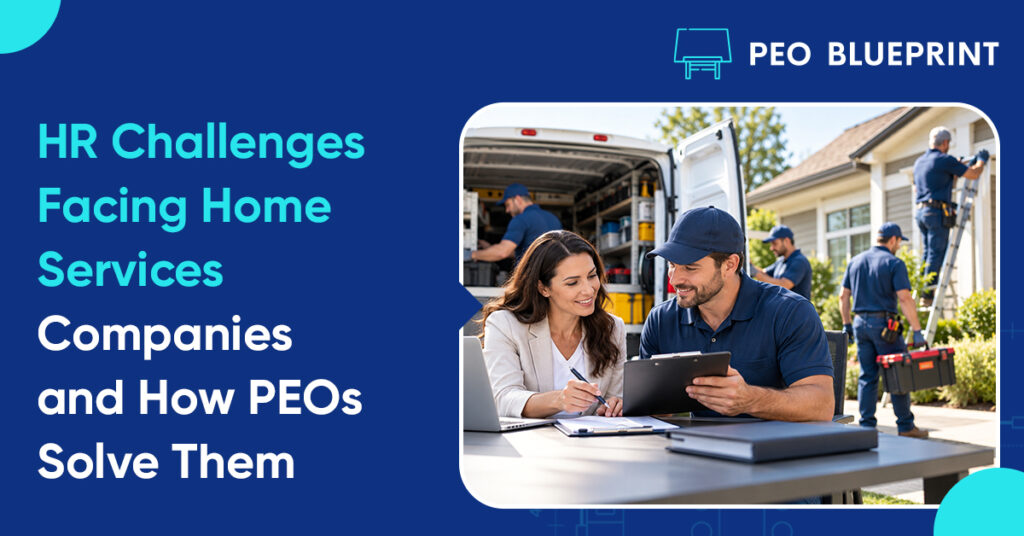
Home services companies play an essential role in keeping homes and businesses safe, comfortable, and functional. Plumbing, electrical, HVAC, landscaping, cleaning, and repair businesses depend on skilled employees who deliver reliable work and excellent customer service. However, managing the workforce behind these services creates challenges that can affect profitability, productivity, and long-term growth.
HR Challenges Facing Home Services businesses include finding qualified technicians, retaining experienced employees, managing payroll, following employment laws, and maintaining workplace safety. These responsibilities become harder when owners must also manage customer calls, schedule appointments, purchase equipment, and oversee daily operations.
Many small and growing companies lack the time or resources to maintain a full internal human resources department. Professional employer organizations, commonly known as PEOs, offer an alternative by providing services such as payroll administration, benefits management, HR guidance, and compliance support.
Understanding how PEOs address these issues can help business owners build stronger teams, reduce administrative pressure, and create a more stable foundation for growth.
1. Understanding the HR Challenges Facing Home Services Companies
Home services businesses operate differently from many office-based organizations. Employees frequently travel between job sites, work independently, handle equipment, and interact directly with customers. Their schedules may change quickly because of emergencies, weather conditions, seasonal demand, and appointment cancellations.
These conditions make workforce management more complicated. Owners must coordinate employees across multiple locations while ensuring accurate payroll, consistent service standards, and compliance with applicable employment requirements.
Common workforce management problems include:
• Difficulty recruiting skilled technicians.
• High employee turnover and rising recruitment costs.
• Complicated payroll and overtime calculations.
• Limited access to competitive employee benefits.
• Workplace injuries and safety concerns.
• Changing labor laws and documentation requirements.
• Inconsistent employee training and performance management.
• Seasonal staffing shortages and scheduling conflicts.
When businesses handle these responsibilities without reliable systems, small administrative mistakes can develop into expensive operational problems. Delayed payroll, incomplete employee records, and poor communication can damage employee trust and reduce service quality.
Effective HR management helps connect employee performance with business results. Companies that address workforce problems early can improve employee satisfaction, maintain more reliable operations, and protect their reputation.
2. Recruiting Qualified Technicians in a Competitive Market
Finding experienced technicians remains a major challenge for home services employers. Electricians, plumbers, HVAC specialists, and other skilled workers need technical knowledge, practical experience, and the ability to solve problems independently.
Competition for qualified workers can make recruitment expensive and time-consuming. Smaller companies may struggle to match the wages, benefits, training opportunities, and career development programs larger employers offer.
Recruitment also involves more than reviewing applications. Businesses must verify relevant credentials, assess technical abilities, check references when appropriate, and determine whether candidates can communicate professionally with customers.
How PEOs help improve recruitment
A PEO can support the recruitment process by helping employers develop job descriptions, organize hiring documentation, establish consistent onboarding procedures, and review compensation and benefits practices.
Some providers offer access to recruitment tools or additional employment services. However, these offerings vary, and businesses should confirm exactly what their selected provider includes.
PEOs do not automatically solve technician shortages. Employers still need strong recruitment strategies, competitive employment packages, and a positive workplace culture.
Companies can strengthen recruitment by:
• Advertising positions through relevant trade schools and industry networks.
• Offering apprenticeships and structured training opportunities.
• Explaining compensation, benefits, and advancement opportunities clearly.
• Responding promptly to qualified candidates.
• Building relationships with technical education programs.
A consistent hiring process helps businesses attract suitable employees while reducing unnecessary delays.
3. Reducing Employee Turnover and Improving Retention
Employee turnover creates substantial disruption for home services businesses. When an experienced technician leaves, the company loses practical knowledge, customer familiarity, and productive capacity. Recruiting and training a replacement requires additional time and money.
Turnover may result from low pay, poor management, limited career opportunities, unpredictable schedules, or excessive workloads. Physically demanding work can also contribute to fatigue when employees lack appropriate equipment, recovery time, or management support.
Why employee retention matters
Experienced employees often complete work more efficiently because they understand company procedures, customer expectations, and common technical problems. They may also help train newer team members and maintain consistent service standards.
High turnover forces supervisors to spend more time recruiting and training instead of improving operations. It can also increase pressure on remaining employees, creating a cycle of dissatisfaction and further resignations.
How PEOs support retention
PEOs can help businesses improve HR policies, organize employee feedback, administer benefits, and establish consistent performance management procedures. These services can help employers create a more professional and supportive employee experience.
Business owners should also review employee feedback, exit interviews, turnover patterns, and reasons for resignation. This information can reveal whether compensation, management practices, scheduling, or workplace conditions need improvement.
Practical retention strategies include:
✅ Recognizing strong performance and customer service.
✅ Providing clear opportunities for promotion and skill development.
✅ Reviewing wages and benefits against local competition.
✅ Creating reasonable schedules and managing overtime carefully.
✅ Addressing employee concerns promptly and fairly.
A PEO can support the administrative foundation, but effective leadership remains essential for retaining skilled workers.
4. Simplifying Payroll and Time Tracking
Payroll becomes complicated when technicians work across multiple job sites, earn overtime, receive commissions, or follow changing schedules. Some employees may work hourly, while others receive salaries or performance-based compensation.
Accurate payroll requires complete time records, correct employee classifications, and calculations that follow applicable wage laws. Manual spreadsheets and disconnected systems increase the likelihood of errors.
Common payroll challenges include:
• Recording hours worked across different locations.
• Calculating overtime and applicable wage rates.
• Processing commissions, bonuses, and approved reimbursements.
• Managing payroll deductions and tax reporting.
• Correcting missed hours and payment errors.
• Maintaining accurate payroll records.
Payroll mistakes can frustrate employees and create compliance risks. Even small errors may require repeated corrections, additional communication, and management attention.
How PEOs simplify payroll
A PEO can centralize payroll processing, maintain employee information, calculate applicable deductions, and support payroll tax administration under the agreed service arrangement.
Many providers offer online systems that allow employees to review pay statements and access relevant documents. Managers may also gain reporting tools that help them review payroll expenses and workforce information.
Before choosing a provider, employers should understand which payroll tasks are included and which remain their responsibility. They should also confirm system integrations, correction procedures, processing deadlines, and service fees.
Accurate timekeeping remains necessary. Businesses must ensure employees record their working time correctly and that supervisors approve hours according to established procedures.
5. Managing Employment Law and Compliance Requirements
Home services employers must follow applicable employment laws covering wages, overtime, workplace discrimination, employee classification, leave, recordkeeping, and other workplace matters.
Requirements may differ across states and local jurisdictions. Businesses operating in several locations must understand the rules that apply to employees in each jurisdiction.
Compliance becomes especially difficult when owners rely on outdated documents, informal policies, or assumptions about employment practices. A mistake may lead to employee disputes, penalties, back-pay obligations, or legal expenses.
Common compliance risks
Incorrect worker classification is one important concern. A company cannot automatically classify a technician as an independent contractor simply because the arrangement appears convenient. The actual working relationship and applicable legal standards determine the correct classification.
Businesses must also maintain accurate employment records, communicate workplace policies clearly, and follow applicable requirements for wage payments and employee treatment.
The U.S. Department of Labor provides guidance on federal wage-and-hour requirements.
How PEOs support compliance
PEOs can provide HR guidance, assist with employee documentation, support policy development, and communicate relevant regulatory updates. Depending on the agreement, they may also help prepare employee handbooks and organize required employment records.
However, outsourcing HR does not eliminate every legal responsibility. Employers must provide accurate information, follow applicable requirements, and manage workplace conduct appropriately.
For complex employment questions, businesses may need advice from qualified legal professionals. A PEO should complement a company’s compliance strategy, not replace sound management and legal judgment.
6. Offering Competitive Employee Benefits
Employee benefits can influence recruitment, retention, and job satisfaction. Health insurance, retirement plans, paid leave, and other benefits can make an employer more attractive to skilled technicians.
Smaller home services companies may struggle to offer competitive benefits because of rising costs and limited administrative resources. Owners must balance employee needs with cash flow, equipment purchases, insurance expenses, and other operating costs.
Managing enrollment, eligibility, employee questions, and benefit documentation can also consume considerable time.
How PEOs help with benefits administration
Some PEOs provide access to employee benefits arrangements and support enrollment, eligibility administration, and related paperwork. Depending on the provider and arrangement, this can give smaller employers access to benefit options that may otherwise be difficult to administer.
PEOs may also help owners understand plan structures and compare administrative requirements. However, access to a PEO does not guarantee lower premiums or identical benefits across participating businesses.
Before selecting a benefits arrangement, companies should review:
• Monthly premiums and employer contributions.
• Employee deductibles and out-of-pocket costs.
• Provider networks and coverage limitations.
• Retirement plan options and administrative requirements.
• Renewal terms and potential changes in pricing.
• Employee eligibility rules and enrollment deadlines.
The right benefits strategy should support employee well-being while remaining financially sustainable. Clear communication also helps employees understand available options and make informed decisions.
7. Improving Workplace Safety and Injury Prevention
Home services employees face hazards that office-based workers may rarely encounter. Electricians work around electrical systems, HVAC technicians handle equipment and refrigerants, and plumbers may work in confined spaces and handle heavy materials in difficult conditions.
Landscaping and maintenance employees may face risks from power tools, vehicles, lifting, repetitive movements, and extreme temperatures. Without appropriate training and safety procedures, these hazards can cause injuries and disrupt business operations.
Building a safer workplace
Employers should identify job-specific hazards, provide appropriate protective equipment, train employees, and establish clear incident-reporting procedures.
Supervisors should reinforce safe work practices rather than reward employees for completing jobs quickly at the expense of safety. Workers must understand when to stop a task, request assistance, or report unsafe conditions.
The Occupational Safety and Health Administration provides workplace safety and health resources.
How PEOs contribute
Depending on the agreement, a PEO may provide safety resources, workers’ compensation administration, risk-management guidance, claims coordination, and documentation support.
These services can help employers organize safety processes and respond more consistently to workplace incidents. However, a PEO cannot replace job-specific safety expertise, suitable equipment, or effective field supervision.
Businesses must continue to maintain safe working conditions and comply with applicable workplace safety requirements.
8. Managing Workers’ Compensation and Insurance
Workers’ compensation is an important consideration for businesses whose employees perform physically demanding tasks. Coverage requirements vary by jurisdiction, and employers must understand the rules that apply to their workforce.
When an employee experiences a workplace injury, the company may need to report the incident, coordinate documentation, communicate with relevant parties, and support an appropriate return-to-work process.
These responsibilities can become difficult when the owner also manages scheduling, customer service, and business finances.
How PEOs can help
Some PEO arrangements include workers’ compensation coverage or related administrative services. Providers may assist with claims documentation, risk-management resources, and communication during the claims process.
Businesses should verify how coverage is structured, how premiums are calculated, who handles claims, and which responsibilities remain with the employer.
They should also examine the financial terms carefully. A lower administrative fee does not necessarily mean lower total insurance costs.
Strong injury prevention, accurate records, and timely communication remain essential, whether or not a PEO provides administrative assistance.
9. Handling Seasonal Staffing and Scheduling Challenges
Demand for home services often changes throughout the year. HVAC companies may experience increased demand during extreme temperatures, landscaping businesses may become busier in warmer months, and plumbing companies may receive more emergency calls during severe weather.
These fluctuations can create staffing shortages during peak periods and excess labor capacity during slower months. Poor scheduling may lead to missed appointments, unnecessary overtime, employee fatigue, and dissatisfied customers.
Improving workforce planning
Companies should review historical demand, employee availability, travel times, and appointment patterns. Field-service management software can help dispatchers assign work based on location, skill requirements, and urgency.
Managers should also establish clear policies for attendance, overtime approval, schedule changes, and emergency assignments.
How PEOs support scheduling needs
PEOs can help with payroll administration, employee documentation, seasonal hiring, and HR guidance for changing work schedules.
They may help businesses establish consistent policies for temporary employees, overtime, and leave. However, routing, dispatching, and appointment management generally remain operational responsibilities.
By combining workforce planning with reliable HR administration, companies can respond to changing demand without placing unnecessary pressure on employees.
10. Strengthening Employee Training and Development
Home services businesses depend on employees who understand equipment, safety procedures, customer expectations, and service standards. As technology and industry practices evolve, workers need regular training to maintain their skills.
Poor training can lead to repeat service calls, inconsistent artistry, customer complaints, equipment damage, and avoidable safety incidents.
New employees need structured onboarding, while experienced technicians may require advanced technical instruction or leadership development.
How PEOs support employee development
Some PEOs provide onboarding resources, training materials, learning platforms, or performance management tools. These services can help businesses establish consistent processes for communicating expectations and tracking employee development.
Companies should supplement general HR resources with technical training that reflects their specific services, equipment, and safety requirements.
Effective training programs may include:
• Equipment operation and maintenance procedures.
• Workplace safety and emergency response.
• Customer communication and conflict resolution.
• Service documentation and quality standards.
• Leadership training for experienced technicians.
Employers should also create clear career paths. Technicians who can progress toward lead roles, supervisory positions, or specialized certifications may have stronger reasons to remain with the company.
11. Creating Consistent Performance Management Systems
Performance management helps employers communicate expectations, recognize achievements, and address problems fairly. In home services, performance involves more than the number of jobs completed each day.
Companies should also evaluate artistry, punctuality, customer feedback, safety compliance, teamwork, and documentation quality.
Without clear standards, employees may receive inconsistent feedback. Managers may also struggle to explain why one technician receives a promotion or bonus while another does not.
Establishing effective performance reviews
Businesses should define measurable expectations for each role and review performance regularly. Managers should provide specific examples, discuss areas for improvement, and identify the training or resources employees need.
A PEO can help create review templates, organize employee documentation, and guide disciplinary procedures or other sensitive workplace decisions.
However, managers must still deliver honest feedback and apply policies consistently. A PEO can support the process, but it cannot replace effective leadership.
Fair performance management helps employees understand expectations and gives businesses a structured way to improve service quality.
12. Protecting Employee Records and HR Information
Home services companies collect sensitive employee information during hiring, payroll, benefits enrollment, and employment management. These records may contain personal details, tax information, banking information, compensation records, and benefit selections.
When businesses store documents across email accounts, spreadsheets, and paper folders, managing the information can become difficult. Poor access controls may also expose confidential data to unauthorized individuals.
How PEOs support HR data management
Many PEOs offer centralized platforms for employee records, payroll information, and HR documentation. These systems can simplify document retrieval and reduce reliance on scattered files.
Before selecting a provider, employers should evaluate security practices, access permissions, data-handling policies, and incident-response procedures.
Practical safeguards include:
✅ Restricting access to sensitive information based on job responsibilities.
✅ Using secure systems for storing and transmitting employee records.
✅ Training staff to identify phishing attempts and suspicious requests.
✅ Reviewing user permissions when employees change roles or leave.
✅ Establishing clear procedures for retaining and disposing of records.
Businesses should also understand how their data will be transferred or returned if the PEO relationship ends. Centralized administration can improve organization, but both parties must take information security seriously.
13. Improving Employee Engagement and Customer Satisfaction
Home services employees represent the company whenever they enter a customer’s property. Their professionalism, communication, punctuality, and attitude can influence customer trust and repeat business.
When employees feel unsupported or overworked, service quality may suffer. Poor communication, missed appointments, and inconsistent customer interactions can lead to complaints and negative reviews.
Connecting employee experience with business results
Employers should provide reliable equipment, communicate expectations clearly, and recognize employees who deliver excellent service. They should also make it easy for workers to raise concerns about workload, safety, scheduling, and management.
A PEO can help establish employee feedback processes, develop workplace policies, and support consistent communication practices.
However, engagement requires more than formal procedures. Employees need supervisors who listen, treat people fairly, and follow through on commitments.
Businesses should review employee feedback and take practical action when recurring concerns appear. A supportive workplace can help employees deliver better service while strengthening the company’s reputation.
14. Supporting Business Growth Without Expanding Administrative Burdens
As home services companies grow, their workforce becomes more complex. A business that once employed a handful of technicians may eventually need several field teams, dispatchers, supervisors, office staff, and recruitment support.
Informal HR processes may become unreliable as headcount increases. Payroll errors, inconsistent onboarding, incomplete records, and unclear responsibilities can increase risk.
How PEOs support business expansion
A PEO can provide access to HR administration and expertise without requiring a business to build every HR function internally.
Depending on the agreement, services may include payroll, benefits administration, onboarding, employee relations support, and compliance guidance.
This can help owners focus on customer service, sales, operational planning, and business development.
Before outsourcing, businesses should review their existing processes and identify the responsibilities that create the greatest administrative burden. They should also consider whether payroll systems, accounting software, and field-service tools can integrate with the PEO platform.
A scalable HR structure should support future growth while maintaining clear accountability.
15. Choosing the Right PEO for a Home Services Business
Not every PEO offers the same services, pricing, technology, or industry experience. Companies should compare providers carefully and select one that understands the needs of field-based employees.
A provider familiar with HVAC, plumbing, electrical, cleaning, or landscaping businesses may better understand the challenges associated with mobile workforces and seasonal demand.
Important factors to evaluate
- Industry experience: Ask whether the provider works with businesses similar to yours.
- Service coverage: Confirm which HR, payroll, benefits, and compliance services are included.
- Pricing transparency: Request a breakdown of administrative fees, insurance expenses, benefits costs, and additional charges.
- Compliance support: Understand how the provider communicates regulatory changes and assists with employment documentation.
- Technology: Review payroll tools, reporting, employee self-service, and software integrations.
- Customer support: Ask how quickly the provider responds to urgent payroll and HR questions.
- Contract terms: Review termination conditions, renewal provisions, and employee data transfer procedures.
- Responsibility allocation: Confirm which decisions and legal obligations remain with your business.
A thorough evaluation helps owners understand the provider’s actual value instead of choosing solely on advertised pricing.
16. Implementing PEO Services Successfully
Selecting a provider is only the beginning. Businesses must prepare for the transition, communicate changes clearly, and establish procedures for working with the PEO.
A structured implementation plan reduces confusion and ensures employees understand how the new system will affect payroll, benefits, and HR support.
Steps for a smoother transition
- Review current processes. Document existing payroll, recruitment, benefits, and employee record procedures.
- Identify priorities. Determine which problems create the greatest financial, administrative, or compliance risks.
- Compare providers. Evaluate service coverage, costs, technology, industry experience, and contract terms.
- Assign responsibilities. Identify who will approve payroll, communicate with the PEO, and address employee questions.
- Prepare employee records. Check that required information is accurate and complete before transferring it.
- Communicate with employees. Explain the changes, relevant deadlines, and available support channels.
- Monitor results. Track payroll accuracy, hiring timelines, administrative hours, turnover, and employee feedback.
Businesses should review performance regularly and address problems promptly. Clear communication and well-defined responsibilities help the relationship deliver practical value.
17. Measuring the Results of Better HR Management
Businesses should measure the impact of HR improvements rather than assuming that outsourcing automatically produces savings.
Useful performance indicators include employee turnover, recruitment time, payroll accuracy, overtime expenses, administrative hours, and training completion rates.
Companies can also review customer satisfaction, repeat service calls, appointment completion rates, and employee feedback to understand how workforce practices affect operational performance.
A PEO’s contribution should be measured against the services it actually provides. For example, a provider may reduce payroll administration time without directly increasing technician productivity. These outcomes should be evaluated separately.
Businesses should compare results across meaningful periods and account for seasonal changes. This provides a more accurate picture of whether the new arrangement is improving operations.
Clear performance measures help owners make informed decisions about HR investments. They also identify areas where additional training, management changes, or process improvements may be necessary.
Conclusion
HR Challenges Facing Home Services companies can affect recruitment, employee retention, payroll accuracy, workplace safety, compliance, and long-term growth. When owners manage these responsibilities without sufficient support, administrative demands can take attention away from customers and daily operations.
Professional employer organizations offer a practical way to manage selected HR responsibilities through payroll administration, benefits support, employee documentation, and HR guidance. The right provider can help establish more consistent processes while letting business owners focus on building teams and serving customers.
However, outsourcing HR is not a substitute for strong leadership, safe working conditions, effective training, or responsible management. Businesses must evaluate provider capabilities, contractual responsibilities, costs, and service quality before deciding.
Home services companies should begin by identifying their most pressing workforce problems and determining which responsibilities would benefit from external support. They can then compare providers and set clear measures to evaluate results.
For additional guidance on professional employer organizations and HR outsourcing, visit PEO Blueprint. With a suitable HR strategy and the right support, home services businesses can strengthen employee relationships, reduce administrative pressure, and create a more reliable foundation for sustainable growth.