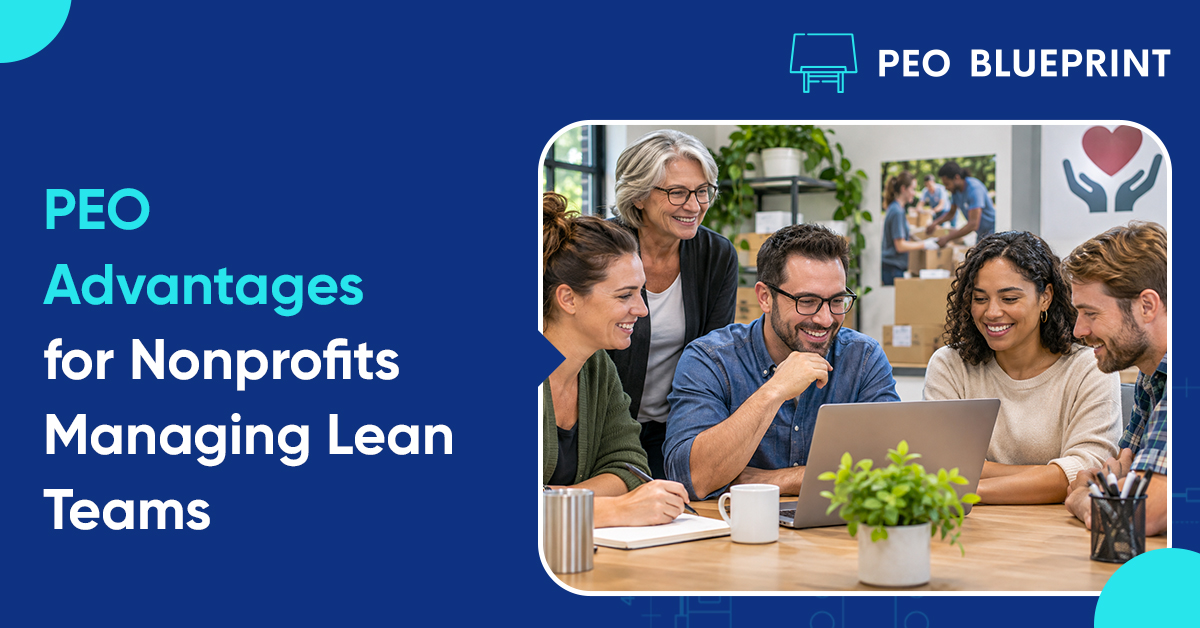
Nonprofit organizations operate with a unique responsibility. They must deliver meaningful services, support communities, manage limited funding, and maintain public trust. Unlike many for-profit businesses, nonprofits often work with smaller administrative teams and tight operating budgets. Every dollar and every employee must contribute to the organization’s mission.
However, managing employees involves much more than hiring people and distributing salaries. Payroll processing, employee benefits, workplace policies, recruitment, tax reporting, and regulatory compliance all require time, knowledge, and consistent attention. These responsibilities can become overwhelming when a nonprofit has only a small HR department or relies on an executive director to manage administrative work.
This is where understanding PEO Advantages for nonprofits matters. A Professional Employer Organization (PEO) provides Access to professional HR support, payroll administration, employee benefits, and compliance resources through a co-employment arrangement.
Instead of building a large internal HR department, nonprofits can work with an experienced PEO to manage essential employment responsibilities. This arrangement lets leadership teams spend less time on administrative tasks and more time advancing their organizational mission.
For nonprofits managing lean teams, a PEO can provide operational support, improve employee experiences, and create a more structured approach to workforce management. Understanding these advantages can help nonprofit leaders decide whether outsourcing HR functions is the right investment.
Understanding How a PEO Works for Nonprofit Organizations
A Professional Employer Organization partners with businesses and nonprofits to provide comprehensive human resources services. The relationship generally operates through a co-employment arrangement in which the nonprofit and PEO share certain employer responsibilities.
The nonprofit continues to direct its daily operations, supervise employees, set organizational priorities, and deliver services. Meanwhile, the PEO provides administrative support for agreed-upon employment functions.
These services commonly include:
• Payroll processing and administration.
• Employee benefits administration.
• HR policy development and documentation.
• Employment compliance assistance.
• Employee onboarding and offboarding.
• Workers’ compensation administration.
• Workplace training and employee support.
The specific responsibilities depend on the service agreement and applicable employment laws.
For example, a community nonprofit with 18 employees might have one operations manager handling recruitment, payroll coordination, employee questions, and general administration. These responsibilities can take time away from fundraising, community outreach, and program development.
By partnering with a PEO, the organization can access professional HR resources without hiring several additional administrative employees.
The primary objective is not to transfer the nonprofit’s mission or management authority. It is to make workforce administration more manageable.
10 Major PEO Advantages for Nonprofits Managing Lean Teams
Nonprofits need practical solutions that improve operational efficiency without creating unnecessary expenses. A PEO can address several workforce challenges through centralized HR services and professional administrative support.
Here are ten significant advantages nonprofit leaders should understand.
1. Reduced Administrative Workload
Small nonprofit teams frequently operate with overlapping responsibilities. An executive director might manage organizational strategy, donor relationships, grant applications, recruitment, payroll approvals, and employee concerns.
When administrative work increases, leadership has less time to focus on strategic priorities.
A PEO helps reduce this pressure by handling routine HR administration. Depending on the agreement, the provider can manage payroll calculations, maintain employee records, coordinate benefits enrollment, and support onboarding processes.
This creates a more organized administrative structure without requiring the nonprofit to expand its internal HR department.
The benefits extend beyond leadership. Program managers and department supervisors can also spend less time resolving routine employment questions.
How this helps nonprofit organizations:
✅ Reduces repetitive administrative responsibilities.
✅ Creates more time for mission-related activities.
✅ Helps leadership concentrate on fundraising and organizational development.
✅ Improves consistency across employee management processes.
For organizations with limited administrative capacity, reducing routine HR work can create meaningful operational improvements.
2. More Accessible Employee Benefits
Attracting qualified employees can be difficult for nonprofits. Many organizations cannot compete directly with larger companies on salary alone.
However, compensation includes more than a paycheck. Health insurance, retirement plans, paid time off, and other workplace benefits influence employee decisions.
PEOs can provide Access to Accessnce benefit programs through their broader service arrangements. Because a PEO works with multiple client organizations, it may have Access to Accessnce and benefits arrangements that an individual small nonprofit could struggle to secure independently.
Availability, eligibility, pricing, and plan options vary by provider and location.
For nonprofits, this creates an opportunity to evaluate more competitive employee benefits without establishing an extensive benefits administration department.
Potential benefits include:
✅ Access to a broader range of health insurance options.
✅ Retirement plan administration support.
✅ More organized benefits enrollment.
✅ Professional assistance with employee benefits questions.
✅ Improved employee satisfaction and retention opportunities.
Better benefits can strengthen recruitment efforts and help nonprofits demonstrate that they value their employees.
3. Improved Payroll Accuracy and Efficiency
Payroll management requires accuracy, consistency, and attention to deadlines. Even small errors can create employee frustration and compliance problems.
Nonprofits must calculate wages, manage deductions, maintain payroll records, and complete applicable tax reporting. Organizations must also understand how their tax-exempt status affects specific employment tax obligations.
A PEO can manage payroll administration through an organized system that processes employee compensation and maintains relevant records.
Its responsibilities may include:
• Collecting and maintaining payroll information.
• Calculating regular wages and applicable deductions.
• Processing direct deposits.
• Managing payroll schedules.
• Preparing payroll reports.
• Supporting employment tax administration.
The IRS explains that tax-exempt organizations still have important employment tax responsibilities. These generally include withholding applicable taxes, depositing employment taxes, and filing required returns.
See the IRS employment tax requirements for tax-exempt organizations for additional guidance.
A PEO can help nonprofits establish more consistent payroll processes while reducing the administrative burden on internal employees.
However, organizations should understand the distinction between ordinary payroll outsourcing and a certified PEO arrangement. Contractual responsibilities and applicable tax rules determine which party is responsible for specific obligations.
4. Stronger HR Compliance Management
Employment regulations can be challenging for nonprofit organizations, particularly when they operate across multiple locations or employ different categories of workers.
Nonprofits must consider applicable federal, state, and local employment requirements. These may involve minimum wage, overtime, employee classification, workplace safety, discrimination prevention, recordkeeping, and employee leave.
A PEO provides Access to Accessfessionals who can help organizations understand and manage these responsibilities.
For example, a nonprofit that hires temporary program coordinators, administrative employees, and part-time outreach workers may need to review different employment arrangements and maintain accurate documentation.
A PEO can help develop consistent processes and identify potential compliance gaps.
Important compliance areas include:
✅ Employee classification and documentation.
✅ Payroll and employment tax administration.
✅ Wage and hour requirements.
✅ Employee handbook development.
✅ Workplace policies and procedures.
✅ Employment recordkeeping.
The U.S. Department of Labor provides guidance on how the Fair Labor Standards Act applies to nonprofit organizations. Its nonprofit organization compliance guidance explains important coverage considerations.
A nonprofit should never assume that its tax-exempt status automatically removes all employment law obligations.
A qualified PEO can provide valuable guidance, but nonprofit leadership should continue monitoring compliance and obtain legal advice when necessary.
5. Better Recruitment and Employee Retention
Nonprofits depend on talented employees who believe in their mission. However, recruiting and retaining qualified professionals can become difficult when organizations have limited budgets and minimal HR resources.
A PEO can help improve the employee experience by supporting recruitment administration, onboarding, benefits communication, and workforce policies.
A well-organized hiring process creates a positive first impression. Employees receive clearer information about their responsibilities, compensation, workplace policies, and benefits.
This consistency matters because employees want to understand what their organization expects from them and what support they can expect.
A PEO can also help nonprofit leaders identify opportunities to improve employee retention through structured HR practices.
Practical advantages include:
✅ More organized employee onboarding.
✅ Consistent employment documentation.
✅ Better communication about benefits.
✅ Standardized HR policies.
✅ Support for employee Supportment initiatives.
Although a PEO cannot guarantee lower turnover, better HR administration can help create a more supportive working environment.
6. Access to Professional HR Expertise
Many nonprofits cannot justify hiring a full-time HR director, particularly when their workforce is relatively small.
However, not having an HR specialist does not eliminate the need for professional employment guidance.
Employee disputes, leave requests, disciplinary procedures, workplace policies, and performance management require thoughtful handling.
A PEO gives nonprofits Access to Accessfessionals who can guide on these matters.
For example, an organization may need assistance creating an employee handbook, reviewing its onboarding procedures, or establishing consistent performance evaluation practices.
Instead of developing every process independently, nonprofit leaders can use the PEO’s existing expertise and administrative resources.
This is particularly useful when an organization is expanding its workforce or introducing new programs.
Professional HR support can help nonprofits:
• Develop consistent employment policies.
• Improve employee documentation.
• Establish structured onboarding procedures.
• Address routine employee relations questions.
• Create performance management frameworks.
• Improve internal communication.
Support levels vary by provider, so nonprofits should confirm whether HR professionals are directly available or whether assistance is limited to software and online resources.
7. Greater Financial Predictability
Financial planning is essential for nonprofit organizations. Leaders must manage operating expenses while ensuring that available funding supports programs, employees, and community services.
Maintaining an internal HR department can involve several expenses beyond salaries.
These may include payroll software, benefits administration systems, compliance resources, employee training, and additional administrative personnel.
A PEO consolidates several services into a single, agreed-upon pricing structure. This can make certain HR expenses easier to understand and budget for.
However, a PEO is not automatically less expensive than internal administration. Organizations should compare total costs, including service fees, insurance premiums, implementation expenses, and any additional charges.
Potential financial advantages include:
✅ Reduced need for additional HR employees.
✅ More predictable administrative service expenses.
✅ Less spending on separate HR systems.
✅ Better visibility into workforce-related costs.
✅ Opportunities to reduce administrative duplication.
The real value comes from understanding the total cost of managing HR internally compared with outsourcing selected responsibilities.
Nonprofit boards should evaluate this decision using financial data rather than assuming that outsourcing always produces savings.
8. Improved Employee Onboarding and Documentation
Employee onboarding influences how new team members understand their roles and responsibilities.
For nonprofits, an inconsistent onboarding process can create unnecessary confusion. New employees may receive incomplete information about workplace policies, reporting structures, compensation, benefits, or required documentation.
A PEO can help establish a repeatable onboarding framework.
This may include employment paperwork, payroll setup, benefits enrollment, policy acknowledgments, and employee record management.
A consistent process also helps managers prepare new employees for their responsibilities.
For example, a nonprofit hiring five additional employees for a community outreach program can use standardized onboarding procedures instead of creating separate processes for each new hire.
A structured onboarding system can provide:
✅ More consistent employee experiences.
✅ Better organization of employment records.
✅ Clearer communication of workplace expectations.
✅ Faster completion of administrative requirements.
✅ Improved coordination between managers and new employees.
Good documentation also supports organizational accountability. Nonprofits can maintain clearer records of employment decisions and required employee information.
9. Scalable HR Support During Organizational Growth
Nonprofits rarely experience growth in a perfectly predictable pattern.
A successful fundraising campaign, new government contract, community initiative, or grant award may require an organization to quickly recruit additional employees.
Unfortunately, internal HR systems may not be ready for sudden workforce expansion.
A PEO can provide scalable administrative support as employee and organizational needs change.
For example, a nonprofit may start with 12 employees and expand to 35 after receiving funding for a regional education initiative.
Without established HR processes, this growth can create payroll delays, inconsistent documentation, and additional administrative pressure.
A PEO can help manage increased employment administration through its existing infrastructure.
Scalable support can help nonprofits
• Manage employee additions and departures.
• Coordinate payroll for expanding teams.
• Standardize policies across departments.
• Support benefits administration as eligibility changes.
• Maintain more consistent HR processes.
The nonprofit still needs to make hiring decisions and manage its workforce. The PEO provides the infrastructure to support those activities.
10. More Time for Mission-Driven Activities
Perhaps the most important PEO Advantage for Nonprofits is the opportunity to redirect internal resources toward the organization’s mission.
Nonprofit leaders do not establish their organizations to spend most of their time processing payroll, answering routine benefits questions, or organizing employment documents.
They want to address social challenges, improve communities, support vulnerable populations, and deliver meaningful services.
However, these goals depend on reliable administrative operations.
When HR responsibilities become more manageable, employees can devote additional attention to fundraising, program development, volunteer coordination, donor engagement, and community relationships.
This does not mean administrative work becomes unimportant. It means the organization can manage necessary responsibilities through a more efficient operating structure.
For mission-driven organizations, better HR administration can create more room for meaningful work.
PEO vs. In-House HR: Which Option Makes More Sense?
Choosing between a PEO and an internal HR department requires a realistic assessment of organizational needs.
Neither option is automatically superior. The objective is to identify the structure that delivers the right combination of expertise, control, service quality, and cost.
| Evaluation Area | PEO Model | In-House HR |
|---|---|---|
| HR expertise | Access to external professionals | Depends on internal hiring |
| Payroll | Outsourced administration | Managed internally or through software |
| Benefits | Access to provider-supported arrangements | Independently arranged |
| Compliance | Professional guidance and support | Internal responsibility |
| Administrative staffing | Lower internal staffing requirements | Requires dedicated resources |
| Organizational control | Shared responsibilities under contract | Direct internal management |
| Scalability | Existing provider infrastructure | Requires additional internal capacity |
How to Choose the Right PEO for a Nonprofit
Selecting a PEO is an important organizational decision. The provider will work with sensitive employee information and support several essential workforce functions.
Nonprofit leaders should evaluate potential partners carefully rather than selecting a provider based only on advertised pricing.
The following steps can help create a more effective selection process.
Step 1: Identify Your Organization’s HR Needs
Begin by reviewing existing administrative responsibilities.
Identify which activities consume the most time and where the organization experiences recurring problems.
Consider payroll, benefits, onboarding, compliance, employee records, and recruitment administration.
Create a list of services that your nonprofit needs immediately and those that may become necessary as the organization grows.
Step 2: Establish a Realistic Budget
Determine how much the organization currently spends on HR administration.
Include employee salaries, payroll software, insurance administration, compliance resources, and other related expenses.
Compare these costs with the proposed PEO service fees.
Request a detailed pricing breakdown, including additional charges and implementation costs.
Focus on overall operational value, not just the lowest monthly price.
Step 3: Verify PEO Certification
Consider whether working with an IRS-certified PEO fits your organization.
The IRS operates a voluntary Certified Professional Employer Organization program. Certification involves specific financial, tax compliance, and other eligibility requirements.
Nonprofits can verify a provider’s status through the IRS-certified PEO directory and program information.
Remember that certification does not replace the need to review the contract, service quality, and provider suitability.
Step 4: Review the Service Agreement
Carefully examine the proposed agreement before signing.
Pay particular attention to:
• Responsibilities of the nonprofit and PEO.
• Payroll processing and tax administration.
• Employee benefits arrangements.
• Insurance coverage and associated costs.
• Data security and confidentiality.
• Termination procedures and transition assistance.
• Responsibility for employment-related disputes.
For certified PEO arrangements, carefully review the applicable contractual and tax responsibilities.
Step 5: Evaluate Technology and Customer Support
A good PEO should provide accessible systems and reliable assistance.
Ask whether employees can access their payroll information, benefits details, and relevant employment documents through an online portal.
Also determine how the provider handles urgent payroll issues and employee questions.
Technology is valuable only when it improves everyday administrative processes.
Step 6: Compare Multiple Providers
Do not decide after reviewing only one proposal.
Compare at least two or three providers based on pricing, service scope, experience, technology, customer support, and contract flexibility.
Ask for references from organizations with similar workforce sizes or operational needs.
A provider that understands nonprofit workforce challenges may offer a more relevant service experience.
Common Misconceptions About PEO Advantages for Nonprofits
Although PEO services offer several potential benefits, misconceptions can prevent nonprofit leaders from making informed decisions.
Understanding the limitations is just as important as understanding the advantages.
Misconception 1: Nonprofits Cannot Work With PEOs
This is incorrect. PEO arrangements are not limited to traditional for-profit companies.
Nonprofits can evaluate PEO partnerships based on their organizational structure, workforce needs, and the provider’s eligibility requirements.
The key consideration is whether the proposed arrangement supports the nonprofit’s operational and compliance obligations.
Misconception 2: A PEO Takes Complete Control of Employees
A PEO does not automatically take over the nonprofit’s daily management.
The organization generally retains responsibility for directing employee activities, assigning duties, establishing program priorities, and making operational decisions.
The PEO provides agreed-upon employment administration and support.
Misconception: Outsourcing HR Eliminates All Legal Responsibilities
Outsourcing HR does not mean nonprofit leadership can stop monitoring employment compliance.
Responsibilities depend on applicable laws, the arrangement’s nature, and contractual terms.
The IRS also distinguishes between ordinary third-party payroll arrangements and certified PEO relationships.
Organizations should understand which obligations remain with them after entering an agreement.
Misconception 4: Every PEO Automatically Reduces Costs
A PEO charges for its services, and the overall financial outcome depends on the organization’s existing structure and the services it selects.
Some nonprofits may achieve savings through reduced administrative staffing or more efficient systems. Others may find it more economical to maintain existing internal processes.
A detailed cost comparison is essential.
Misconception 5: All PEO Providers Offer Identical Services
PEO providers differ in their pricing models, technology, benefits arrangements, service availability, and industry experience.
Some offer comprehensive HR support, while others focus more heavily on payroll and benefits administration.
Nonprofits should evaluate actual service capabilities rather than relying on general industry descriptions.
Measuring the Success of a PEO Partnership
A nonprofit should not evaluate a PEO partnership solely by whether payroll is processed on time.
The broader objective is to improve workforce administration and create a more effective operating environment.
Establishing measurable performance indicators can help leadership understand whether the partnership delivers meaningful value.
Important HR Performance Indicators
Consider monitoring the following metrics:
• Payroll error frequency.
• Time required to complete onboarding.
• Employee benefits enrollment completion.
• HR administrative hours per month.
• Employee turnover rates.
• Recruitment and hiring timelines.
• Employee satisfaction levels.
• Compliance documentation completion.
These indicators help organizations compare performance before and after implementation.
For example, if an operations manager previously spent 15 hours each month coordinating payroll and employee records, leadership can measure whether those responsibilities decrease after partnering with a PEO.
However, organizations should also consider implementation time and any additional responsibilities the partnership creates.
Evaluate Results Regularly
Schedule periodic reviews with the provider and internal leadership.
Discuss service quality, employee feedback, administrative efficiency, payroll performance, and emerging workforce needs.
This approach allows nonprofit leaders to address concerns before they become larger operational problems.
It also ensures the selected service arrangement continues to support the organization’s priorities.
How PEO Services Support Long-Term Nonprofit Sustainability
Nonprofit sustainability requires more than securing donations and maintaining successful programs.
Organizations must also build reliable internal systems that support employees, maintain financial accountability, and allow leadership to respond to changing community needs.
Workforce administration plays an important role in this process.
When employment records are organized, payroll processes are consistent, and employee policies are clearly communicated, nonprofits can establish a stronger administrative foundation.
A PEO can support this foundation by providing professional resources that smaller organizations may otherwise struggle to maintain independently.
Supporting Organizational Accountability
Nonprofits must demonstrate responsible management to donors, grant providers, employees, and the communities they serve.
Organized payroll records, consistent HR documentation, and clear employment policies strengthen internal accountability.
A PEO can help maintain these processes through standardized systems and administrative support.
However, nonprofit boards and executives must continue overseeing organizational performance and ensuring that resources are used appropriately.
Preparing for Future Workforce Needs
As nonprofit programs expand, workforce requirements can become more complex.
Organizations may need additional support to oversee specialized professionals and temporary workers in new locations.
Planning for these changes early helps prevent administrative problems during periods of growth.
A PEO partnership can provide infrastructure that supports workforce expansion without requiring nonprofits to build every administrative function from the beginning.
Protecting Employee Experience
Employees are essential to nonprofit success.
Their commitment, professional expertise, and understanding of community needs influence the quality of services an organization delivers.
Accurate payroll, accessible benefits information, consistent policies, and reliable HR support help create a better employee experience.
These improvements can strengthen organizational culture and support long-term workforce stability.
Frequently Asked Questions
1. What is a PEO, and how does it work
A Professional Employer Organization partners with nonprofits through a co-employment arrangement to provide services such as payroll administration, benefits support, HR management, and compliance assistance. It helps smaller organizations access professional employment resources without developing every HR function internally.
2. Are PEO services suitable for nonprofits?
Yes, nonprofits can benefit from PEO services when internal administrative resources are limited. Organizations with small teams may find it useful to outsource payroll, benefits administration, and selected HR responsibilities instead of hiring additional administrative employees.
3. Can a PEO offer better employee benefits?
A PEO may provide access to Accessr employee benefits arrangements through its service model. These may include health insurance and retirement-related options. Availability and pricing depend on the provider, employee eligibility, location, and applicable plan requirements.
4. Does a PEO offer nonprofit payroll?
Yes. Payroll administration is a common service offered by PEOs. Depending on the agreement, a provider may calculate wages, process payments, manage payroll records, and handle specified employment tax responsibilities.
5.n Does a nonprofit lose control when partnering with a PEO?
No. A typical PEO arrangement does not remove a nonprofit’s authority over its mission, daily operations, or employee supervision; the nonprofit generally retains operational management while the PEO supports agreed-upon employment functions.
6. How much does a PEO cost?
PEO pricing varies depending on employee numbers, selected services, benefits arrangements, payroll costs, and provider pricing models. Some providers charge a percentage of payroll, while others use per-employee pricing. Requesting detailed proposals is the best way to determine the actual cost.
7. Do PEOs guarantee employment law compliance?
No. PEOs can provide compliance guidance, administrative resources, and established HR processes. Still, they cannot guarantee that an organization will avoid every employment-related issue. Nonprofit leadership must understand its legal responsibilities and maintain appropriate oversight.
8 Nonprofit switch from a PEO back to internal HR?
Yes. Organizations can generally transition away from a PEO according to the terms of their service agreements. Before making the change, they should plan for payroll continuity, employee records, benefits transitions, tax administration, and other contractual obligations.
Conclusion
Managing a nonprofit with a lean team requires careful planning, responsible financial management, and effective workforce administration. When a small team handles multiple responsibilities, HR administration can quickly become a major operational challenge.
Understanding the PEO Advantage for nonprofits helps organizational leaders identify opportunities to simplify employment administration without losing focus on their mission.
From payroll management and employee benefits to HR expertise, compliance support, and scalable workforce systems, a PEO can provide resources that nonprofits may struggle to maintain independently.
However, choosing the right provider requires careful evaluation. Organizations should compare service offerings, review contractual responsibilities, assess total costs, and consider their long-term workforce requirements.
A PEO is not the right solution for every nonprofit. Some organizations may benefit from comprehensive outsourcing, while others may prefer a hybrid approach that combines internal HR leadership with external administrative support.
Ultimately, Supportl aims to create an efficient and sustainable workforce management structure. Nonprofits spend less time managing administrative complexity; they can focus more on supporting employees, strengthening programs, and creating meaningful community impact. For nonprofit leaders exploring practical HR solutions, PEO Blueprint offers a starting point for understanding professional employer organization services and evaluating available workforce management options.
Lorem ipsum dolor sit amet, consectetur adipiscing elit. Ut elit tellus, luctus nec ullamcorper mattis, pulvinar dapibus leo.