PEO benefits for hospitality employers have become a strategic necessity in an industry defined by constant change. Hotels, restaurants, and resorts face relentless turnover, seasonal hiring spikes, and complex compliance demands. These operational pressures can drain resources and limit growth if not managed effectively.
A Professional Employer Organization (PEO) offers a structured solution by taking over key HR functions, allowing hospitality leaders to focus on the guest experience and revenue. From workforce stabilization to cost optimization, PEOs are reshaping how hospitality businesses operate in competitive markets.
Understanding the Hospitality Workforce Challenge
The hospitality industry operates in a uniquely volatile environment. Staffing needs shift rapidly based on seasons, tourism trends, and economic conditions. Employers must balance flexibility with stability, which is often easier said than done.
- High employee turnover rates
- Seasonal demand fluctuations
- Complex labor laws and compliance requirements
- Limited time for strategic HR planning
- Rising employee benefit expectations
These challenges create a cycle of reactive hiring and operational inefficiency. Without a strong HR infrastructure, businesses risk burnout, compliance issues, and declining service quality.
What Is a PEO and How Does It Work?
A Professional Employer Organization (PEO) partners with businesses through a co-employment model. This means the PEO manages HR responsibilities such as payroll, compliance, and benefits administration, while the employer retains control over daily operations.
Through this partnership, hospitality businesses gain access to enterprise-level HR systems without the cost of building them internally.
Key services include:
- Payroll processing and tax compliance
- Employee benefits administration
- Risk management and workers’ compensation
- HR support and policy development
- Recruitment and onboarding assistance
To explore how this model works in depth, visit PEO Blueprint, a trusted resource for understanding PEO partnerships.
Why Turnover Is So High in Hospitality
Turnover is one of the most persistent challenges in hospitality. Employees often view roles as temporary, leading to frequent exits and constant rehiring cycles.
Several factors contribute to this trend:
- Irregular work schedules
- Limited career advancement opportunities
- Physically demanding roles
- Competitive labor markets
- Seasonal employment patterns
According to the U.S. Bureau of Labor Statistics, the hospitality industry consistently ranks among the highest for employee turnover. This creates a need for smarter workforce strategies.
How PEO Benefits for Hospitality Employers Reduce Turnover
A well-structured PEO partnership directly addresses the root causes of employee turnover. By improving the employee experience, businesses can retain talent longer and reduce hiring costs.
Competitive Benefits Packages
One of the strongest PEO benefits for hospitality employers is access to high-quality employee benefits typically reserved for larger corporations.
✅ Health insurance at competitive rates
✅ Retirement plans with employer contributions
✅ Employee assistance programs
✅ Paid time off and wellness initiatives
Better benefits increase job satisfaction and encourage long-term commitment.
Streamlined Onboarding and Training
Efficient onboarding sets the tone for employee success. PEOs provide standardized onboarding processes that reduce confusion and improve engagement.
✅ Digital onboarding systems
✅ Compliance-ready documentation
✅ Training modules and policy guides
✅ Faster integration into team workflows
This structured approach reduces early-stage attrition.
Improved Employee Experience
PEOs enhance the overall employee journey by ensuring consistency, fairness, and support.
✅ Clear HR policies and communication
✅ Prompt payroll and benefits administration
✅ Conflict resolution support
✅ Performance management tools
Employees who feel supported are more likely to stay.
Managing Seasonal Fluctuations with a PEO
Seasonality is a defining characteristic of hospitality. Whether it’s peak tourist seasons or holiday rushes, businesses must scale quickly without compromising quality.
Flexible Workforce Scaling
PEOs enable rapid hiring and onboarding during peak seasons.
✅ Access to pre-vetted talent pools
✅ Faster recruitment processes
✅ Scalable HR infrastructure
✅ Reduced administrative burden
This flexibility ensures businesses meet demand without overextending resources.
Efficient Payroll Management
Handling payroll for seasonal staff can be complex. A PEO simplifies this process by automating calculations and ensuring compliance.
✅ Accurate wage calculations
✅ Timely payments
✅ Tax filing and reporting
✅ Multi-location payroll support
This reduces errors and administrative stress.
Compliance During Seasonal Hiring
Seasonal hiring introduces compliance risks, especially with varying labor laws. PEOs help businesses stay compliant across jurisdictions.
For detailed labor law guidance, refer to the U.S. Department of Labor.
✅ Proper employee classification
✅ Wage and hour compliance
✅ Documentation management
✅ Regulatory updates and alerts
Compliance reduces legal risks and protects brand reputation.
Cost Savings and Financial Efficiency
One of the most compelling PEO benefits for hospitality employers is cost optimization. By consolidating HR functions, businesses can significantly reduce overhead.
Lower Benefits Costs
PEOs leverage group purchasing power to secure better rates.
✅ Reduced insurance premiums
✅ Access to premium plans at lower costs
✅ Improved cost predictability
Reduced HR Overhead
Outsourcing HR functions eliminates the need for large in-house teams.
✅ Fewer administrative staff requirements
✅ Lower training and development costs
✅ Reduced software and infrastructure expenses
Minimized Risk Exposure
PEOs help mitigate financial risks associated with compliance violations and workplace incidents.
For workplace safety standards, explore OSHA guidelines.
✅ Workers’ compensation management
✅ Safety training programs
✅ Risk assessment and mitigation
Enhancing Operational Focus
Hospitality businesses thrive on customer experience. However, administrative burdens often distract leadership from core operations.
More Time for Guest Experience
By outsourcing HR tasks, managers can focus on delivering exceptional service.
✅ Improved customer satisfaction
✅ Better staff supervision
✅ Enhanced brand reputation
Strategic Growth Opportunities
PEOs provide insights and analytics that support long-term planning.
✅ Workforce data and reporting
✅ Performance metrics
✅ Strategic HR consulting
To discover more growth-focused insights, explore expert PEO strategies tailored for hospitality businesses.
Recruitment Advantages with a PEO
Attracting top talent is critical in a competitive market. PEOs enhance recruitment efforts through structured processes and broader reach.
Access to Better Talent Pools
PEOs connect employers with qualified candidates faster.
✅ Pre-screened applicants
✅ Industry-specific recruitment strategies
✅ Reduced time-to-hire
Employer Branding Support
A strong employer brand attracts high-quality candidates.
✅ Professional HR policies
✅ Competitive compensation packages
✅ Positive workplace culture
Technology and Automation Benefits
Modern PEOs offer advanced HR technology platforms that streamline operations and improve efficiency.
Integrated HR Systems
These platforms centralize all HR functions in one place.
- Employee records management
- Payroll and benefits tracking
- Performance monitoring
- Compliance documentation
Data-Driven Decision Making
Access to real-time data enables better workforce planning.
- Turnover analysis
- Cost forecasting
- Productivity tracking
Risk Management and Compliance Excellence
Hospitality businesses operate under strict regulatory frameworks. Non-compliance can lead to fines, lawsuits, and reputational damage.
Proactive Compliance Management
PEOs stay up to date with changing regulations and ensure compliance.
✅ Labor law compliance
✅ Tax regulations
✅ Industry-specific standards
Workplace Safety Programs
Safety is critical in hospitality environments.
✅ Employee training programs
✅ Incident reporting systems
✅ Risk assessments
Steps to Choose the Right PEO for Your Hospitality Business
Selecting the right partner is crucial for maximizing value. Follow these steps to make an informed decision:
- Assess your business needs and HR gaps
- Evaluate PEO’s experience in hospitality
- Compare service offerings and pricing models
- Review compliance and risk management capabilities
- Request client references and case studies
A well-aligned PEO partnership can transform your workforce strategy.
Common Misconceptions About PEOs
Despite their benefits, some misconceptions still exist.
- Loss of control over employees
- High costs compared to in-house HR
- Limited customization
In reality, PEOs enhance control by providing better systems and support while remaining cost-effective.
Building a Resilient Workforce Culture in Hospitality
A resilient workforce is no longer a luxury in hospitality—it is a business imperative. Constant hiring cycles and seasonal shifts can erode team morale if not addressed proactively. This is where PEO benefits for hospitality employers extend into cultural transformation.
Rather than operating in a reactive hiring mode, PEO-backed businesses can establish structured environments that promote stability and engagement.
Creating Consistency Across Locations
Hospitality brands often operate across multiple locations, making consistency a challenge. A PEO introduces standardized HR frameworks that align policies, expectations, and employee experiences.
✅ Uniform HR policies across all properties
✅ Standardized employee handbooks
✅ Centralized communication systems
✅ Consistent disciplinary and performance practices
Consistency builds trust among employees and strengthens brand identity across locations.
Leveraging Workforce Analytics for Smarter Decisions
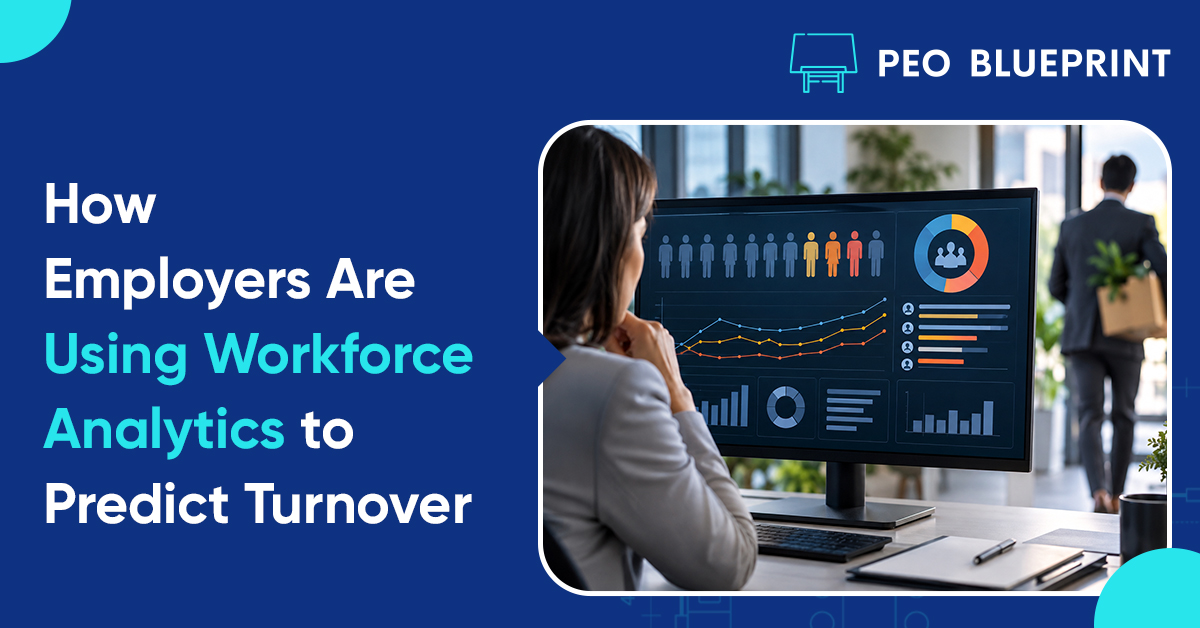
Data-driven decision-making is transforming hospitality management. PEOs provide access to workforce analytics that help leaders move beyond guesswork.
Understanding Employee Behavior Patterns
Advanced analytics reveal insights into workforce trends that are often overlooked.
- Turnover patterns by role or location
- Seasonal staffing performance metrics
- Employee engagement indicators
- Absenteeism trends
With these insights, businesses can refine hiring strategies and improve retention outcomes.
Predictive Workforce Planning
PEOs enable predictive planning by analyzing historical data and forecasting future needs.
✅ Anticipate peak hiring periods
✅ Optimize staff scheduling
✅ Reduce overstaffing or understaffing risks
✅ Improve labor cost allocation
This forward-looking approach allows hospitality businesses to stay ahead of demand rather than react to it.
Strengthening Employer-Employee Relationships
Strong workplace relationships are the foundation of long-term retention. PEOs play a key role in fostering transparent and professional interactions.
Structured Communication Channels
Clear communication reduces misunderstandings and builds accountability.
✅ Employee feedback systems
✅ Regular performance reviews
✅ Conflict resolution frameworks
✅ Anonymous reporting mechanisms
Employees who feel heard are more likely to remain committed to their roles.
Fair and Transparent Policies
Inconsistent policies often lead to dissatisfaction. PEOs ensure fairness across all employee interactions.
✅ Equal opportunity practices
✅ Transparent compensation structures
✅ Clearly defined roles and expectations
✅ Consistent enforcement of rules
Fairness enhances trust and reduces workplace friction.
Supporting Compliance in a Multi-Jurisdictional Environment
Hospitality businesses frequently operate across cities, states, or even countries. Each region comes with its own set of labor laws and regulations.
Navigating Complex Legal Landscapes
PEOs simplify compliance by managing region-specific requirements.
- Local labor law adherence
- Tax regulations across jurisdictions
- Employee classification standards
- Licensing and documentation requirements
This reduces the administrative burden on internal teams.
Audit Readiness and Documentation
Regulatory audits can disrupt operations if businesses are unprepared. PEOs maintain accurate and up-to-date records.
✅ Digital document management systems
✅ Audit-ready compliance files
✅ Timely reporting and filings
✅ Reduced risk of penalties
Preparedness ensures smoother operations and protects business continuity.
Enhancing Training and Skill Development
Continuous learning is essential in hospitality, where service quality directly impacts customer satisfaction.
Structured Training Programs
PEOs support the development of standardized training modules.
✅ Role-specific training content
✅ Compliance and safety training
✅ Customer service excellence programs
✅ Leadership development initiatives
Well-trained employees deliver consistent and high-quality guest experiences.
Upskilling for Career Growth
Career growth opportunities reduce turnover by giving employees a reason to stay.
✅ Clear career progression paths
✅ Skill enhancement workshops
✅ Cross-functional training opportunities
✅ Leadership pipeline development
Investing in employee growth creates long-term organizational value.
Improving Employee Retention Through Engagement Strategies
Engagement is a key driver of retention. PEOs help businesses implement structured engagement initiatives that go beyond basic HR functions.
Recognition and Reward Systems
Employees perform better when their efforts are acknowledged.
✅ Performance-based incentives
✅ Employee recognition programs
✅ Milestone celebrations
✅ Peer-to-peer appreciation systems
Recognition fosters motivation and strengthens team dynamics.
Work-Life Balance Initiatives
Hospitality roles can be demanding. Supporting work-life balance improves employee satisfaction.
✅ Flexible scheduling options
✅ Wellness programs
✅ Mental health support services
✅ Paid leave management
Balanced employees are more productive and less likely to leave.
Optimizing Vendor and Benefit Management
Managing multiple vendors for payroll, benefits, and compliance can be overwhelming. A PEO consolidates these functions into a single, streamlined system.
Vendor Consolidation Benefits
- Reduced administrative complexity
- Improved service coordination
- Better cost control
- Simplified communication channels
Centralization enhances efficiency and reduces operational friction.
Enhanced Benefit Administration
PEOs ensure that benefits are managed effectively and communicated clearly to employees.
✅ Easy enrollment processes
✅ Transparent benefit structures
✅ Ongoing employee support
✅ Reduced administrative errors
This improves employee satisfaction and reduces confusion.
Driving Business Agility in a Competitive Market
The hospitality industry is highly competitive, requiring businesses to adapt quickly to changing market conditions.
Rapid Response to Market Changes
PEOs provide the infrastructure needed to respond swiftly to demand fluctuations.
✅ Quick onboarding of new hires
✅ Scalable HR operations
✅ Flexible workforce management
✅ Real-time operational support
Agility ensures businesses remain competitive and responsive.
Supporting Expansion and Growth
As hospitality businesses expand, managing HR internally becomes increasingly complex.
✅ Scalable HR solutions for new locations
✅ Consistent policies across expanding operations
✅ Reduced complexity during growth phases
✅ Strategic HR guidance for expansion planning
This enables smooth and sustainable business growth.
Enhancing Reputation and Employer Branding
A strong employer brand attracts better talent and improves retention. PEOs help businesses build a professional and credible image.
Building Trust with Employees
Professional HR practices enhance credibility.
- Timely payroll and benefits
- Clear communication
- Fair policies
- Reliable support systems
Trust leads to stronger employee loyalty.
Attracting High-Quality Talent
A well-managed HR system signals professionalism to potential candidates.
✅ Competitive compensation packages
✅ Structured onboarding experiences
✅ Positive workplace culture
✅ Career development opportunities
This positions the business as an employer of choice.
Sustainability and Long-Term Workforce Planning
Sustainability in hospitality extends beyond environmental practices—it includes workforce sustainability.
Reducing Employee Burnout
Burnout is a major contributor to turnover. PEOs help implement strategies to address this issue.
✅ Balanced workloads
✅ Adequate staffing levels
✅ Employee wellness initiatives
✅ Supportive management practices
Reducing burnout improves retention and productivity.
Long-Term Workforce Stability
A stable workforce enhances operational efficiency and customer satisfaction.
- Reduced hiring costs
- Improved team cohesion
- Higher service quality
- Stronger organizational culture
Stability creates a foundation for long-term success.
Integrating Technology with Human-Centric HR
While technology plays a crucial role, the human element remains central to hospitality.
Balancing Automation and Personal Touch
PEOs combine advanced technology with personalized HR support.
✅ Automated administrative tasks
✅ Human-led employee support
✅ Customized HR solutions
✅ Personalized employee experiences
This balance ensures efficiency without losing the human connection.
Integrating PEO Support with Franchise Hospitality Models
Franchise-based hospitality businesses face a unique operational structure. Multiple ownership layers, brand standards, and local workforce challenges must align seamlessly. PEO benefits for hospitality employers become especially valuable in franchise ecosystems where consistency and scalability are critical.
Aligning Brand Standards Across Franchise Units
Franchise brands rely on uniform service delivery. A PEO ensures that HR practices align with brand expectations while adapting to local workforce realities.
✅ Standardized onboarding aligned with brand guidelines
✅ Uniform compliance practices across franchise locations
✅ Centralized HR oversight with local flexibility
✅ Consistent employee experience regardless of ownership
This alignment strengthens brand integrity while allowing operational autonomy.
Managing Part-Time and Gig Workforce Dynamics
The rise of part-time and gig workers has reshaped hospitality staffing. Employers must now manage a blended workforce with varying expectations and legal considerations.
Structuring Flexible Workforce Models
A PEO helps design workforce models that balance flexibility with compliance.
- Clear classification of part-time and contract workers
- Structured scheduling systems
- Transparent compensation frameworks
- Defined engagement policies
This ensures operational efficiency without legal ambiguity.
Enhancing Engagement for Non-Full-Time Staff
Part-time employees often feel disconnected from the organization. PEO-driven strategies help bridge this gap.
✅ Inclusive communication practices
✅ Access to selected benefits and perks
✅ Recognition programs for all staff types
✅ Opportunities for role progression
Engaged part-time staff contribute significantly to service quality.
Strengthening Crisis Management and Business Continuity
Hospitality businesses are highly vulnerable to external disruptions such as economic downturns, health crises, or natural events. A PEO provides structured support during uncertain times.
Rapid Response Frameworks
PEOs help businesses respond quickly to unforeseen challenges.
✅ Emergency workforce planning
✅ Temporary policy adjustments
✅ Communication strategies during crises
✅ Compliance updates for changing regulations
Preparedness minimizes disruption and protects operations.
Maintaining Workforce Stability During Uncertainty
During challenging periods, retaining key employees becomes critical.
✅ Retention-focused benefit adjustments
✅ Flexible scheduling solutions
✅ Employee support programs
✅ Transparent communication initiatives
Stability during crises builds long-term resilience.
Enhancing Diversity, Equity, and Inclusion (DEI) in Hospitality
Modern hospitality businesses must prioritize inclusive workplaces. A diverse workforce enhances creativity, service quality, and brand perception.
Building Inclusive Hiring Practices
PEOs support structured and unbiased recruitment processes.
- Standardized interview frameworks
- Equal opportunity hiring policies
- Equal opportunity hiring policies
- Diverse candidate sourcing strategies
- Bias-reduction training for hiring managers
Inclusive hiring strengthens organizational culture.
Promoting Equity in Workplace Policies
Fair treatment across all employee groups is essential.
✅ Transparent pay structures
✅ Equal access to growth opportunities
✅ Inclusive workplace policies
✅ Regular DEI assessments
Equity fosters trust and improves employee satisfaction.
Improving Time-to-Productivity for New Hires
In hospitality, speed matters. New employees must become productive quickly to maintain service standards.
Accelerated Learning Curves
PEOs implement systems that reduce the time it takes for employees to reach full productivity.
✅ Structured onboarding timelines
✅ Role-specific training pathways
✅ Mentorship and buddy systems
✅ Performance tracking from day one
Faster productivity improves operational efficiency.
Reducing Early-Stage Errors
New hires are more prone to mistakes, especially in fast-paced environments.
✅ Clear operational guidelines
✅ Standard operating procedures (SOPs)
✅ Real-time support systems
✅ Continuous feedback loops
Reducing errors enhances customer experience and team confidence.
Maintaining Compliance During Transitions
Employee transitions often carry compliance risks.
✅ Proper documentation for exits
✅ Final payroll and benefits processing
✅ Legal compliance with termination policies
✅ Record maintenance for audits
Compliance ensures risk-free operations.
Evaluating Workforce Performance Metrics
✅ Productivity benchmarks
✅ Turnover comparisons
✅ Engagement score analysis
✅ Training effectiveness metrics
Benchmarking helps identify gaps and opportunities for improvement.
Future Outlook: PEOs in Hospitality
The hospitality industry is evolving rapidly. Labor shortages, digital transformation, and changing employee expectations are reshaping workforce dynamics.
PEOs are positioned to play a central role in this transformation by offering scalable, technology-driven HR solutions.
Emerging trends include:
- AI-driven recruitment tools
- Enhanced employee wellness programs
- Greater focus on diversity and inclusion
- Advanced workforce analytics
Conclusion
PEO benefits for hospitality employers extend far beyond administrative convenience. They provide a strategic framework for managing turnover, navigating seasonal fluctuations, and optimizing operational efficiency.
By leveraging a PEO, hospitality businesses can stabilize their workforce, reduce costs, and focus on delivering exceptional guest experiences. In an industry where agility and service quality define success, a PEO partnership is not just an option—it is a competitive advantage.
For businesses ready to take the next step, exploring solutions through PEO Blueprint can provide valuable direction and clarity.