PEO AI Integration is rapidly redefining how modern organizations manage human resources. In 2026, Professional Employer Organizations (PEOs) will no longer be limited to payroll processing and benefits administration. They are becoming intelligent workforce engines powered by artificial intelligence, machine learning, and predictive analytics.
As companies face growing compliance complexity, hybrid workforce models, and rising talent competition, HR leaders are turning to advanced technology frameworks embedded within PEO platforms. The future of HR is not reactive—it is predictive, automated, and insight-driven.
This comprehensive guide explores how PEO AI Integration is transforming HR operations, enhancing workforce intelligence, and shaping the next generation of employer performance.
Understanding the Evolution of PEO Technology
Traditional PEO services focused on co-employment structures that simplified administrative tasks such as payroll, tax filings, and benefits management. While these services remain foundational, modern PEOs have evolved significantly.
Through digital transformation and AI-powered systems, PEO engines now provide:
✔️ Intelligent workforce analytics
✔️ Automated compliance monitoring
✔️ Real-time payroll error detection
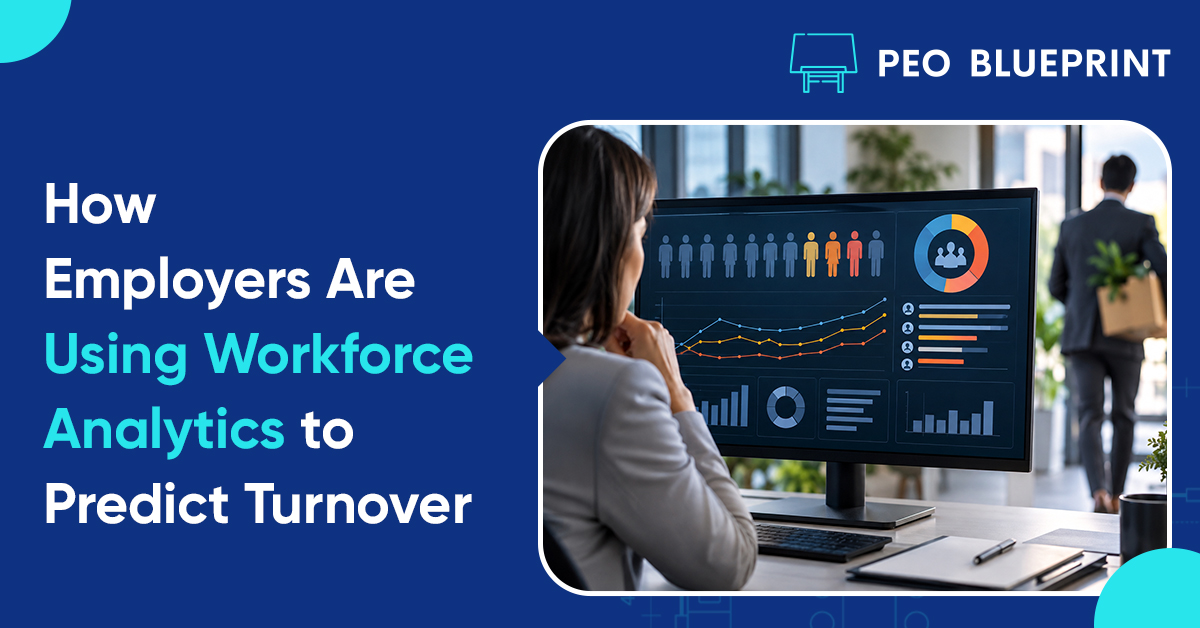
✔️ Predictive turnover insights
✔️ Smart benefits optimization
Platforms highlighted through PEO Blueprint’s industry insights demonstrate how modern PEO models prioritize technological integration to support scalable workforce management.
PEO AI Integration represents the convergence of HR services with advanced computational intelligence.
Why HR Needs AI-Driven Intelligence in 2026
Human resources has shifted from administrative support to strategic leadership. HR departments now influence organizational growth, culture, and operational resilience.
However, increasing complexity demands smarter systems.
Key HR Challenges Today
✔️ Managing distributed workforces
✔️ Navigating evolving labor laws
✔️ Predicting employee retention risks
✔️ Reducing payroll errors
✔️ Ensuring benefits cost efficiency
Manual systems cannot keep pace with these demands. PEO AI Integration empowers HR teams to shift from manual processing to data-driven strategic decision-making.
How Artificial Intelligence Enhances PEO Engines
Artificial intelligence acts as the core intelligence layer within modern PEO platforms. It enables automation, insight generation, and adaptive decision-making.
AI in Payroll Accuracy
AI systems detect anomalies in payroll data by identifying inconsistencies based on historical trends.
Examples include:
✔️ Duplicate payments flagged automatically
✔️ Overtime calculation discrepancies detected
✔️ Tax withholding irregularities corrected before submission
This reduces costly compliance errors and increases financial accuracy.
AI-Powered Benefits Optimization
PEO AI Integration also analyzes employee benefits usage patterns.
AI tools can:
✔️ Recommend cost-effective health plans
✔️ Identify underutilized benefits
✔️ Forecast renewal pricing changes
✔️ Suggest benefits customization for workforce demographics
By leveraging AI, PEO platforms help businesses align benefits strategies with workforce needs.
Machine Learning and Workforce Pattern Recognition
Machine learning goes beyond static automation. It enables systems to improve over time by analyzing historical workforce data.
Predicting Employee Turnover
Machine learning models identify early indicators of attrition, such as:
✔️ Sudden performance changes
✔️ Reduced engagement scores
✔️ Compensation misalignment
✔️ Role stagnation
By flagging high-risk employees, HR leaders can intervene proactively.
Hiring Efficiency Optimization
Through machine learning, PEO platforms analyze recruitment data to determine:
✔️ Candidate quality patterns
✔️ Time-to-hire benchmarks
✔️ Interview conversion rates
✔️ Onboarding success metrics
This enhances hiring strategies and reduces recruitment inefficiencies.
PEO AI Integration transforms recruitment from a reactive process into a predictive science.
Predictive Analytics: The Strategic Advantage
Predictive analytics allows organizations to anticipate workforce trends before they occur.
Workforce Planning Forecasting
Advanced PEO engines forecast:
✔️ Staffing needs based on business growth
✔️ Seasonal hiring requirements
✔️ Compensation adjustments
✔️ Skills gap projections
Predictive models analyze historical HR data and external economic factors to guide planning decisions.
Compliance Risk Prediction
Labor laws and regulatory requirements evolve frequently. Predictive analytics can monitor trends and alert HR teams to potential compliance gaps before violations occur.
For a deeper exploration of compliance-driven HR transformation, review expert resources at PEO Blueprint Compliance Insights.
Through PEO AI Integration, compliance management becomes proactive rather than reactive.
Automation in HR Operations
Automation is one of the most visible outcomes of AI integration.
Intelligent Onboarding Workflows
Automated onboarding systems can:
✔️ Generate personalized documentation
✔️ Schedule compliance training
✔️ Trigger payroll setup
✔️ Assign benefits enrollment tasks
This reduces administrative burden while improving employee experience.
Smart Performance Monitoring
PEO platforms equipped with AI can:
✔️ Track goal alignment
✔️ Identify productivity trends
✔️ Detect engagement shifts
✔️ Generate performance insights
These systems provide managers with actionable intelligence.
Real-Time Workforce Dashboards
Modern HR leaders require visibility across multiple dimensions.
PEO AI Integration delivers dynamic dashboards displaying:
✔️ Payroll status metrics
✔️ Benefits utilization trends
✔️ Compliance alerts
✔️ Attrition probability scores
✔️ Hiring funnel performance
These dashboards enable data-driven executive decision-making.
Strengthening Risk Management Through AI
Risk management is a core benefit of AI-driven PEO systems.
Fraud Detection
AI monitors unusual payroll activity and flags suspicious transactions.
Workers’ Compensation Insights
Predictive analytics identify workplace injury patterns and recommend preventive measures.
Legal Exposure Mitigation
PEO engines analyze employment practices and highlight areas that may trigger regulatory scrutiny.
The integration of AI into risk management significantly reduces liability exposure.
Cost Optimization Through Intelligent Systems
AI-powered analytics reveal hidden cost drivers.
Payroll Cost Efficiency
✔️ Overtime trend analysis
✔️ Labor cost forecasting
✔️ Budget variance alerts
Benefits Cost Control
✔️ Claims pattern analysis
✔️ Plan negotiation insights
✔️ Demographic-driven plan optimization
Through PEO AI Integration, organizations gain transparency into workforce expenditures.
Employee Experience Personalization
Employee engagement has become a strategic priority.
AI-driven personalization allows PEO platforms to tailor:
✔️ Benefits recommendations
✔️ Learning pathways
✔️ Wellness initiatives
✔️ Recognition programs
This individualized approach improves retention and satisfaction.
Data Security and Ethical AI Governance
With advanced analytics comes responsibility.
PEO providers must ensure:
✔️ Secure data encryption
✔️ Transparent AI algorithms
✔️ Bias mitigation practices
✔️ Regulatory compliance alignment
Ethical AI governance protects employee trust while maximizing technological advantage.
Industry-Wide Transformation
Industries such as healthcare, manufacturing, and technology are adopting AI-driven HR models at accelerated rates.
PEO AI Integration allows small and mid-sized businesses to access enterprise-level technology without building internal infrastructure.
Through educational resources at PEO Blueprint, organizations can evaluate PEO partners aligned with advanced technological capabilities.
The Competitive Advantage of Predictive HR
Companies leveraging AI-enhanced PEO systems gain strategic advantages.
Benefits include:
✔️ Faster hiring cycles
✔️ Lower turnover rates
✔️ Reduced compliance violations
✔️ Improved cost management
✔️ Enhanced workforce planning
Predictive HR transforms human capital into measurable strategic value.
Building an AI-Ready HR Infrastructure
As organizations adopt PEO AI Integration, one of the most critical success factors is infrastructure readiness. Advanced analytics and machine learning models are only as effective as the data environments that support them.
Data Standardization and Integration
For AI-driven PEO engines to function effectively, HR data must be centralized and standardized across systems. Disconnected payroll tools, legacy HR software, and fragmented benefits platforms can limit predictive accuracy.
Key preparation steps include:
✔️ Consolidating employee data into unified platforms
✔️ Standardizing job classifications and compensation bands
✔️ Cleaning historical workforce records
✔️ Integrating payroll, benefits, and performance systems
When clean, structured data feeds AI models, PEO AI Integration produces more reliable forecasts and actionable insights.
Executive Decision-Making Powered by Workforce Intelligence
Beyond operational efficiency, one of the most transformative aspects of PEO AI Integration is executive visibility.
Modern PEO platforms now support C-suite leaders with predictive dashboards that inform high-level business decisions.
Strategic Insights for Leadership
AI-enabled systems can support executive planning by:
✔️ Forecasting labor costs across expansion markets
✔️ Modeling workforce impact of mergers or acquisitions
✔️ Predicting headcount requirements under various growth scenarios
✔️ Identifying compensation misalignment that may hinder recruitment
This strategic intelligence allows leadership teams to align human capital strategy with long-term business objectives.
AI-Enhanced Compensation Strategy
Compensation planning has traditionally relied on static benchmarking reports. However, with PEO AI Integration, compensation becomes dynamic and data-responsive.
Real-Time Market Benchmarking
AI engines continuously analyze external labor market data alongside internal workforce performance metrics.
This enables:
✔️ Instant salary competitiveness analysis
✔️ Dynamic bonus structure modeling
✔️ Equity compensation forecasting
✔️ Pay equity compliance monitoring
Rather than reviewing compensation annually, organizations can now make informed adjustments proactively.
Workforce Reskilling Through Predictive Learning Models
The future of HR increasingly depends on continuous skill development. AI-powered PEO engines are expanding into workforce capability mapping.
Skills Gap Identification
Machine learning algorithms assess:
✔️ Current workforce skill inventory
✔️ Emerging industry skill demands
✔️ Performance data trends
✔️ Internal promotion pathways
From there, AI systems recommend personalized training pathways aligned with both organizational needs and individual career progression.
PEO AI Integration thus supports workforce adaptability in rapidly evolving industries.
Enhancing Remote and Hybrid Workforce Management
Hybrid work models are now standard across industries. Managing distributed teams introduces new challenges in engagement, productivity, and compliance.
Intelligent Remote Workforce Monitoring
AI-enhanced PEO systems can:
✔️ Analyze productivity trends without intrusive monitoring
✔️ Identify burnout risk indicators
✔️ Track cross-border compliance obligations
✔️ Evaluate engagement metrics across time zones
By leveraging predictive insights, HR leaders can create balanced remote work strategies that protect employee well-being while maintaining performance.
Scenario Modeling for Organizational Change
Businesses frequently face restructuring, scaling, or cost-reduction decisions. PEO AI Integration enables advanced scenario modeling before decisions are finalized.
What-If Workforce Simulations
AI-driven HR platforms can simulate:
✔️ Impact of hiring freezes
✔️ Effects of benefit restructuring
✔️ Financial outcomes of workforce expansion
✔️ Retention shifts following compensation changes
These predictive simulations reduce uncertainty and provide leadership with measurable risk assessments.
Cross-Departmental Alignment Through HR Analytics
One of the most overlooked benefits of PEO AI Integration is its ability to foster cross-functional alignment.
When HR data integrates with finance and operations systems, organizations gain enterprise-wide insight.
Examples include:
✔️ Correlating employee performance with revenue growth
✔️ Linking workforce engagement to customer satisfaction metrics
✔️ Measuring training investment ROI
✔️ Aligning staffing levels with operational capacity
This integration elevates HR from a support function to a central strategic contributor.
Ethical Workforce Decision Frameworks
As AI models guide HR decisions, organizations must establish ethical oversight frameworks.
Responsible AI in HR
Ethical safeguards include:
✔️ Regular bias audits of predictive models
✔️ Transparent decision-making documentation
✔️ Human oversight for automated recommendations
✔️ Clear communication with employees regarding data usage
PEO AI Integration must balance efficiency with fairness, ensuring decisions remain equitable and compliant.
Scaling Small Businesses with Enterprise-Level Intelligence
Historically, predictive HR analytics were accessible only to large corporations with significant technology budgets. Today, AI-powered PEO platforms democratize access to advanced workforce intelligence.
Small and mid-sized businesses benefit from:
✔️ Enterprise-grade compliance monitoring
✔️ Automated tax and regulatory updates
✔️ Predictive workforce cost analysis
✔️ Intelligent benefits optimization
Resources available through the PEO Blueprint help organizations compare modern PEO providers equipped with advanced technology, enabling growing companies to compete with larger enterprises.
AI-Driven Workforce Sentiment Monitoring
Employee sentiment significantly influences productivity and retention. PEO AI Integration is expanding into sentiment analysis tools.
Natural Language Processing in HR
Advanced systems analyze anonymized feedback, surveys, and engagement data to detect:
✔️ Early signs of dissatisfaction
✔️ Cultural misalignment
✔️ Leadership communication gaps
✔️ Burnout risk factors
These insights allow HR teams to address issues before they escalate into widespread turnover.
Long-Term Workforce Resilience Strategy
In uncertain economic environments, resilience becomes a competitive advantage. AI-powered PEO platforms support long-term workforce stability.
Resilience Indicators
Predictive models evaluate:
✔️ Workforce adaptability
✔️ Critical role redundancy
✔️ Succession planning strength
✔️ Organizational dependency risks
By identifying vulnerabilities in talent pipelines, businesses can reinforce continuity planning.
Integrating HR Metrics with Business KPIs
The future of HR lies in measurable contribution to business outcomes.
Through PEO AI Integration, HR metrics can directly align with:
✔️ Revenue per employee
✔️ Customer acquisition costs
✔️ Profit margin trends
✔️ Operational efficiency ratios
This alignment transforms HR reporting from descriptive statistics to performance-driving analytics.
Technology Adoption Roadmap for PEO AI Integration
Organizations adopting AI-enabled PEO systems should follow a phased implementation strategy.
Phase 1: Assessment
✔️ Evaluate current HR technology stack
✔️ Identify data gaps
✔️ Assess workforce complexity
Phase 2: Platform Selection
✔️ Compare AI capabilities across PEO providers
✔️ Review compliance support features
✔️ Validate security certifications
Phase 3: Deployment
✔️ Migrate payroll and benefits systems
✔️ Integrate performance data
✔️ Conduct AI model validation testing
Phase 4: Optimization
✔️ Monitor predictive accuracy
✔️ Refine reporting dashboards
✔️ Align AI insights with leadership objectives
A structured roadmap ensures a smooth transition and maximized value.
The Strategic Horizon of HR Innovation
As AI, machine learning, and predictive analytics continue to mature, PEO AI Integration will evolve from an enhancement to a necessity. Organizations that delay adoption risk operational inefficiencies, compliance exposure, and competitive disadvantage.
Future advancements may include:
✔️ Real-time labor law adaptation engines
✔️ AI-generated workforce budgeting
✔️ Predictive diversity and inclusion modeling
✔️ Automated succession planning simulations
The integration of intelligent systems into HR infrastructure marks a fundamental transformation in how organizations manage talent.
Global Workforce Expansion Powered by Intelligent PEO Systems
As businesses expand across state and national borders, workforce complexity multiplies. Regulatory differences, tax structures, and labor standards vary significantly by jurisdiction. PEO AI Integration provides a scalable solution for managing international and multi-state employment structures with precision.
Cross-Border Compliance Automation
AI-driven PEO engines can dynamically track regional labor requirements and automatically adapt payroll and tax calculations accordingly. This reduces manual intervention and lowers compliance risk.
Advanced systems support:
✔️ Multi-jurisdiction tax modeling
✔️ Country-specific benefits compliance
✔️ Automated statutory reporting
✔️ Real-time regulatory update alerts
For companies pursuing geographic expansion, intelligent PEO platforms eliminate much of the operational friction traditionally associated with global workforce growth.
AI-Driven Diversity, Equity, and Inclusion Analytics
Modern organizations are placing greater emphasis on diversity, equity, and inclusion (DEI). PEO AI Integration enhances DEI initiatives by providing data-backed visibility into workforce equity metrics.
Workforce Equity Monitoring
AI-powered analytics can identify patterns in:
✔️ Promotion rates across demographic groups
✔️ Pay equity alignment
✔️ Hiring diversity trends
✔️ Retention disparities
Instead of relying solely on annual audits, organizations can continuously monitor inclusion benchmarks. Predictive models also flag potential bias risks before they manifest into systemic issues.
This real-time oversight supports a fair, transparent workplace culture while reinforcing regulatory compliance.
Workforce Health and Wellness Forecasting
Employee well-being directly impacts productivity and retention. Advanced PEO platforms increasingly integrate wellness analytics into their systems.
Predictive Wellness Modeling
Machine learning tools can assess trends such as:
✔️ Absenteeism frequency
✔️ Sick leave utilization
✔️ Healthcare claims fluctuations
✔️ Burnout indicators
By forecasting potential workforce strain, HR leaders can introduce preventive wellness initiatives. This proactive approach reduces long-term healthcare costs and strengthens organizational resilience.
PEO AI Integration thus supports not only operational metrics but also holistic employee health management.
Advanced Talent Mobility and Succession Intelligence
Organizational continuity depends on strategic succession planning. Traditional methods often rely on manual performance reviews and subjective assessments. AI-enabled PEO systems introduce objective, data-backed succession forecasting.
Succession Planning Analytics
Predictive models evaluate:
✔️ Leadership pipeline strength
✔️ Internal promotion readiness
✔️ Skill maturity benchmarks
✔️ Time-to-role readiness projections
These insights enable organizations to proactively develop future leaders and mitigate talent shortages in critical roles.
PEO AI Integration shifts succession planning from static planning documents to dynamic forecasting systems.
AI-Powered Contractor and Gig Workforce Oversight
The rise of freelance and gig-based work arrangements has introduced complexities in classification and compliance risks. Intelligent PEO platforms are adapting to manage blended workforce models.
Classification and Risk Detection
AI systems analyze engagement structures to ensure proper classification between employees and independent contractors. They flag potential misclassification risks that could trigger regulatory penalties.
Capabilities include:
✔️ Contract structure analysis
✔️ Compensation threshold monitoring
✔️ Engagement duration tracking
✔️ Regulatory alignment alerts
By incorporating contractor oversight into unified workforce systems, PEO AI Integration strengthens legal safeguards.
Real-Time Engagement Benchmarking Across Industries
Modern PEO platforms increasingly incorporate benchmarking intelligence drawn from anonymized industry-wide data.
Comparative Workforce Metrics
Organizations gain access to comparative insights such as:
✔️ Industry-specific turnover averages
✔️ Compensation competitiveness benchmarks
✔️ Benefits adoption rates
✔️ Hiring velocity metrics
These comparative dashboards provide strategic context for HR decisions. Leaders can quickly determine whether internal metrics align with or lag behind market standards.
PEO AI Integration transforms isolated HR reporting into industry-informed workforce intelligence.
Future Outlook: Beyond 2026
The evolution of PEO AI Integration will likely include:
✔️ Advanced natural language processing for HR chatbots
✔️ AI-driven workforce sentiment analysis
✔️ Automated compensation benchmarking
✔️ Skills gap prediction aligned with industry trends
As machine learning models refine over time, predictive accuracy will continue improving.
Conclusion: Redefining HR Through Intelligent PEO Systems
PEO AI Integration is not a futuristic concept—it is actively reshaping HR operations in 2026. By embedding artificial intelligence, machine learning, and predictive analytics into core HR functions, PEO engines provide businesses with unprecedented visibility, efficiency, and strategic foresight.
Organizations that embrace AI-driven PEO platforms will move beyond traditional HR administration toward intelligent workforce ecosystems that can adapt to rapid market change.
The future of HR belongs to predictive systems, proactive compliance, and data-driven leadership.