Introduction
In today’s competitive labor market, elite employers are no longer asking whether technology matters—they are asking which systems truly drive workforce performance. At the center of this shift are PEO tech stacks, the integrated digital ecosystems that power modern Professional Employer Organizations and the businesses they support.
A well-designed PEO tech stack does more than automate HR tasks. It creates operational clarity, ensures compliance, improves employee experience, and enables data-driven decision-making across the organization. For high-performing companies, the right technology stack is not an administrative tool—it is a strategic advantage.
This article breaks down PEO tech stacks in clear, practical terms, explaining what elite employers use, how these systems work together, and why they are essential for optimizing workforce performance at scale.
What Is a PEO Tech Stack?
A PEO tech stack refers to the integrated collection of software platforms and digital tools used by a Professional Employer Organization to manage workforce operations on behalf of client companies.
Rather than relying on disconnected systems, modern PEOs deploy unified platforms that centralize:
✔️ Payroll processing
✔️ Human resources management
✔️ Benefits administration
✔️ Compliance and risk management
✔️ Workforce analytics
For employers, this means fewer manual processes, greater visibility, and a consistent employee experience across the organization.
Why Elite Employers Care About PEO Tech Stacks
Elite employers understand that workforce performance is directly influenced by the systems that support employees and managers every day. Disjointed tools create friction, errors, and inefficiencies that compound over time.
High-performing organizations prioritize PEO tech stacks because they deliver:
✔️ Operational consistency
✔️ Regulatory confidence
✔️ Scalable growth infrastructure
✔️ Actionable workforce insights
Technology becomes the foundation upon which talent strategy, compliance, and productivity are built.
Core Components of Modern PEO Tech Stacks
While each PEO may configure its systems differently, elite employers expect certain foundational components to be present and fully integrated.
- Human Resource Information Systems (HRIS)
At the center of most PEO tech stacks is a robust HRIS platform. This system acts as the central record for employee data and lifecycle management.
Key HRIS capabilities include:
✔️ Employee onboarding and offboarding
✔️ Job and compensation tracking
✔️ Policy acknowledgments
✔️ Document management
By centralizing employee information, HR teams reduce errors and gain a single source of truth across the organization.
- Payroll and Tax Automation Platforms
Payroll accuracy is non-negotiable. Elite employers rely on PEO tech stacks that automate payroll calculations, tax filings, and cross-jurisdictional reporting.
Payroll automation delivers:
✔️ Accurate wage calculations
✔️ Timely tax remittance
✔️ Reduced compliance risk
✔️ Improved employee trust
Automation ensures payroll operations scale smoothly as headcount grows or workforce complexity increases.
- Benefits Administration Technology
Benefits are a major driver of employee satisfaction and retention. Modern PEO tech stacks integrate benefits administration directly into the HR ecosystem.
These platforms support:
✔️ Medical, dental, and vision plans
✔️ Retirement programs
✔️ Open enrollment workflows
✔️ Eligibility tracking
Employees gain self-service access, while employers benefit from simplified administration and alignment with compliance requirements.
- Compliance and Risk Management Systems
Regulatory complexity is one of the primary reasons businesses engage PEOs. Elite employers expect compliance tools to be embedded into the tech stack—not managed separately.
Compliance platforms within PEO tech stacks help manage:
✔️ Employment law updates
✔️ Workplace safety tracking
✔️ Risk assessments
✔️ Audit readiness
This proactive approach minimizes exposure while supporting confident business expansion.
- Time, Attendance, and Workforce Scheduling Tools
Accurate time tracking is essential for payroll accuracy, labor cost control, and regulatory compliance.
Integrated time and attendance systems provide:
✔️ Real-time labor visibility
✔️ Automated overtime calculations
✔️ Scheduling optimization
✔️ Reduced time theft
For hourly and hybrid workforces, these tools significantly improve operational efficiency.
How Integration Separates Elite PEO Tech Stacks From Average Ones
The true power of PEO tech stacks lies not in individual tools, but in how seamlessly they work together. Elite stacks eliminate data silos by ensuring information flows automatically across systems.
Integration benefits include:
✔️ Reduced duplicate data entry
✔️ Consistent reporting across platforms
✔️ Faster issue resolution
✔️ Improved employee experience
When systems communicate effectively, organizations gain clarity rather than complexity.
Workforce Analytics: Turning Data Into Performance Intelligence
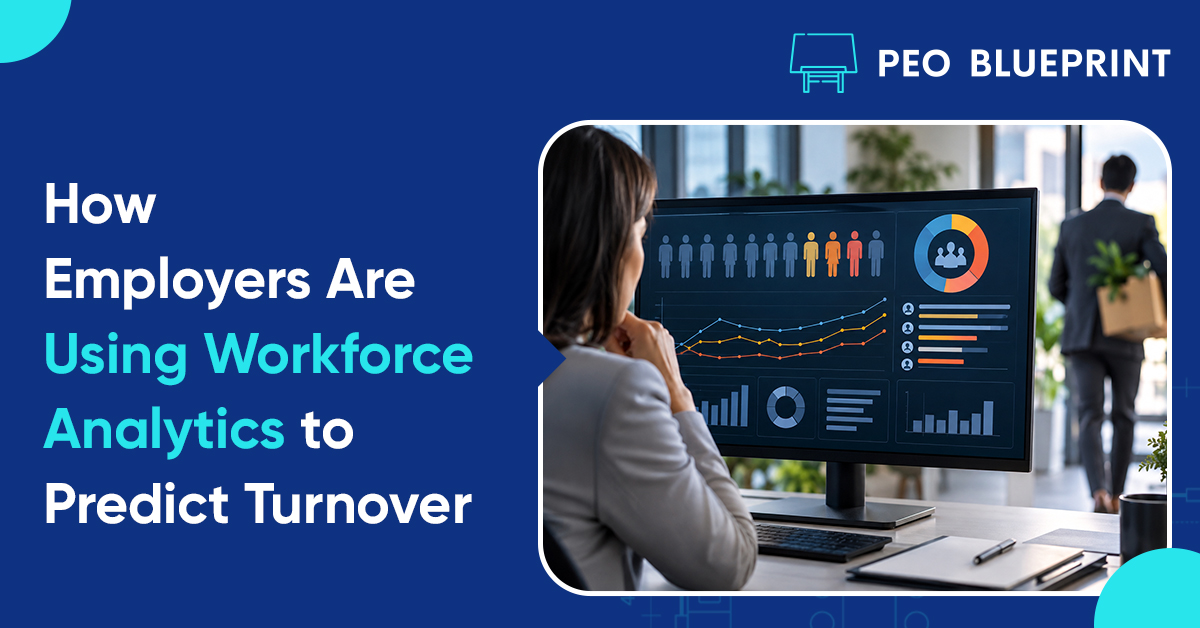
Elite employers do not rely on instinct alone—they rely on insight. Advanced analytics capabilities are now a defining feature of leading PEO tech stacks.
Analytics dashboards provide visibility into:
✔️ Turnover trends
✔️ Labor cost distribution
✔️ Absenteeism patterns
✔️ Performance indicators
This data empowers leaders to make informed decisions that improve workforce outcomes rather than react to problems after they escalate.
Employee Self-Service as a Performance Multiplier
Self-service portals are a critical but often underestimated component of modern PEO tech stacks.
Through intuitive employee portals, individuals can:
✔️ Access pay stubs and tax forms
✔️ Update personal information
✔️ Enroll in benefits
✔️ Request time off
By reducing administrative dependency, self-service tools free HR teams to focus on strategic initiatives while improving employee satisfaction.
Manager Enablement Through Technology
Elite employers recognize that managers are the frontline drivers of workforce performance. PEO tech stacks increasingly include tools designed specifically for people leaders.
Manager-focused features support:
✔️ Performance tracking
✔️ Team scheduling
✔️ Compliance alerts
✔️ Workforce planning
These capabilities help managers lead effectively without becoming overwhelmed by administrative tasks.
Security and Data Privacy in PEO Tech Stacks
With sensitive employee data centralized across platforms, security is paramount. Elite PEO tech stacks are designed with enterprise-grade protections.
Security measures typically include:
✔️ Role-based access controls
✔️ Data encryption
✔️ Multi-factor authentication
✔️ Regular audits
Strong security safeguards not only protect data but also reinforce trust between employers and employees.
Scalability: Supporting Growth Without Disruption
One of the defining advantages of PEO tech stacks is scalability. Elite employers select platforms that evolve alongside business growth rather than constrain it.
Scalable tech stacks support:
✔️ Rapid hiring
✔️ Geographic expansion
✔️ Workforce restructuring
✔️ Changing compliance requirements
This flexibility allows organizations to pursue growth opportunities with confidence.
The Role of Automation in Workforce Optimization
Automation is a central theme in modern PEO tech stacks. By removing manual processes, organizations reduce error rates and accelerate workflows.
Automated processes commonly include:
✔️ Onboarding checklists
✔️ Payroll approvals
✔️ Compliance reporting
✔️ Benefits eligibility updates
Automation transforms HR operations from reactive to proactive.
Customization Without Complexity
Elite employers demand flexibility without sacrificing usability. Modern PEO tech stacks strike this balance through configurable workflows rather than custom code.
Customization options allow organizations to:
✔️ Align systems with internal policies
✔️ Support industry-specific requirements
✔️ Adapt to unique workforce structures
This adaptability ensures technology supports business strategy rather than dictating it.
How PEO Tech Stacks Improve Employee Experience
Employee experience is increasingly recognized as a driver of performance. Disjointed systems frustrate employees, while cohesive platforms create confidence and engagement.
PEO tech stacks enhance employee experience by offering:
✔️ Consistent interfaces
✔️ Transparent processes
✔️ Faster issue resolution
✔️ Reliable access to information
Satisfied employees are more productive, engaged, and loyal.
Evaluating PEO Tech Stacks: What Elite Employers Look For
When assessing PEO partners, elite employers evaluate technology as rigorously as service quality.
Key evaluation criteria include:
✔️ Platform integration depth
✔️ Reporting and analytics capabilities
✔️ Security standards
✔️ Ease of use for employees and managers
Technology maturity often reflects a PEO’s overall sophistication.
Aligning PEO Tech Stacks With Business Strategy
The most effective PEO tech stacks align directly with organizational goals. Whether the priority is growth, efficiency, or risk mitigation, technology must support that direction.
Strategic alignment ensures:
✔️ Faster decision-making
✔️ Better resource allocation
✔️ Improved long-term outcomes
Technology becomes an enabler rather than an overhead cost.
Common Mistakes to Avoid When Adopting PEO Tech Stacks
Even strong platforms can fail if implementation is poorly managed.
Common pitfalls include:
✔️ Underestimating change management
✔️ Failing to train users adequately
✔️ Ignoring data migration quality
✔️ Over-customizing early
Elite employers approach adoption as a phased transformation rather than a one-time deployment.
The Future of PEO Tech Stacks
As workforce models continue to evolve, PEO tech stacks will increasingly incorporate:
✔️ AI-driven insights
✔️ Predictive workforce analytics
✔️ Enhanced mobile accessibility
✔️ Deeper employee personalization
Technology will play an even greater role in shaping how organizations attract, manage, and retain talent.
The Role of Change Management in Maximizing Tech Stack ROI
Even the most advanced PEO tech stacks can underperform if organizational change is not managed deliberately. Elite employers recognize that technology adoption is as much a people initiative as it is a systems upgrade.
Successful change management emphasizes:
✔️ Clear communication around why systems are changing
✔️ Early involvement of key stakeholders
✔️ Incremental rollouts rather than abrupt transitions
By framing the tech stack as an enabler of daily work—not an imposed system—organizations significantly increase adoption rates and long-term return on investment.
Bridging the Gap Between HR and Finance Through Shared Systems
One often-overlooked benefit of mature PEO tech stacks is their ability to align HR and finance teams around a shared data foundation.
Integrated systems enable:
✔️ Unified labor cost visibility
✔️ More accurate forecasting
✔️ Faster budget adjustments
✔️ Fewer reconciliation issues
When HR and finance operate from the same data environment, workforce decisions become more strategic, transparent, and defensible at the executive level.
Supporting Hybrid and Distributed Workforces
As hybrid and remote work models become permanent fixtures, PEO tech stacks are evolving to support geographically dispersed teams without sacrificing oversight or consistency.
Modern platforms help employers:
✔️ Maintain consistent policies across locations
✔️ Track compliance in multiple jurisdictions
✔️ Provide equal access to HR services for all employees
This flexibility ensures that workforce performance remains high regardless of employees’ physical location.
The Importance of User Experience in Technology Adoption
Elite employers increasingly evaluate PEO tech stacks through a user-experience lens. Systems that are technically powerful but difficult to navigate often create frustration rather than efficiency.
User-centric platforms prioritize:
✔️ Intuitive navigation
✔️ Clear workflows
✔️ Mobile-friendly access
✔️ Minimal training requirements
When employees and managers find systems easy to use, engagement increases and administrative friction declines.
Reducing Operational Risk Through Standardization
Inconsistent processes are a major source of operational risk. PEO tech stacks help elite employers standardize critical workforce activities across departments and locations.
Standardization supports:
✔️ Predictable outcomes
✔️ Easier auditing
✔️ Faster onboarding of new managers
✔️ Reduced dependency on individual knowledge
This consistency is especially valuable in regulated environments or during periods of rapid growth.
Enabling Faster Decision Cycles
Speed matters in modern organizations. Fragmented systems slow decision-making by forcing leaders to wait for reports or reconcile conflicting data.
Well-integrated PEO tech stacks enable:
✔️ Near real-time reporting
✔️ On-demand workforce insights
✔️ Faster response to emerging issues
This agility allows leaders to address challenges before they escalate into larger problems.
Aligning Technology With Organizational Culture
Technology subtly shapes how people work. Elite employers ensure their PEO tech stacks reinforce—not undermine—their organizational culture.
For example:
✔️ Transparent systems support cultures of trust
✔️ Self-service tools encourage autonomy
✔️ Collaborative features reinforce teamwork
When technology aligns with cultural values, it strengthens engagement rather than creating resistance.
Supporting Leadership Development Through Better Data
Leadership development initiatives benefit significantly from the insights generated by PEO tech stacks. Performance data, engagement indicators, and workforce trends provide objective inputs into talent development decisions.
These insights help organizations:
✔️ Identify emerging leaders
✔️ Target development investments
✔️ Track progress over time
Technology thus becomes a quiet yet powerful contributor to the strength of the leadership pipeline.
Preparing for Mergers, Acquisitions, and Organizational Change
Periods of structural change place immense strain on workforce systems. Elite employers rely on PEO tech stacks to provide stability during transitions such as mergers or reorganizations.
Robust platforms help:
✔️ Consolidate employee data efficiently
✔️ Harmonize policies and benefits
✔️ Maintain compliance during change
This stability reduces disruption and preserves employee confidence during uncertain periods.
Long-Term Cost Predictability and Financial Control
Beyond immediate efficiency gains, PEO tech stacks contribute to long-term financial predictability. By centralizing workforce data and automating processes, organizations gain clearer insight into cost drivers.
This clarity supports:
✔️ More accurate long-term planning
✔️ Early identification of cost overruns
✔️ Better alignment between staffing and revenue
Over time, these advantages compound into meaningful financial resilience.
Strengthening Employer Brand Through Operational Excellence
Employees may not consciously evaluate HR systems every day—but they feel the difference between chaos and coherence. Reliable, transparent systems contribute directly to employer brand perception.
Strong PEO tech stacks help organizations:
✔️ Deliver consistent employee experiences
✔️ Respond quickly to inquiries
✔️ Demonstrate professionalism and care
These experiences influence retention, referrals, and overall reputation in the talent market.
Building Organizational Confidence Through Reliable Infrastructure
Ultimately, elite employers view PEO tech stacks as confidence-building infrastructure. When leaders trust their systems, they can focus on growth rather than administration.
Reliable technology provides:
✔️ Assurance that critical processes are handled
✔️ Confidence in compliance posture
✔️ Freedom to innovate and expand
This sense of operational security is a powerful, often underestimated advantage.
The Role of Benchmarking in Tech Stack Excellence
Elite employers do not evaluate their PEO tech stacks in isolation. They continuously benchmark their technology maturity against peers, industry standards, and future-state models.
Benchmarking enables organizations to:
✔️ Identify capability gaps early
✔️ Validate whether current tools are still competitive
✔️ Prioritize upgrades based on business impact
Rather than reacting to problems, benchmarking allows leaders to anticipate where workforce technology must evolve next to stay ahead.
Data Ownership and Transparency as Strategic Assets
As reliance on external platforms grows, elite employers pay close attention to data ownership and accessibility. Control over workforce data is not just a technical concern—it is a strategic one.
High-performing organizations ensure:
✔️ Clear data ownership agreements
✔️ Easy access to raw and aggregated data
✔️ Portability in case of platform changes
This transparency protects long-term flexibility and prevents over-dependence on any single provider.
Enhancing Cross-Functional Collaboration With Shared Visibility
PEO tech stacks increasingly act as collaboration bridges between departments that historically operated in silos.
Shared visibility supports:
✔️ Alignment between operations and HR
✔️ Better coordination with legal and compliance teams
✔️ Informed decision-making across leadership levels
When multiple functions rely on the same system of record, collaboration becomes smoother and more objective.
Reducing Cognitive Load for Employees and Managers
One understated benefit of mature PEO tech stacks is reduced cognitive load. When systems are intuitive and consistent, users spend less mental energy navigating processes and more on meaningful work.
This reduction leads to:
✔️ Fewer errors
✔️ Higher confidence in self-service actions
✔️ Improved overall productivity
Over time, lower cognitive friction contributes to better morale and sustained performance.
Supporting Equity and Fairness Through Consistent Systems
Consistency is a prerequisite for fairness. Elite employers rely on PEO tech stacks to apply policies, benefits, and processes uniformly across the workforce.
This consistency helps ensure:
✔️ Equal access to benefits and information
✔️ Standardized performance processes
✔️ Reduced risk of unintentional bias
Technology becomes a tool not only for efficiency, but for reinforcing organizational values.
Scenario Planning and Workforce Modeling
Advanced PEO tech stacks enable leaders to model “what-if” scenarios related to staffing, compensation, and growth.
Scenario planning capabilities allow organizations to:
✔️ Evaluate the impact of hiring plans
✔️ Assess cost implications of workforce changes
✔️ Prepare for economic fluctuations
This foresight supports more resilient and adaptable business strategies.
Minimizing Institutional Knowledge Loss
Employee turnover can erode institutional knowledge if systems rely too heavily on individual expertise. PEO tech stacks mitigate this risk by embedding processes and documentation into the technology itself.
This ensures:
✔️ Continuity during staff transitions
✔️ Faster onboarding for new hires
✔️ Reduced dependency on informal knowledge transfer
Knowledge becomes organizational rather than individual, strengthening long-term stability.
The Role of Vendor Accountability in Tech Stack Performance
Elite employers expect accountability not just from their PEO partners, but from the technology vendors within the stack.
This includes:
✔️ Clear service-level expectations
✔️ Ongoing performance reviews
✔️ Transparent issue resolution processes
Strong vendor accountability ensures the tech stack continues to meet evolving business needs.
Enabling Proactive Workforce Planning
Rather than reacting to turnover or performance issues after they occur, mature PEO tech stacks enable proactive workforce planning.
With early indicators and trend analysis, organizations can:
✔️ Address engagement risks sooner
✔️ Adjust staffing before shortages arise
✔️ Align talent strategy with business forecasts
Proactivity becomes a defining trait of elite employers.
Final Thoughts: Technology as a Workforce Advantage
PEO tech stacks are no longer optional tools—they are foundational systems that define how modern organizations operate. Elite employers recognize that optimizing workforce performance requires more than policies and people; it requires technology that connects strategy to execution.
By investing in integrated, scalable, and intelligent tech stacks, organizations position themselves to lead with confidence, agility, and clarity in an increasingly complex employment landscape.
The difference between average and elite employers is not ambition—it is infrastructure.