The modern Chief Financial Officer (CFO) is no longer just the “guardian of the books.” In an era defined by rapid digital transformation, shifting labor laws, and a globalized workforce, the CFO’s role has evolved into that of a strategic architect. One of the most significant yet “quiet” shifts occurring in the C-suite today is the migration away from traditional, fragmented HR administration toward integrated PEO-managed payroll ecosystems.
While the buzz in the boardroom often centers on AI and market volatility, the quiet revolution is happening in the back office. CFOs are realizing that the traditional way of handling payroll—relying on disconnected software, manual data entry, and local tax compliance experts—is a liability. By moving to a Professional Employer Organization (PEO), financial leaders are not just outsourcing; they are installing a sophisticated financial ecosystem that stabilizes cash flow and mitigates risk.
In this deep dive, we explore the strategic, financial, and operational reasons why the most forward-thinking CFOs are making the switch.
🏗️ The Structural Shift: From Fragmented Systems to Integrated Ecosystems
For decades, mid-market companies have operated on a “patchwork” model. They use one software for time tracking, another for payroll processing, a third for benefits administration, and a series of spreadsheets to track compliance. This fragmentation creates “data silos” that are the enemy of financial clarity.
When a company adopts PEO-managed payroll ecosystems, these silos are demolished. A PEO operates under a co-employment model, meaning they become the employer of record for tax purposes. This allows them to consolidate every employee-related expense into a single, predictable stream of data.
Why Integration Matters for the Bottom Line:
- Real-Time Labor Costing: CFOs can see the actual cost of a department—including taxes, benefits, and workers’ comp—in one view.
- Reduced Software Bloat: Eliminating multiple SaaS subscriptions for HRIS, ATS, and Payroll reduces the “tech debt” and integration headaches.
- Data Integrity: Automated data flow from time-tracking to tax filing eliminates the human error that leads to costly year-end adjustments.
By visiting PEO Blueprint, financial leaders can find resources to help them transition from legacy systems to modern frameworks without disrupting active operations.
💰 The Financial Strategy: Risk Mitigation and Cost Predictability
Financial predictability is the holy grail for any CFO. Traditional payroll is fraught with “hidden” costs: unexpected tax penalties, sudden hikes in health insurance premiums, and soaring workers’ compensation insurance costs.
PEO-managed payroll ecosystems provide a buffer against this volatility. Because a PEO aggregates thousands of employees from various companies, it gains “economies of scale.” This allows them to negotiate lower insurance rates and provide a “fixed-cost” feel to what are usually “variable-cost” line items.
The CFO’s Financial Checklist:
✔️ Benefit Cost Stabilization: PEOs offer access to large-group health insurance plans, protecting the company from the 10-15% annual “renewal shock” common in the small-to-mid market.
✔️ Workers’ Comp Protection: Most PEOs provide “pay-as-you-go” workers’ comp, which eliminates the massive down payments and the dreaded end-of-year audit.
✔️ Unemployment Tax Management: PEOs often manage SUTA (State Unemployment Tax Act) rates, shielding the company from spikes caused by unavoidable layoffs or turnover.
For a deeper look at how this impacts your balance sheet, explore the benefits of PEO services for growing enterprises.
⚖️ Navigating the Compliance Minefield
The regulatory landscape is becoming increasingly hostile for mid-market firms. Between the complexities of the Affordable Care Act (ACA), changing overtime rules under the FLSA, and a dizzying array of state-specific sick leave laws, the risk of a compliance “blow-up” is higher than ever.
CFOs are moving to PEO-managed payroll ecosystems to transfer the liability. In a PEO relationship, the PEO shares the responsibility for federal and state compliance. If a tax filing is late or a payroll tax is miscalculated, the PEO is often responsible for resolving the issue.
Compliance Areas Covered by a PEO Ecosystem:
- Multi-State Tax Filings: If you hire a remote worker in a new state, the PEO handles the nexus registration and local withholding.
- EEO-1 Reporting: Automated tracking of workforce demographics for federal reporting.
- COBRA Administration: Seamless handling of departing employees without the need for third-party COBRA administrators.
🌍 Supporting the Remote and Global Workforce
The “Work From Anywhere” movement has created a logistical nightmare for finance departments. Hiring a single employee in a different state can trigger new tax registrations, other workers’ comp requirements, and unique “pay frequency” laws.
PEO-managed payroll ecosystems are designed for the borderless workforce. They provide the infrastructure to hire across state lines—and often across international borders via Global PEO or EOR (Employer of Record) models—in a matter of days rather than months.
Strategic Advantages for Global Expansion:
- Speed to Market: Hire talent in a new region without waiting for local entity incorporation.
- Unified Reporting: Even with a distributed team, the CFO receives a single invoice and a single set of reports.
- Localized Expertise: The PEO ensures that local labor contracts are compliant with regional “at-will” or “for-cause” termination laws.
Check out the PEO selection guide to understand which providers offer the best multi-state support.
🛡️ Cybersecurity and Data Privacy in Payroll
Payroll data is a goldmine for cybercriminals. It contains Social Security numbers, bank account details, home addresses, and salary information. For a CFO, a data breach isn’t just an IT issue; it’s a massive financial and reputational liability.
Legacy payroll systems and internal servers are often the weakest link. PEO-managed payroll ecosystems utilize enterprise-grade security protocols that most mid-market companies couldn’t afford on their own.
Security Enhancements in a PEO Model:
✔️ SOC 2 Compliance: Most leading PEOs maintain rigorous security certifications.
✔️ Multi-Factor Authentication (MFA): Standardized across all employee and admin portals.
✔️ Encrypted Data Transmission: Ensuring that sensitive financial data is never sent via unencrypted email.
✔️ Disaster Recovery: Redundant servers ensure that payroll is processed even in the event of a localized natural disaster or cyber-attack.
📈 Leveraging Advanced Analytics for Human Capital
In the past, “HR Data” and “Financial Data” lived in different worlds. A CFO might know the total payroll spend but couldn’t easily correlate it with turnover rates, productivity metrics, or benefit utilization.
The power of PEO-managed payroll ecosystems lies in the “Data Lake” they create. Because all the data is in one place, CFOs can use advanced analytics to make better talent-spend decisions.
Insights CFOs Gain from PEO Analytics:
- Turnover Cost Analysis: Understanding the exact financial impact of losing an employee in a specific department.
- Overtime Heatmaps: Identifying where labor costs are leaking due to poor scheduling or understaffing.
- Benchmark Data: Comparing your salary and benefits packages against industry standards to ensure competitiveness without overspending.
Learn more about optimizing your workforce spend at PEO Blueprint’s cost analysis section.
🛠️ The Operational Architecture: Building a Resilient Back Office
Beyond financial and compliance-based arguments, CFOs are increasingly focused on their organizations’ operational resilience. In a traditional setup, the payroll function often falls to one or two key individuals. If a payroll manager leaves or falls ill, the entire system is paralyzed.
By integrating PEO-managed payroll ecosystems, the CFO effectively creates a “redundant” infrastructure. The PEO provides a team of specialists—not just software—ensuring that the business never misses a payment cycle, regardless of internal turnover.
Strengthening the Infrastructure:
✔️ System Continuity: Automatic updates to tax tables and labor laws happen in the background without requiring IT intervention.
✔️ Cross-Departmental Synchronization: Integration with existing accounting software (like NetSuite or QuickBooks) ensures that payroll journals are posted automatically, reducing the monthly close time.
✔️ Scalable Support Tiers: As the company grows, the PEO scales its support, providing more dedicated account management to handle the increased complexity.
💎 The Talent Retention Engine: Redefining Employee Value Propositions
In the current “War for Talent,” the CFO must view employee benefits not just as an expense, but as a retention tool. Smaller firms often struggle to compete with the “Big Tech” benefit packages of Fortune 500 companies. This is where PEO-managed payroll ecosystems act as a great equalizer.
Through the collective bargaining power of a PEO, a 50-person startup can offer the exact 401(k) matches, dental plans, and mental health resources as a multi-billion-dollar corporation.
Impact on Retention and Recruitment:
- Rich Benefit Portfolios: Access to specialized perks like pet insurance, commuter benefits, and HSA/FSA accounts that are usually too administratively heavy for mid-market firms.
- Professional Onboarding: A seamless, digital onboarding experience through the PEO portal makes a lasting first impression on new hires.
- Employee Self-Service: Reducing the burden on HR by allowing employees to download pay stubs, change tax withholdings, and update beneficiaries through a mobile app.
For more insights on building a competitive benefits package, see the comprehensive guide to employee perks at PEO Blueprint.
📈 Strategic Cash Flow Management: The “Pay-As-You-Go” Revolution
Cash flow is the lifeblood of any organization, and the CFO is its primary steward. One of the most underrated reasons for moving to PEO-managed payroll ecosystems is the shift from “Lump Sum” payments to “Incremental” billing.
In a non-PEO environment, expenses like Workers’ Compensation premiums often require a large upfront deposit based on estimated payroll, followed by a painful year-end audit.
Financial Fluidity Improvements:
- Elimination of Large Deposits: Workers’ comp is billed per payroll cycle based on actual wages paid, keeping more cash in the company’s operating account.
- Unified Invoicing: Instead of cutting checks to twenty different insurance carriers and tax authorities, the CFO authorizes one single ACH transfer per period.
- Predictable Monthly Spend: With a transparent “per-employee-per-month” (PEPM) fee structure, budgeting for administrative overhead becomes nearly 100% accurate.
🛡️ Intellectual Property and Liability Protection
When a company manages its own payroll and HR, it carries the full weight of “Employer Liability.” This includes potential lawsuits related to wrongful termination, harassment, or discrimination. While most companies have Employment Practices Liability Insurance (EPLI), the deductibles are often high, and navigating the legal system can be exhausting.
PEO-managed payroll ecosystems often include robust EPLI coverage as part of the package. More importantly, they provide the “Human Element”—HR consultants who review termination letters and disciplinary actions before they happen, significantly lowering the risk of a lawsuit.
Risk Management Pillars:
✔️ Pre-emptive HR Consulting: Access to legal experts who ensure that your internal policies (Handbooks) are compliant with current case law.
✔️ Claims Management: If a claim is filed, the PEO’s dedicated team handles the paperwork and coordination with the carrier.
✔️ Safety Training: Many PEO ecosystems offer OSHA-compliant safety training modules to prevent workplace accidents before they occur.
🤖 Preparing for the AI-Driven Payroll Future
The next frontier for the CFO is integrating Artificial Intelligence into financial forecasting. PEO-managed payroll ecosystems are currently at the forefront of this technology. By aggregating anonymized data across thousands of clients, PEOs are developing predictive models that can warn a CFO of “Flight Risk” (employees likely to quit) or “Burnout Trends” based on overtime and PTO usage patterns.
The AI Edge for CFOs:
- Automated Tax Anomaly Detection: AI algorithms that flag potential tax errors before the “Submit” button is ever pressed.
- Predictive Labor Budgeting: Using historical data to predict precisely how many seasonal hires will be needed based on past revenue cycles.
- Smart Compensation Benchmarking: Real-time data on what competitors are paying for similar roles in specific zip codes.
To stay ahead of these tech trends, check out the latest HR technology reviews on our leading site.
📊 Measuring the ROI of a PEO Migration
CFOs are inherently skeptical of “soft costs.” To justify the move to PEO-managed payroll ecosystems, a hard ROI (Return on Investment) analysis is required. When calculating the value, the CFO must look at the “Total Cost of Ownership” (TCO) of the current HR/Payroll function.
The TCO Calculation Table:
|
Current Costs (Traditional) |
PEO Ecosystem Costs |
|
Internal Payroll Salary + Benefits |
Flat PEPM Fee |
|
Software Subscriptions (HRIS/ATS/Payroll) |
Included in Platform |
|
Tax Penalty Contingency Fund |
Shared Liability / PEO Responsibility |
|
Broker Fees for Health/Workers’ Comp |
Zero (Direct Access) |
|
Outsourced COBRA/FSA Admin Fees |
Included |
Most CFOs find that while the PEO fee is visible, the hidden “leakage” in a traditional model is 20-30% higher than the PEO’s annual cost.
🏢 The M&A Catalyst: Accelerating Due Diligence and Integration
For CFOs involved in mergers and acquisitions, the “human capital” portion of due diligence is often the messiest. Disparate benefit plans, varying pay scales, and inconsistent compliance records can stall a deal or lead to post-merger integration nightmares.
PEO-managed payroll ecosystems act as a standardized “plug-and-play” framework. When a company acquires a new entity, transitioning the new employees into an existing PEO ecosystem is significantly faster than merging two separate internal HR departments.
How PEOs Streamline M&A:
✔️ Standardized Valuation: Having all labor costs, liabilities, and benefits clearly documented in a single PEO reporting suite makes the “books” much cleaner for potential buyers or investors.
✔️ Rapid Onboarding of Acquisitions: Instead of weeks of manual data migration, the PEO’s infrastructure allows for the bulk upload of new teams, ensuring they have insurance and payroll access on Day 1.
✔️ Liability Shielding: The PEO helps identify “red flag” compliance issues in the target company’s records before they become the buyer’s problem.
🛡️ Future-Proofing Against Legislative Volatility
We are entering an era of unprecedented legislative shifts. From potential changes to the “Independent Contractor” classification (1099 vs. W-2) to shifting federal tax credits, the administrative burden is becoming a moving target.
CFOs are moving to PEO-managed payroll ecosystems because they provide a “Regulatory Radar.” PEOs employ teams of legal and tax experts whose sole job is to monitor the Federal Register and state-level legislative sessions.
Staying Ahead of the Curve:
- Predictive Compliance: When a new state law is enacted (e.g., a paid family leave act), the PEO ecosystem is automatically updated. The CFO doesn’t have to hire a consultant to explain the new law; the system adapts.
- Tax Credit Optimization: Many PEOs help companies identify and claim the Research & Development (R&D) tax credit or the Work Opportunity Tax Credit (WOTC), which often go unclaimed by mid-market firms due to the complex paperwork involved.
- Audit Defense: If the Department of Labor (DOL) or the IRS initiates an audit, the PEO provides the necessary documentation and, in many cases, serves as the point of contact, saving the internal finance team hundreds of hours of stress.
For a checklist on staying compliant in a changing market, visit PEO Blueprint’s compliance resource center.
🧩 The Psychological Shift: Empowering the “Human” in Human Resources
CFOs often overlook the “soft” benefit of moving to PEO-managed payroll ecosystems: the revitalization of the internal HR team. When the internal HR Manager is no longer drowning in payroll data entry, COBRA notices, and insurance enrollment forms, they can finally focus on high-value initiatives.
From Administrative to Strategic HR:
- Leadership Development: HR can focus on training the next generation of managers rather than tracking down missing timecards.
- Culture and Engagement: Spending time on employee wellness and retention strategies that actually lower turnover costs.
- Performance Management: Implementing robust feedback loops that align employee goals with the CFO’s financial targets.
📊 Deep-Tier Reporting: The CFO’s New Dashboard
In a traditional setup, generating a “Total Labor Cost” report might take a controller two days of exporting and pivot-tabling. Within PEO-managed payroll ecosystems, this data is available with a single click.
Key Reports Every CFO Needs:
- Fringe Benefit Analysis: See exactly how much the company subsidizes health, dental, and life insurance for each department.
- Labor Burden by Location: Essential for companies with multiple offices or a remote workforce to see where it is most cost-effective to hire.
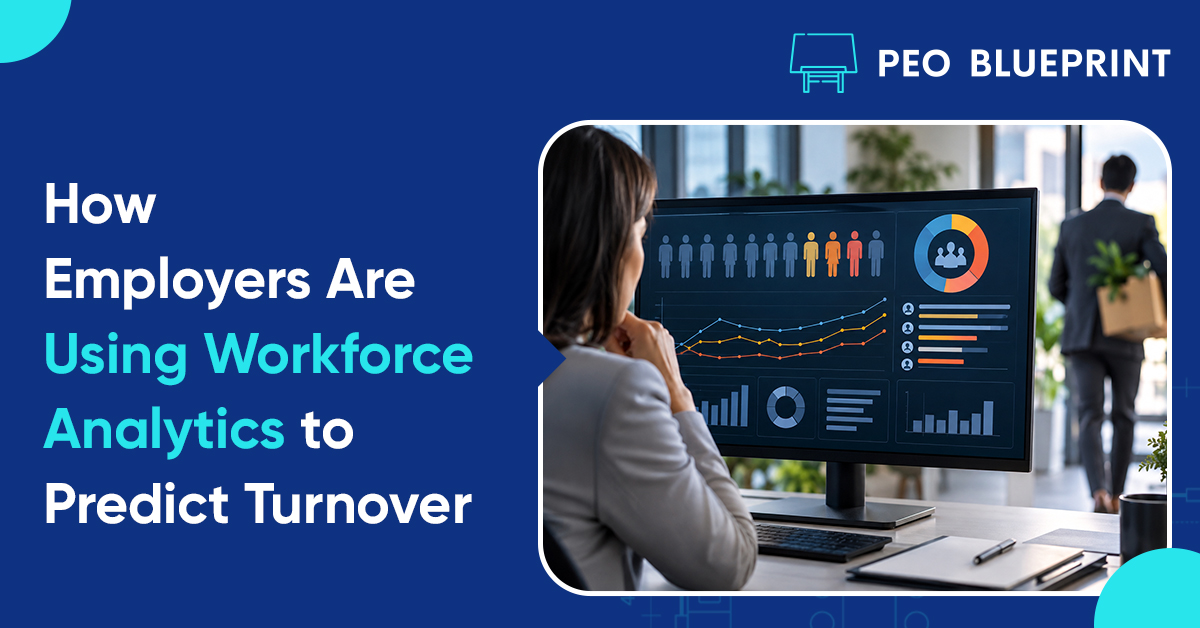
- Turnover Financial Impact: A specialized report that calculates the cost of attrition, including lost productivity and recruiting fees.
To see how these reports can be integrated into your quarterly financial reviews, explore PEO Blueprint’s guide to HR analytics.
🛠️ Customizing the Ecosystem: Not a One-Size-Fits-All Solution
One common misconception that CFOs have is that a PEO is a “rigid” box. Modern PEO-managed payroll ecosystems are highly customizable. Whether your firm is in white-collar professional services, high-risk construction, or healthcare, the ecosystem can be tailored to meet specific industry requirements.
Industry-Specific Tailoring:
✔️ Non-Profits: Handling the unique tax-exempt status and grant-based payroll allocations.
✔️ Tech Startups: Integrating equity-based compensation and stock option tracking into the payroll flow.
✔️ Blue Collar: Managing complex “certified payroll” for government contracts and union reporting.
🤝 The “Co-Employment” Advantage: A Shared Responsibility
One of the most misunderstood concepts in the financial world is “Co-employment.” Some CFOs initially fear a loss of control. However, the reality is that the CFO retains control over all business operations, culture, and hiring/firing decisions.
The PEO takes over the “Administrative Burden.” This allows the finance team to stop being “transactional” (processing checks and filing forms) and start being “transformational” (focusing on growth, M&A, and capital allocation).
The Division of Labor:
- The Company (You): Manage daily tasks, set performance goals, and drive the business strategy.
- The PEO Ecosystem: Processes payroll, remits taxes, manages benefits, and provides HR technology.
🚀 Conclusion: The Future of Mid-Market Finance
The move toward PEO-managed payroll ecosystems is not a trend; it is a structural evolution. As the complexity of employing people continues to rise, the CFOs who succeed will be those who recognize that managing payroll and HR in-house is an inefficient use of capital.
By leveraging a PEO, companies can achieve:
- Scalability: Grow from 50 to 500 employees without needing to 10x the HR staff.
- Efficiency: Reduce the “cost-per-check” processed.
- Peace of Mind: Knowing that experts handle compliance.
If you are a CFO looking to modernize your financial stack, it is time to look beyond simple payroll software. It is time to embrace an ecosystem that protects your bottom line and empowers your workforce.
For expert reviews and a comprehensive directory of the best providers in the industry, visit PEO Blueprint today.