In the modern corporate landscape, the difference between a thriving enterprise and a struggling startup often boils down to one factor: efficiency. As digital transformation sweeps through every department—from marketing to supply chain—a glaring “HR Automation Gap” has emerged. While large corporations often use custom-built HRIS (Human Resource Information Systems), small and medium-sized businesses (SMBs) are usually left juggling spreadsheets and manual data entry.
This is where PEO Tech steps in. A Professional Employer Organization (PEO) is no longer just a service provider; it is a technology powerhouse that bridges the gap between manual labor and automated excellence. In this comprehensive guide, we explore how leveraging PEO Tech can transform your HR department from a cost center into a strategic growth engine.
🛠️ Understanding the HR Automation Gap
The “HR Automation Gap” refers to the disparity between a growing company’s administrative needs and the tools it actually has at its disposal. Most businesses reach a “tipping point” at which manual HR processes—such as onboarding, payroll processing, and benefits enrollment—become bottlenecks.
The Cost of Manual HR
When a business ignores the need for PEO Tech, it encounters several hidden costs:
- Time Leakage: HR managers spend up to 40% of their week on repetitive administrative tasks.
- Compliance Risks: Manual data entry is prone to human error, leading to costly tax penalties and labor law violations.
- Employee Attrition: A clunky onboarding experience or delayed payroll kills morale and increases turnover.
By integrating high-level PEO solutions, businesses can automate these friction points, allowing leadership to focus on high-impact strategy rather than paperwork.
🚀 What is PEO Tech? The Convergence of Software and Service
PEO Tech isn’t just a single software; it’s a sophisticated ecosystem that combines cloud-based platforms with co-employment expertise. Unlike a straightforward SaaS (Software as a Service) tool, PEO Tech offers a “human-in-the-loop” automation model.
Key Components of a Modern PEO Platform:
- Centralized Cloud Dashboard: One login for payroll, benefits, and performance data.
- Self-Service Portals: Employees can update their information, view pay stubs, and enroll in benefits without HR intervention.
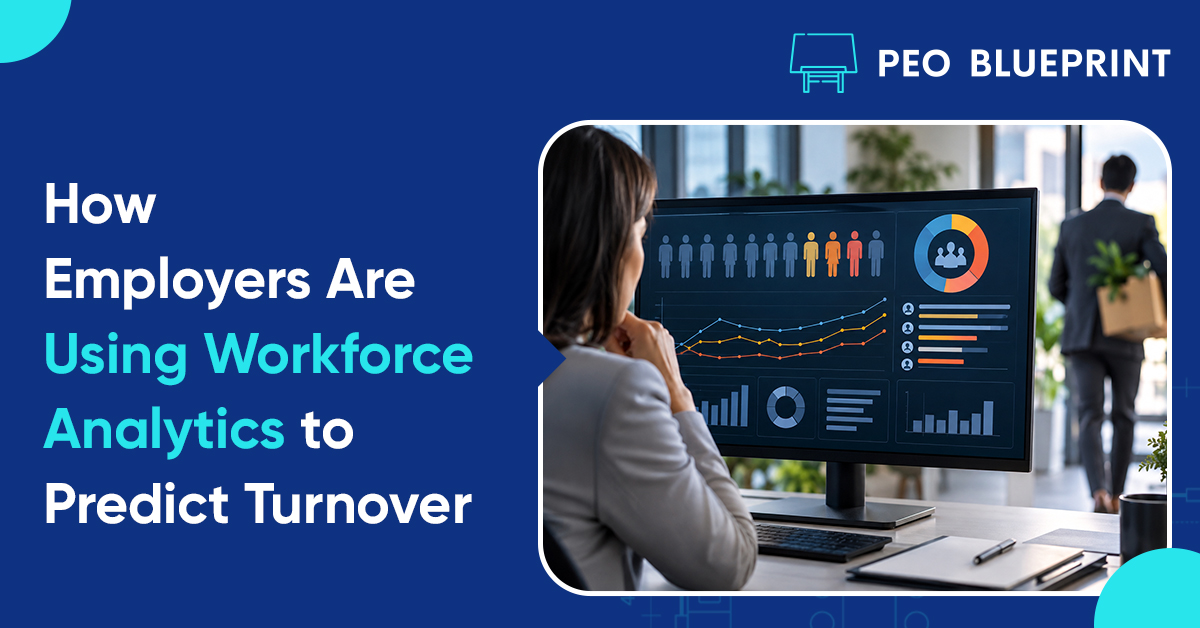
- Real-Time Analytics: Dashboards that track labor costs, turnover rates, and diversity metrics.
When you invest in PEO Tech, you aren’t just buying software; you are acquiring an automated infrastructure that scales with you.
📉 Closing the Gap: Core Pillars of PEO Automation
To achieve a 100% TruSEO impact, a business must understand the specific areas where PEO Tech provides a measurable advantage.
- Automated Payroll & Tax Compliance ✅
Payroll is the most time-consuming HR function. PEO Tech automates the entire cycle:
- ✅ Automated tax withholding and filings at local, state, and federal levels.
- ✅ Direct deposit scheduling and digital paystub delivery.
- ✅ Integration with time and attendance tracking to eliminate manual entry errors.
- Benefits Administration and Enrollment ✅
Choosing and managing insurance plans is a nightmare for most SMBs. Through PEO blueprinting, businesses gain access to Fortune 500-level benefits via a tech-first interface.
- ✅ Digital open enrollment with comparison tools for employees.
- ✅ Automated COBRA administration and HIPAA compliance.
- ✅ Seamless integration with 401(k) and HSA providers.
📈 Competitive Edge #1: Drastic Reduction in Operational Costs
The most immediate benefit of PEO Tech is the impact on the bottom line. By automating the “HR Gap,” companies can significantly reduce their overhead.
Example: The Scaling Startup Imagine a tech startup that grows from 10 to 50 employees in six months. Without PEO Tech, they would need to hire at least two full-time HR administrators to handle the paperwork. With a PEO platform, the existing team can manage growth through automated workflows, saving the company up to $120,000 in annual salaries and benefits for internal HR staff.
Furthermore, PEO Tech provides access to “Master Policies” for Workers’ Compensation and Health Insurance, lowering premiums through the power of collective bargaining. You can calculate these savings using a PEO cost calculator.
👥 Competitive Edge #2: Superior Talent Acquisition & Retention
In a “War for Talent,” the candidate experience is your strongest weapon. A business that uses modern PEO Technology looks and feels more professional to prospective hires.
The Digital Onboarding Experience
First impressions matter. With PEO Tech, new hires receive a digital “Welcome Packet” before their first day. They can:
- Sign documents electronically (E-Sign).
- Upload IDs via a mobile app.
- Complete training modules through a built-in Learning Management System (LMS).
This streamlined approach reduces “time-to-productivity,” ensuring your new talent is contributing to the company’s goals within days, not weeks.
⚖️ Competitive Edge #3: Compliance and Risk Mitigation
The legal landscape of employment is a minefield. From the Affordable Care Act (ACA) to shifting DOL (Department of Labor) regulations, staying compliant is nearly impossible without automation.
How PEO Tech Shields Your Business:
- Automatic Updates: When labor laws change, the PEO Tech platform updates its workflows to ensure you remain compliant.
- Audit Trails: Every action in a PEO system is logged, providing an airtight audit trail for tax or legal inquiries.
- Risk Management Tools: Automated reporting on workplace injuries and safety training ensures you stay ahead of OSHA requirements.
By leveraging compliance management systems, businesses shift the liability burden to the PEO, providing peace of mind and financial security.
📊 Competitive Edge #4: Data-Driven Decision Making
Many SMBs fly blind when it comes to human capital. They know how much they spend on payroll, but they don’t understand why their turnover is high or which departments are over-budget.
PEO Tech turns “HR data” into “Business Intelligence.”
- Predictive Analytics: Identify which employees are at risk of leaving based on engagement metrics.
- Labor Cost Allocation: Drill down into exactly how much each project or department costs in real-time.
- Benchmarking: Compare your benefits and salary offerings against industry standards to ensure you remain competitive.
🌐 The Role of AI in Future PEO Tech
As we look toward the future, PEO Tech is integrating Artificial Intelligence (AI) and Machine Learning (ML) to further widen the gap between automated and manual processes.
- AI Chatbots: Handling routine employee queries (e.g., “How many PTO days do I have left?”) instantly.
- Smart Recruitment: Using ML to screen resumes and match candidates to company culture.
- Sentiment Analysis: Scanning internal communications to gauge employee morale and prevent burnout.
Businesses that adopt PEO Tech now will be the first to benefit from these AI advancements, keeping them miles ahead of competitors stuck in the spreadsheet era.
🏢 Industry-Specific Impacts of PEO Tech
The HR automation gap manifests differently across sectors. Here is how PEO Tech addresses unique industry challenges:
Healthcare & Life Sciences
- Challenge: Strict HIPAA compliance and license tracking.
- Solution: PEO Tech automates the tracking of certifications and ensures all data handling meets medical-grade security standards.
Construction & Blue-Collar Trades
- Challenge: Managing mobile workforces and complex Workers’ Comp.
- Solution: Mobile-first PEO Tech allows workers to clock in via GPS-tagged apps, simplifying payroll for jobs across multiple sites.
Technology & Remote-First Companies
- Challenge: Multi-state nexus and remote equipment management.
- Solution: PEOs handle the “legal presence” in multiple states, allowing you to hire the best talent regardless of geography without setting up new legal entities.
🛡️ The Invisible Shield: Cyber-Resilience Through PEO Tech
As businesses bridge the HR automation gap, they often overlook a critical vulnerability: data security. In an era where a single data breach can cost a company millions, PEO Tech serves as an invisible shield for sensitive employee information. Manual HR processes—think of spreadsheets sent via email or physical files in cabinets—are a goldmine for cybercriminals.
Securing the “Human” in Human Resources
PEO Tech platforms utilize bank-grade encryption and multi-factor authentication (MFA) to protect Social Security numbers, bank details, and medical records.
- ✅ SOC 2 Compliance: Most top-tier PEO platforms are SOC 2 Type II compliant, meaning they undergo rigorous third-party audits of their security protocols.
- ✅ Role-Based Access Control (RBAC): Automation allows you to restrict data visibility. A manager might see performance reviews, but cannot access an employee’s private medical history or home address.
- ✅ Automatic Data Backups: Unlike a local hard drive or a physical ledger, cloud-based PEO Tech ensures that your business records are safe from hardware failure or natural disasters.
By closing the technology gap, you aren’t just gaining efficiency; you are fortifying your business against the growing threat of identity theft and corporate espionage.
🌎 Global Expansion Without the Growing Pains
For many modern businesses, the next step in gaining a competitive edge is “going global.” However, the HR automation gap becomes a chasm when you try to hire in London, Tokyo, or Mexico City. This is where the advanced “Global PEO” or EOR (Employer of Record) features of modern PEO Tech become indispensable.
Erasing Geographic Boundaries
When you use global PEO strategies, you can hire an international expert in minutes rather than months.
- Local Entity Elimination: You don’t need to spend $20,000+ setting up a foreign legal entity. The PEO Tech handles the local legal requirements.
- Localized Payroll: The software automatically calculates local taxes, social security contributions, and mandatory 13th-month pay requirements specific to each country.
- Cultural Compliance: PEO Tech ensures that your employment contracts are written in the local language and comply with specific regional labor protections (like the “Right to Disconnect” laws in Europe).
This level of automation allows a small business in Ohio to compete for top-tier talent in Berlin, giving it a significant edge over competitors limited to their local zip code.
💡 The Psychology of Automation: Boosting Employee Mental Health
We often discuss PEO Tech in terms of ROI and efficiency, but there is a profound psychological benefit to closing the HR gap. Frustrating administrative hurdles are a leading cause of “micro-stress” in the workplace.
Frictionless Workflows = Happier Teams
Imagine an employee who needs to request time off for a family emergency. In a manual environment, they have to locate a PDF, complete it, email it to a manager, wait for a signature, and then check back three days later.
In a PEO Tech environment:
- ✅ The employee opens an app on their phone.
- ✅ They see their balance in real-time.
- ✅ They hit “Request,” and the manager gets a push notification.
- ✅ Approval happens in seconds.
This transparency builds trust. When employees know their payroll is accurate, their benefits are secure, and their requests are handled instantly, they feel valued. This psychological safety is the bedrock of high-performance cultures. You can learn more about building these cultures at PEO Blueprint’s resources.
📊 Deep-Dive: ROI Analysis of the HR Automation Gap
To truly understand why PEO Tech is a “competitive edge,” we must look at the Hard ROI (Return on Investment) versus the Soft ROI.
Feature | Hard ROI (Direct Savings) | Soft ROI (Indirect Value) |
Automated Tax Filing | Zero penalties and interest from the IRS. | Peace of mind for the CFO. |
Group Health Rates | 15-30% reduction in premium costs. | Higher quality talent attraction. |
Integrated Time Tracking | Elimination of “Time Theft” and entry errors. | Accurate project costing. |
Digital Onboarding | Reduced “Time-to-Hire” costs. | Stronger brand perception. |
By quantifying these metrics, business owners can see that the cost of the PEO Tech platform is usually offset within the first six months of implementation.
🛠️ Customization: Making the Tech Work for Your Culture
A common misconception is that automation makes a business feel “robotic.” On the contrary, the best PEO Tech allows for deep customization that reflects your unique company culture.
Tailoring the Interface
Modern platforms allow you to:
- Brand the Portal: Add your logo, brand colors, and mission statement so employees feel they are in your digital office, not a third-party site.
- Custom Performance Reviews: Move away from generic templates. Automate reviews that reward the specific behaviors—like “Innovation” or “Radical Candor”—that your company values most.
- Recognition & Rewards: Many PEO platforms integrate with “Peer Recognition” tools, allowing employees to send automated shout-outs or digital gift cards for a job well done.
This customization ensures that while the process is automated, the human connection remains at the forefront.
📉 Avoiding the “Frankenstein” Tech Stack
Many businesses try to close the HR gap by buying five different “point solutions”—one for payroll, one for ATS (Applicant Tracking), one for benefits, etc. This creates a “Frankenstein” tech stack where nothing talks to each other.
PEO Tech provides a unified “Single Source of Truth.”
- Data Integrity: When an employee gets a raise in the payroll module, it automatically updates their life insurance coverage and 401(k) matching.
- Reduced Training: Your staff only has to learn one interface, not five.
- Consolidated Reporting: You get one report that shows the full lifecycle of an employee, from their first interview to their final exit interview.
Avoiding the “Frankenstein” approach is a massive competitive advantage, as it prevents the data silos that often lead to executive blind spots. For advice on consolidating your HR tech, see our integration blueprint.
🚀 The Future: Predictive Workforce Modeling
The final frontier of PEO Tech is predictive modeling. As the automation gap closes, the most advanced businesses will use their PEO data to look ahead.
Predicting the Future of Your Team
- Turnover Forewarning: AI algorithms can flag when an employee’s engagement patterns change, allowing managers to intervene before the person quits.
- Succession Planning: The tech can identify high-potential employees based on performance data and recommend them for leadership training.
- Budget Forecasting: Predict what your labor costs will look like two years from now based on current hiring trends and inflation data.
This isn’t science fiction; it is the current trajectory of high-end PEO Tech. By adopting these tools today, you are positioning your business to be the “disruptor” rather than the “disrupted” in your industry.
🌐 Empowering the Hybrid Revolution: Managing the “Invisible” Workforce
As we move deeper into the 2020s, the “HR Automation Gap” is most visible in how companies manage remote and hybrid teams. The competitive edge no longer belongs to those with the best office perks, but to those with the most seamless digital workspace. PEO Tech is the engine that makes a borderless workforce possible without the administrative friction that usually follows.
Bridging the Physical-Digital Divide
When your team is scattered across time zones, manual HR becomes a logistical nightmare. PEO Tech solves this through:
- ✅ Geo-Fencing & Mobile Attendance: For field teams or hybrid staff, GPS-enabled check-ins ensure accuracy without the need for physical punch cards.
- ✅ Hardware Provisioning Integrations: Some advanced PEO platforms now integrate with IT asset management, allowing you to ship laptops and secure hardware to new hires with a single click in the HR portal.
- ✅ State-Specific Tax Logic: If an employee moves from Florida to California, PEO Tech automatically adjusts tax withholdings and local labor law compliance, preventing a massive “nexus” headache for your accounting team.
By utilizing remote workforce solutions, businesses can tap into global talent pools that were previously “out of reach” due to administrative complexity.
🛡️ Crisis Management and Business Continuity
One of the most underrated advantages of PEO Tech is its role in business resilience. When the unexpected happens—be it an economic downturn, a natural disaster, or a sudden regulatory shift—businesses relying on manual processes are often paralyzed.
Agility Under Pressure
Automation provides a “speed-to-action” that manual HR cannot match.
- Mass Communication: In a crisis, PEO Tech allows leadership to send emergency alerts or policy updates via SMS and push notifications to the entire workforce simultaneously.
- Rapid Policy Deployment: If a new federal mandate is passed, you can upload new handbooks and require digital signatures across the organization in hours, not weeks.
- Financial Clarity: During market volatility, having real-time access to “fully burdened” labor costs helps CEOs make data-backed decisions about hiring freezes or expansions.
A business that closes its automation gap can pivot. Whether you are comparing PEO providers
🏁 Choosing the Right PEO Tech Stack
Not all PEOs are created equal. When evaluating a partner, you must look beyond the service and inspect the “tech stack.”
Questions to Ask:
- Is the software proprietary or licensed? Proprietary PEO Tech is often more agile and receives updates faster.
- Does it integrate with my existing tools? Ensure the platform syncs with your accounting software (e.g., QuickBooks, Xero) and CRM.
- Is there a mobile app? In today’s world, a mobile-first experience is non-negotiable for employees.
For a deeper dive into selecting the right PEO partner, visit our guide to the benefits of PEO.
✅ Summary Checklist: Is Your Business Ready for PEO Tech?
If you can check more than three of these boxes, your HR automation gap is likely costing you money:
- ✅ You spend more than 10 hours a week on payroll and admin.
- ✅ You are hiring in multiple states.
- ✅ Your employee onboarding involves physical paper or manual emails.
- ✅ You struggle to provide competitive health insurance rates.
- ✅ You are worried about an upcoming DOL or IRS audit.
- ✅ You lack a centralized dashboard for employee data.
💡 Conclusion: The Strategic Imperative
The “HR Automation Gap” is more than just a technical hurdle; it is a strategic vulnerability. As the global economy becomes more digitised, businesses that rely on manual HR processes will be slowed by administrative friction, higher costs, and a subpar employee experience.
Investing in PEO Tech is the most effective way to close this gap. It provides the infrastructure of a global corporation with the flexibility of a small business. By automating the mundane, you empower your team to focus on the extraordinary.
The competitive edge isn’t just about having the best product anymore—it’s about having the best system. With PEO Tech, your system becomes your greatest asset.
Ready to transform your HR? Explore the latest insights and strategies to find the right technology partner for your business.